
“I Love Her Special Little Pinky Beans” — Mom Shares Photos of Baby Born With 12 Fingers
Polydactyly occurs 1 out of every 500-1,000 births.

Published Jan. 22 2026, 4:15 p.m. ET

A woman's photo of her newborn daughter's hands went viral on Reddit's r/interesting sub. Uploaded by a user who posts under the handle @Friendly-Bell-4336, the picture shows that her child was born with six fingers. Which she writes is attributed to a congenital condition she likely inherited from her father.
"My baby was born with 12 fingers," the mom penned. "She has polydactyly like her dad and his mom. Extra pinkies on each hand," she explained to folks in a caption of the photos she shared. In each image, the baby can be seen gripping an adult finger, and clearly visible is the extra pinky.
OP then went on to explain that she was bringing the child in to see healthcare professionals to get rid of the added digits. "We have an appointment today with orthopedics and they'll see how to remove them because they're not functional," she detailed.
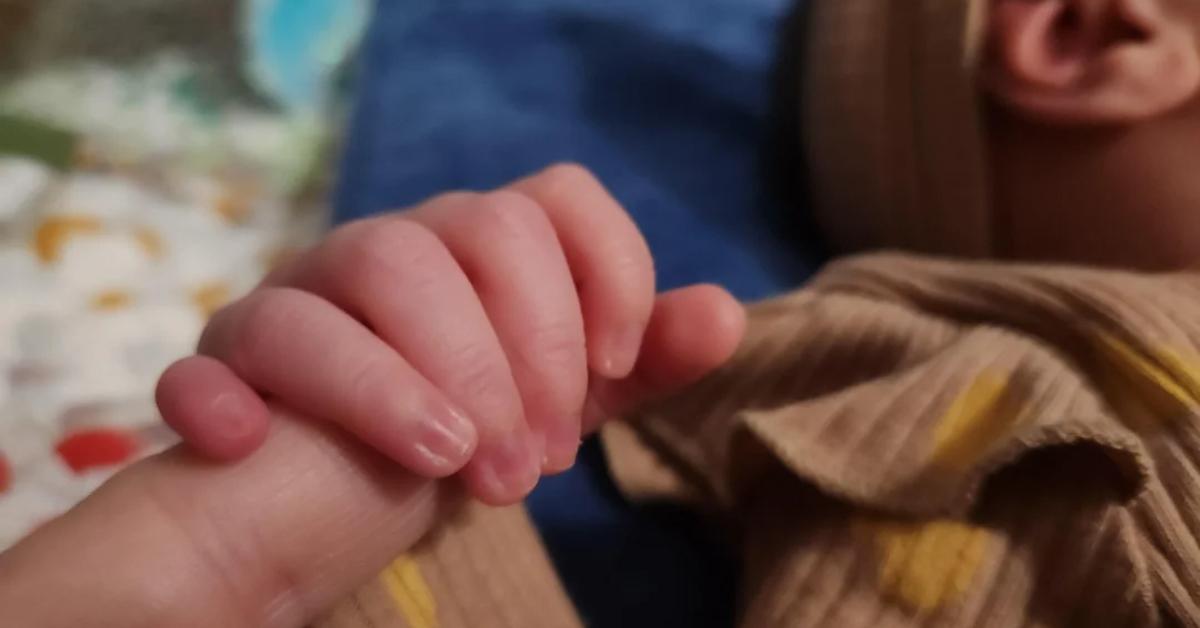
Furthermore, she said that the extraneous appendages "just hang by a thread of skin." Although she is going to indeed have those ancillary fingers surgically removed, the Redditor did say that she was "a little sad because [they] love her special little pinky beans!"
And she also provided a little bit more context as to how the orthopedic surgeon is going about getting rid of the pinkies. "Because the skin attachment is almost 3 mm wide, surgery is a better option than tying off. So we'll wait a couple more months and then have surgery."
Moreover, she added that she's going to take advantage of the time she'll get to spend with her daughter's extra appendages. "I get to kiss her tiny pinky beans a little longer," the mom wrote.
Folks who replied to OP's pictures speculated as to how having an extra, functional finger on each hand could actually be useful.
Like this person who asked: "I always wonder why we don't see more pianists and guitarists and other instrumentalists with stuff like this. You could literally be the best and play stuff no one else could," one commented.
OP responded that there are folks who do indeed benefit from their added appendages and highlighted some examples. "There's a family in Brazil where most of the mare born with six full digits on each hand (with bone unlike my girl's) and a lot of them are pianists or soccer goalies!" she replied.
The Week also proposed the same potential outcome for a boy "born in California with six fingers on each hand and six toes on each foot." In the piece, pediatrician Dr. Michael Treece was quoted as highlighting the potential musical accomplishments a 12-digit instrumentalist would be able to pull off.
"I realize children would tease each other over the slightest thing. But imagine what sort of pianist a 12-fingered person would be, imagine what sort of flamenco guitarist. If nothing else, think of their typing skills," the doctor was quoted as saying.
As for the Reddit user's assertion that there are Brazilian families that indeed put their six-fingered hands to good use, The Mirror reported on how 14 members of the da Silva clan do just that. This includes Joao de Assis, who uses his hexa-digits to prevent strikers from celebrating on the field.
Joao said: "It's good because my hands are bigger than other people and I have better grip and can hold the ball much better than people with five fingers." But this genetic mutation does come with some drawbacks. Like finding appropriate equipment.
"It can be difficult to get gloves because I have to buy two pairs cut one finger from a pair, and stitch in so I have six fingers," he told the outlet. Joao also said that in addition to soccer, he also plays guitar, and his sister, Maria Morena, is a pianist.
"My piano teacher wishes he had six fingers, you can play easier and reach more notes." And whenever a new child is welcomed into the da Silva family, they hope they have six fingers on their hands.
The Cleveland Clinic defines polydactyly as "a birth defect that means your baby was born with extra fingers on their hand or extra toes on their foot."
Furthermore, the health group said it's "one of the most common birth defects that affect babies' hands and feet," but that it's "easily treatable."
The Cleveland Clinic went on to define three types of extra digits on people's hands and feet: postaxial, preaxial, or central, meaning that people either have added pinkies, double thumbs or toes, or an extra middle finger or foot digit.