
Baruch Epshtein: Proving What Deterministic AI Can Actually Learn
Epshtein argues that a deeper understanding of generalization and principled use of prior knowledge are essential to building AI systems that are more reliable, data-efficient, and interpretable.

Published March 16 2026, 2:35 p.m. ET

The promises of artificial intelligence (AI) and machine learning (ML) are often ambitious, especially regarding deterministic systems. For years, the field largely assumed that randomness was essential for effective learning. Baruch Epshtein’s peer-reviewed research challenged that assumption by offering some of the first formal generalization guarantees for broad classes of deterministic models. A mathematically trained AI researcher, Epshtein has published work that advances the theoretical foundations of deep learning, including widely cited contributions on generalization and the role of prior knowledge in modern ML systems. His work was presented at NeurIPS 2022, a premier venue featuring only the top tier of global AI research.
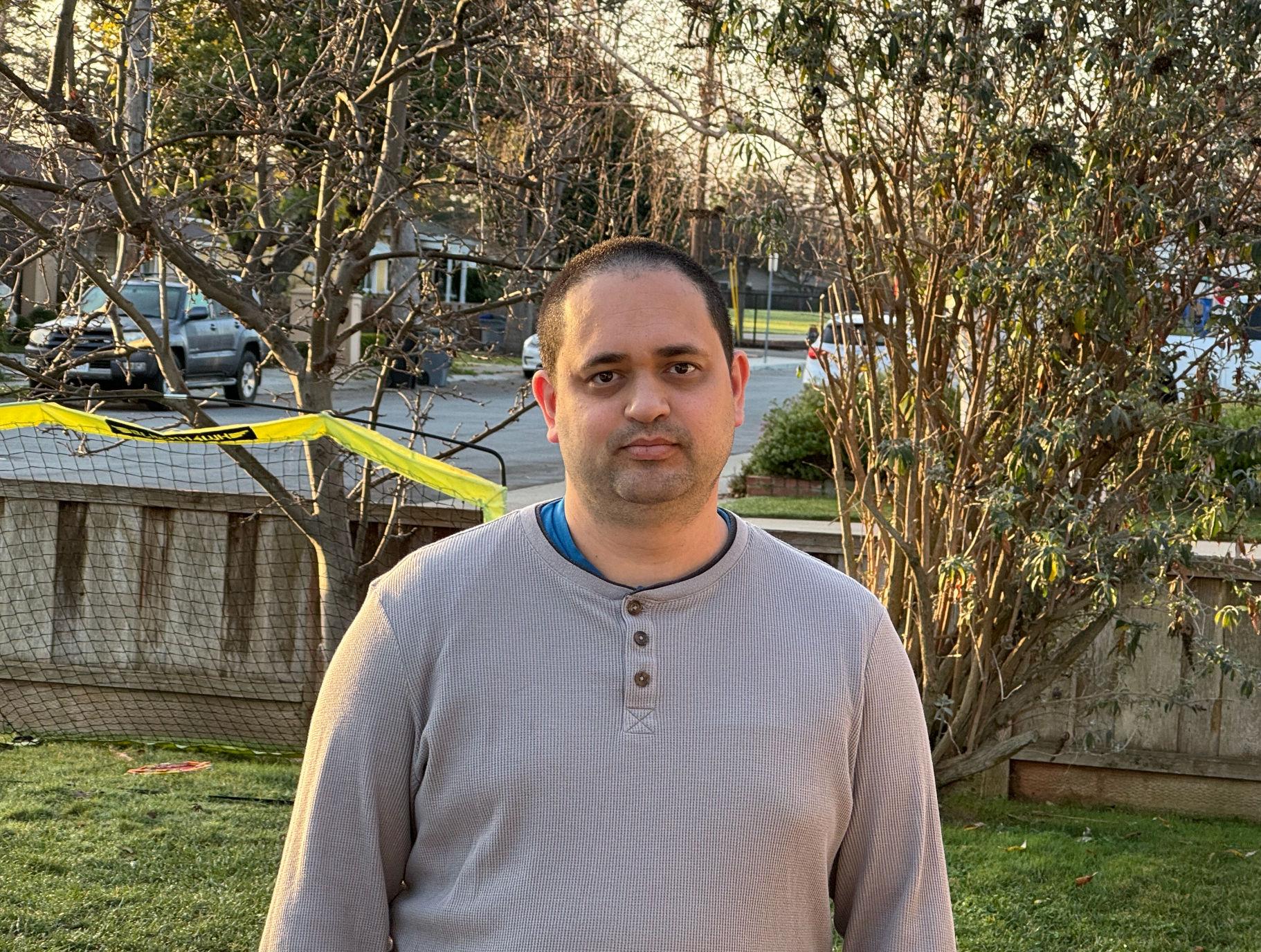
From Mathematician to AI Expert
Before focusing on artificial intelligence, Epshtein completed both his undergraduate and master’s degrees in mathematics at the Technion – Israel Institute of Technology in Haifa, while working professionally as a computer vision engineer. As deep learning began to dominate computer vision between 2012 and 2015, its practical success raised fundamental theoretical questions that would shape his academic trajectory.
“I was captivated by questions about its fundamentals,” Epshtein shared. “Why does it work? What are its limitations? What is its future?” Motivated by these questions, he transitioned into a PhD in electrical engineering at Technion, specializing in machine learning under Professor Ron Meir, a leading researcher in learning theory. His doctoral research centered on two interconnected themes: generalization, how performance on training data translates to unseen inputs, and the role of prior knowledge in model design.
Advancing Generalization Theory
One major focus of Epshtein’s work has been understanding why certain deep learning models generalize well despite classical theory offering limited explanations. In a 2019 paper co-authored with Professor Meir, he provided the first theoretical guarantees explaining the generalization behavior of autoencoders, shedding light on why these models perform reliably in practice and how they can support semi-supervised learning.
In 2022, in collaboration with Ron Amit, Professor Meir, and Professor Shay Moran, Epshtein extended this line of work by deriving generalization bounds for a broad family of deterministic models. Prior results in the field had largely relied on randomness or probabilistic model selection; this work demonstrated that deterministic architectures, including commonly used deep learning models, can also admit meaningful theoretical guarantees.
Prior Knowledge as a Foundation for Learning
A second pillar of Epshtein’s research addresses how prior knowledge shapes learning outcomes. Machine learning theory has long recognized, through results such as the “no free lunch” theorems, that successful learning requires assumptions or inductive bias about the data or task.
In a 2018 paper with Professors Tomer Michaeli and Ron Meir, Epshtein explored how relationships between related tasks can be encoded into model architecture. The resulting approach achieved state-of-the-art performance at the time in few-shot domain adaptation, demonstrating how structured prior information can lead to strong performance even with limited data.
This theme, prior knowledge as a prerequisite for generalization, also underlies his later theoretical work.
Industry Research and Applied AI in the U.S.
Epshtein completed his PhD in 2020 while working at Mobileye, where he contributed to computer vision research for autonomous driving and advanced driver-assistance systems. In early 2021, he relocated to the United States, where his wife began post-doctoral research in synthetic biology at Stanford University.
In the U.S., Epshtein worked with Fei-Fei Li at her startup DawnLight, applying computer vision and learning theory to detect dangerous falls in elderly medical patients. He later joined Ambient.ai as a senior applied research scientist, where he worked on AI systems for physical security, including behavior analysis and event detection in real-world environments.
Bridging Theory and Practice
Today, Epshtein’s work sits at the intersection of theoretical rigor and practical relevance. While many modern AI systems rely on scale and massive datasets, his research addresses two persistent challenges in the field: data inefficiency and reliability. Large models remain highly sample-hungry and can degrade when encountering inputs that differ from their training distribution.
Epshtein argues that a deeper understanding of generalization and principled use of prior knowledge are essential to building AI systems that are more reliable, data-efficient, and interpretable. Rather than treating learning systems as opaque mechanisms, his work aims to clarify why they succeed, when they fail, and what their limitations are.
In a field often driven by empirical performance alone, Baruch Epshtein represents a research-led approach to AI, one grounded in mathematical understanding and long-term reliability rather than short-term gains.