
Carlos N. Cerutti’s Path From Short Films to Television Shows Built for Big Audiences

Published Aug. 12 2026, 2:39 p.m. ET

Carlos N. Cerutti
The producer, writer, and director has screened work around the world while learning how to turn creative ideas into finished entertainment.
The first films were made at home, with whatever camera he could find and no great concern for what might already be on the tape. Carlos N. Cerutti is fairly certain some family memories disappeared that way, recorded over by childhood experiments that made perfect sense to him at the time.
He was not thinking about a career yet. He was thinking about scenes, characters, jokes, and the strange pull of making something that could live outside his own head.
“I was always trying to make something,” Cerutti says. “Even before I knew what the job was called, I knew I wanted to be around film and television.”
That instinct has carried him from homemade shorts to international festivals, from improv in Chicago to the production machinery of network television. Today, Cerutti works as a TV producer and writer across fiction and non-fiction, with a career that includes short films, comedy, reality formats, documentary work, and original shows for Spanish-language audiences.
The path began formally in Buenos Aires, where Cerutti studied Audiovisual Communications at Universidad de Palermo. The program gave him an introduction to nearly every part of film and television creation: writing, building sets, editing, finance, and directing. That range suited him. Cerutti did not want to understand only the idea. He wanted to understand how an idea becomes a thing people can actually watch.
“In school, I started seeing how many jobs live inside one finished piece,” he says. “A scene is not only the writing or the performance. It is the set, the timing, the money, the edit, the hundred choices nobody notices when they are working.”
One of his early short films, Bob (daily nightmares), had a successful festival run in 2014. That moment mattered because it turned private conviction into outside confirmation. Cerutti had spent years making things because he loved making them. The festival response suggested that other people might want to watch what he made.
“That was one of the first times I thought, maybe I have something to offer here,” he says. “You can believe in yourself in a very stubborn way, but it is different when the work starts traveling without you.”
His films would go on to screen at more than 20 festivals around the world, including BAFICI, PÖFF Shorts, London Short Film Festival, Leiden International Film Festival, Girona Film Festival, Athens International Film and Video Festival, Alchemy Film and Moving Image Festival, and CineYouth, presented by the Chicago International Film Festival. His experimental film work, Vivant, was also part of SPACES’ Time-Based Arts Exhibition, Coming Suddenly, Passing Strangely, at SPACES Art Gallery in Cleveland, Ohio.
The festival circuit helped him think about audience and taste. It also exposed him to the difference between admiration and momentum. A short film can open doors, but it does not automatically build a career. Cerutti wanted more than isolated proof that he could make something good. He wanted a path that could keep leading to finished work.
In late 2016, he moved to the United States to pursue an MFA in Cinema Directing at Columbia College Chicago. The move gave him more than graduate training. It introduced him to the city’s sketch and improv community, including iO Chicago, where he took classes and began sharpening his comedy point of view.
“Film school gave me tools, but Chicago gave me a voice,” Cerutti says. “Improv taught me to listen, to react, and to trust what is happening in the room.”
That lesson stayed with him. For Cerutti, comedy is not only about finding the joke. It is about watching people closely enough to understand what makes a moment human. His roots in improv and character-driven storytelling now show up even when he is working far outside a traditional comedy format.
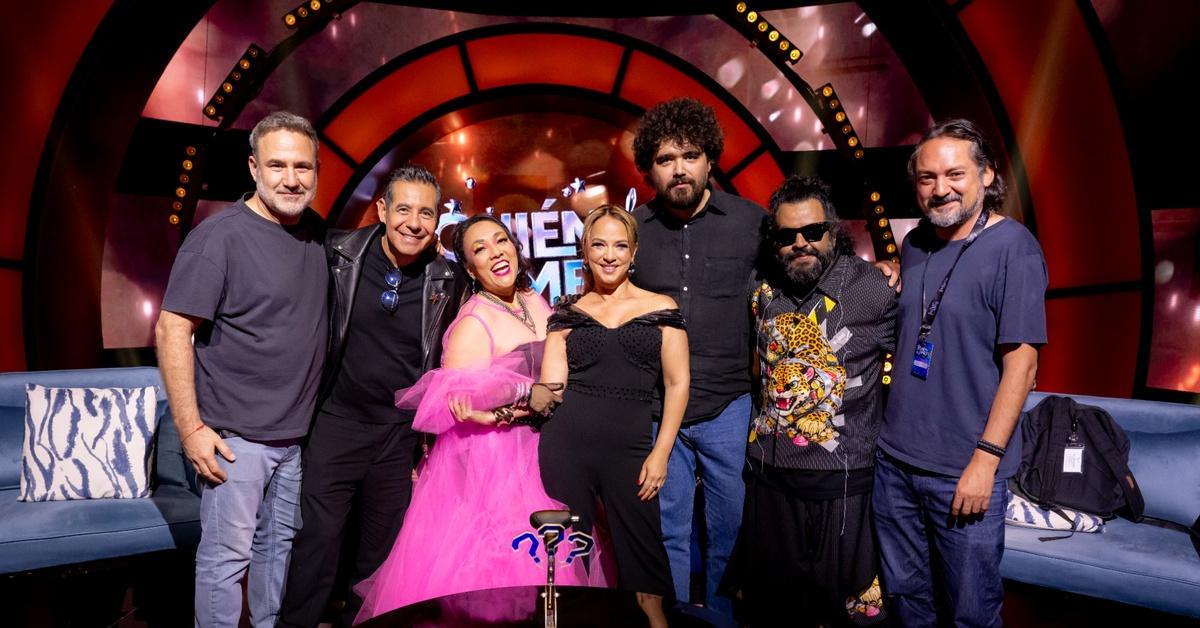
Carlos N. Cerutti
“You can bring humor and humanity into almost anything,” he says. “A scripted scene, a reality format, a competition show. People connect to behavior. They connect to little moments that feel true.”
Chicago also gave Cerutti another kind of education. He volunteered at the Chicago International Film Festival, then became a programming intern and production assistant. He later served on the selection committee for multiple seasons. Watching films with that level of attention changed the way he analyzed work.
“When you are helping evaluate films, you start to understand your own taste more clearly,” he says. “You learn what lasts after the screening is over.”
That kind of training is quieter than a production credit, but it matters. Cerutti was learning to build work and judge work at the same time. He was developing the eye of a filmmaker and the instincts of someone who understood how projects sit in a larger cultural and industry context.
Then came a move toward larger formats. Cerutti joined the production of MasterChef for the Dominican Republic as a post-producing consultant, connecting the local production to the owners of the format. The experience gave him a close look at one of the world’s most recognized reality TV brands and showed him how much discipline sits underneath entertainment that feels effortless to viewers.
“Working on a format like that teaches you respect for structure,” he says. “The audience may just see the emotion and the competition, but underneath it there is a machine that has to work.”
That experience helped lead him toward working in the development and producing of television shows for the US and LATAM market. Later, he moved into his full-time producer role at Blue Hummingbird. In recent years, that path has led him into original television across documentary, comedy, and competition formats, including Mi Mundo, Carnada, and ¿Quién es mejor?
The credits may look varied, but the throughline is clear. Cerutti is drawn to work that moves from spark to screen. He is interested in the idea, but also in the system that lets the idea survive.
“At some point, I understood that making the work was only half the dream,” he says. “The other half was learning how to get it in front of people.”
That realization came with a difficult shift. Independent films and comedy work gave him creative control. Network television required a different temperament. Notes, budgets, legal issues, executives, schedules, and company cash flow all became part of the work. The hardest part was not losing his creativity inside that machinery.
“At first, it is easy to treat every note like a threat,” Cerutti says. “Then you learn that a note is not always the end of the idea. Sometimes it is a sign that the idea has to grow stronger before it can leave the room.”
He now sees that growth as part of the work. Cerutti wants to keep developing original television, push into new formats, explore new markets and languages, and eventually get a feature film greenlit. The goal is not to abandon one side of his career for another. It is to keep expanding the reach of the stories he wants to tell.
“I want to create characters that take on a life of their own,” he says. “I want to bring joy and laughter to people. And I want to be someone who can champion great ideas all the way through execution.”
The kid with the camera has not disappeared. He has learned budgets, schedules, network rooms, and format mechanics, but the impulse is still the same.
Cerutti’s path has grown bigger than the rooms where it began, but it still returns to one familiar instinct: point the camera toward something alive and keep working until someone else gets to feel it too.