
Charlie Tang Left a Prestigious Career Without Another Job Lined Up. Here's Why

Published Nov. 4 2026, 1:28 p.m. ET

"When you're young, the cost of a failed bet is low, and the future return on learning and experience is much higher."
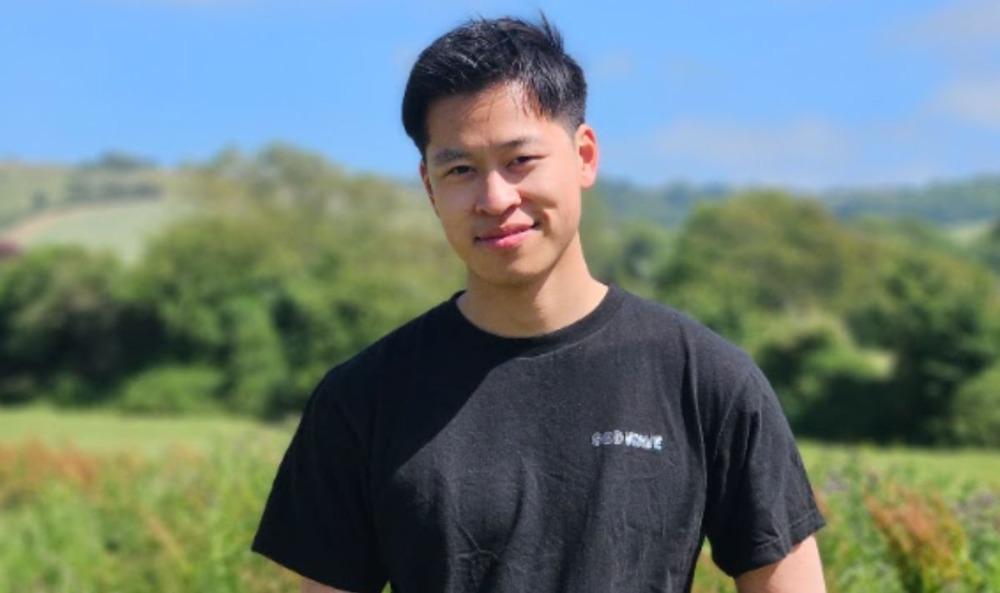
Charlie Tang says this the way other people repeat a family saying, and he has recently put it to the test. Earlier this year, he resigned from a well-paid job with a clear path ahead. No new role was waiting for him, and no offer had come in.
From the outside, that can look reckless. Charlie sees it differently, and his reasoning is easy to follow once he lays it out. It also applies to people who are sitting in comfortable jobs and wondering whether to make a change.
The Price of Staying Put
Charlie's old job was a good one by any normal standard. It was prestigious, the work was demanding, and it was the kind of position people spend years chasing. He says the experience taught him to keep learning, take ownership of his decisions and act when the outcome is uncertain.
By early 2026, he felt the itch for a new challenge, the same one he had felt in his second year at university. This time something bigger was going on around him. In a very short period, AI had moved from chatbots to coding agents that write and ship software on their own. The models were improving quickly, and the industry was growing faster than anything he had seen.
"It was obvious it was going to change the world in all facets imaginable," Charlie says.
That changed the question he was asking. He stopped wondering whether leaving was safe and started asking what staying would cost him. Every month spent on the sidelines was a month of learning he would not get back. "There was no time to waste," he says.
Looking at the Evidence
Charlie describes his choice as a calculated one, and he is careful about the word. He did not leave because AI was exciting or because everyone was talking about it. He left because the pace of technological progress convinced him that a chance to learn at the front of the field was worth pursuing.
He also knew what he was giving up. A prestigious job with a visible future is not easy to walk away from, and he did not have another role waiting for him. He simply judged that the opportunity to develop new skills and contribute to a rapidly changing field was worth the uncertainty.
Why Age Changes the Math
The quote at the top of this story holds the rest of his thinking. A bet placed early has a short list of ways to go wrong and a long runway to recover. If it fails, there are years left to try something else. If it works, the experience can keep paying back for years.
Waiting until you feel certain can seem like the careful path. Charlie sees a hidden price in it. The years when learning is cheapest and the payoff is largest, are the same years people tend to spend waiting for a better moment.
That is why his advice to others starts with timing. Take risks early and do things while you are young. Nobody can promise the bet will work. What you can say is that acting earlier leaves more time to learn, adjust and try again if things do not go as planned.
Where the Confidence Came From
Charlie grew up in the Netherlands and was drawn to difficult problems early. He placed fourth in the 2019 Dutch Mathematical Olympiad, won a bronze medal at the 2020 Benelux Mathematical Olympiad, and completed degrees in mathematics and physics at Utrecht University in three years. He graduated with honors in mathematics.
He says that history gave him a quiet belief that he could pick up unfamiliar things quickly. He had moved through demanding subjects before, and he trusted that he could adapt to another unfamiliar field.
A Place to Land
With the old job behind him, Charlie spent his time looking for a problem worth working on. He found Fragment, an applied AI startup in San Francisco, and the work it was doing in procurement. Companies use procurement to buy the goods and materials they depend on, and much of it still runs on repetitive manual steps. AI agents could take over a large share of that work, but only if people can trust them, because a mistake in procurement can cost real money.
He joined as a founding engineer. Today he leads the evaluation of Fragment’s agents, testing them in simulated environments built from real production data so that failures can be identified before a customer encounters them. The work combines the challenge of building AI systems with the question of whether businesses can rely on them to make consequential decisions.
That work is now part of a much bigger story. Fragment recently emerged from stealth with $56 million in total funding, according to Axios and AI Magazine, 8VC led the Series A, while General Catalyst and A* co-led the seed round. Roelof Botha, former head of Sequoia, is also an investor.
What He Would Say to Anyone Hesitating
Charlie knows that plenty of young people in finance, engineering and other fields are looking at AI and weighing a similar move. He keeps his advice short. Take risks while they are cheap. Choose where you work based on the people. Do not wait to feel ready.
"Nobody is ready for a field that is only a few years old," he says. "Go do something and learn along the way."
His own plans are practical. He wants to help Fragment become a leading platform for autonomous procurement and to grow into a world-class AI engineer who helps set standards for how these systems behave. In time, he hopes the same approach can reach the wider physical goods industry.