
Colossal Acquired One of the Rarest Eggs on Earth, Then Gave It Away

Published Oct. 19 2026, 12:48 p.m. ET

A giant moa egg spent six decades in an American private collection, and Colossal and Sir Peter Jackson are bringing it home.
Colossal Biosciences, the Dallas de-extinction outfit behind the dire wolf, announced today that it bought a giant moa egg at auction, one of the rarest objects in natural history, solely to give it away. The prize is a pale, impossibly fragile shell laid by a bird that could stand taller than an NBA rim. The destination is Aotearoa, New Zealand, and the hands of Ngāi Tahu, the people whose ancestors lived alongside it.
Auction records say the egg was found in New Zealand on January 14, 1966, then sat in an American private collection for roughly sixty years. It resurfaced this summer at Artemis Gallery in Louisville, Colorado, and Colossal moved fast, buying it on June 12. Consider the rarity; fewer than 40 sufficiently complete moa eggs are known in public collections worldwide, and only eight retain at least 90 percent of their original shell. This one measures about 22 by 17 centimeters, nearly double the volume of an ostrich egg, with a shell thinner than two millimeters. The egg will return by private flight, and the handoff will take place at a repatriation ceremony in December, when the egg goes to Professor Te Maire Tau, Ūpoko of Ngāi Tūāhuriri.
“When we launched the moa program, we made a clear commitment that indigenous leadership would guide the science and every decision surrounding the project. Securing and transporting this egg back to its rightful home is just part of that commitment. Regardless of when and how it left the country, we strongly feel all recognizable moa bones and remains as well as any other New Zealand artifacts should be returned to the country and its people. To quote Indiana Jones, “it belongs in a museum,” a museum in Aotearoa, under the care of the people whose ancestors lived alongside these extraordinary birds. We are honored to help return it home.” said Ben Lamm, CEO and Co-Founder of Colossal.
But here's the twist: Colossal is the most aggressive genetic engineering operation on the planet- a company that edits ancient genomes for a living. It could have kept the egg in Dallas and run every test in the book in its movie-set lab. Instead, Ngāi Tahu will decide whether to image the egg, sample it for DNA, or study it at all, in accordance with tikanga. Science is sometimes an extremely competitive field, routinely accused of assuming Godlike powers. The crew just handed over the loot and the final say. That’s not a footnote. It’s the whole point of the moa program, which Ngāi Tahu researchers have directed since its launch in 2025.
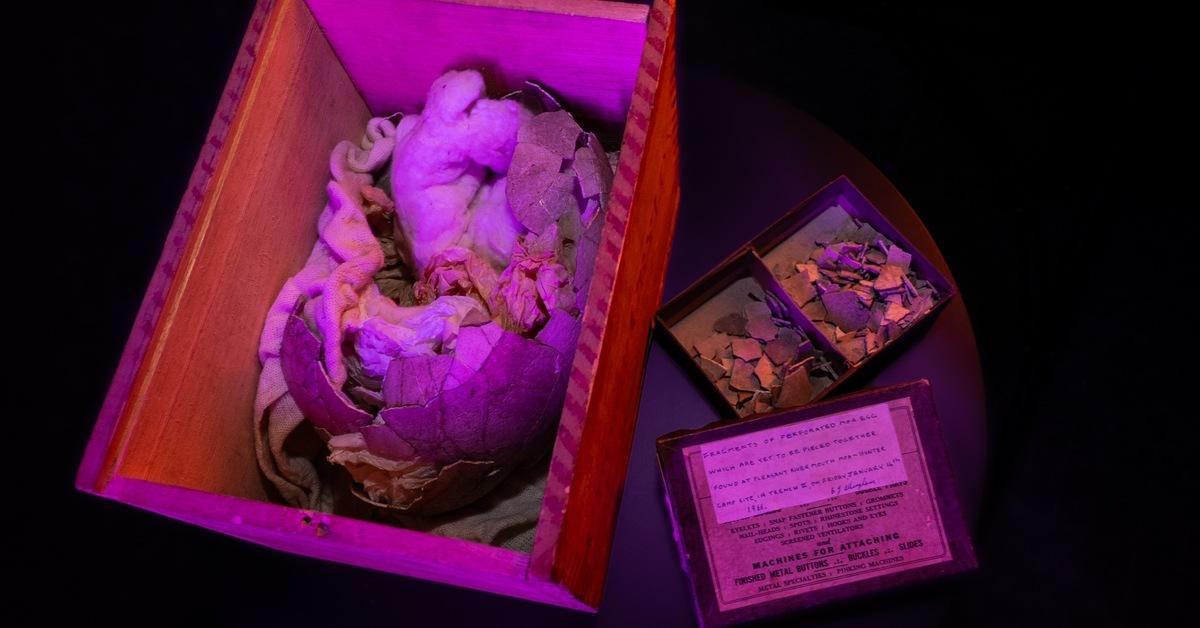
And the man who brought everyone to the table wants you to feel the stakes. “Every New Zealander grows up knowing the moa and feeling its loss,” said Sir Peter Jackson, who confesses he still scans the deep bush looking for a glimpse of the mythic last moa. Jackson believes that after expert restoration, the egg will very likely become only the ninth known nearly intact moa egg. The timing is pure cinema, too. The news broke on opening day of the world’s premier gathering of ancient-bird scientists, in Ōtautahi Christchurch. Meanwhile, the science keeps moving: in May, Colossal hatched healthy chicks from a shell-less incubation system designed to scale someday to moa-sized eggs.
The moa disappeared roughly 600 years ago, wiped out within two centuries of the first human footsteps on its islands. What survived were bones, stories, and a handful of shells too delicate to last. They were scattered across museums and, in this case, a stranger’s shelf half a world away. This December, one of the last things a giant moa ever made finally goes home, and this time, the people waiting for it get the final say.