
From Disney to Rosewood: How Sofia Carcavallo Helped Global Stories Connect with Local Audiences

Published Nov. 16 2026, 2:33 p.m. ET

Every year on November 1 and 2, families across Mexico set up altars for the people they have lost. There are marigolds, candles, old photographs, and often a plate of a favorite meal. In recent years, many people around the world have come to know this tradition through Pixar’s Coco, and through the song at its heart. That song is Recuérdame, or Remember Me, and it is now something people hum when they think of someone they miss, even if they have never stood in front of an altar. Disney and Pixar recently offered a first look at Miguel as a teenager in Coco 2, scheduled to reach theaters on November 21, 2029.
A story like that reaches audiences through a long chain of hands. Some create the characters, write the songs and bring them to life on screen. Others determine how the film will be introduced in each country, which artists will lend their voices, and what viewers in São Paulo, Madrid or Seoul will understand about the world on screen.
Sofia Carcavallo was part of that process at The Walt Disney Company for seven years. From 2016 to 2023, she progressed from coordinator to senior manager in its Latin American regional office, overseeing marketing campaigns for theatrical and, later, streaming releases. Her work spanned Walt Disney Animation Studios, Disney's live-action division, Pixar, Lucasfilm and Marvel Studios, with her remit later expanding to include 20th Century Studios and Searchlight Pictures. She also contributed regional insight to discussions surrounding two of the company's best-known Latin American stories, Coco and Encanto, bringing cultural context to artist recommendations, creative materials and promotional initiatives.
Today, she is Senior Manager, Marketing and Communications, Americas at Rosewood Hotel Group. Her work involves translating a global brand into stories relevant to each property's location and audience.
Growing Up on the Other Side of the Screen
Her road to Disney and her connection to storytelling started long before she had a badge. Sofia grew up in Buenos Aires surrounded by drama and dance, and as a teenager she performed in the opening of Zapping Zone, a Disney Channel block for Latin America. Standing on that side of the screen taught her what it feels like to reach an audience.
At Universidad de San Andrés she studied communication and wrote her thesis on the entertainment business and the film industry. She also joined the founding research team of the Center for Studies of Media and Society, working with Northwestern University on how people consume media. Performing had shown her the feeling. Research gave her a way to study it.
The Decisions Behind Making Global Films Feel Local
When Sofia joined Disney in 2016, her work covered a wide range of theatrical marketing responsibilities, including audience research, film launches, music, talent, partnerships, and creative development. Streaming became part of her remit later, with the launch of Disney+ in Latin America in 2020.
Some of her earliest decisions about a release came before the marketing campaign took shape. One was what to call the film. Sofia helped propose and select titles and taglines in Spanish and Portuguese for audiences across Latin America. For Spanish-speaking audiences, some examples of her work included Wifi Ralph for Ralph Breaks the Internet, the subtitle Un mar de aventuras for Moana, and Unidos for Pixar’s Onward.
According to Sofia, “A literal translation isn't always the best title. When we worked on a local title, I considered what someone would understand the first time they saw the poster. With Wifi Ralph, the connection to technology was clear from the name. It was catchy, made sense to the audience and stayed connected to the film.”
For the Brazilian release of Coco, the question was what feeling the title would leave with someone seeing the poster for the first time. Carcavallo recalls that the team wanted to convey the joy in a story that also deals with death and remembrance. The Portuguese title they chose, Viva: A Vida é uma Festa, put that sense of celebration up front.
That attention to local understanding also extended to campaign materials. Working with Disney's Burbank headquarters and the filmmakers, including Pixar's creative teams, Sofia reviewed posters, trailers and advertising spots tailored to markets such as Mexico and Brazil. These materials were adapted from the US domestic versions to reflect local audiences and their expectations.
In her own words, “We worked directly with Burbank on posters, trailers and advertising spots for audiences across the region. My role included reviewing the creative and explaining where the messaging needed to change, being specific about what audiences would see, hear and understand.”
This exchange became particularly important with Coco and, years later, Encanto. Both stories were rooted in Latin American cultures but intended for audiences around the world. Sofia's regional team was asked to share its knowledge with colleagues at U.S. headquarters and across Europe, the Middle East, Africa and Asia-Pacific. These teams wanted to understand how Latin American culture should be represented and how the films and their surrounding campaigns could connect with people who had never experienced those cultures firsthand.
Regional knowledge also helped the team identify cultural details that might otherwise be overlooked or misunderstood. As part of this collaborative process, Sofia contributed to shaping the cultural approach for both films, helping bring regional perspectives into discussions about representation and the way the stories were introduced to international audiences.
On Coco, her input also extended to work-in-progress screenings and film excerpts, which she reviewed at different stages to provide feedback on cultural details in the script and visuals. One example concerned the name of the celebration itself. Sofia flagged the use of “Día de los Muertos,” recommending “Día de Muertos” for the story’s Mexican context. The recommendation was adopted in the film’s Latin American Spanish dubbing and in its campaign materials. It was one of many details she reviewed, illustrating how regional knowledge could inform a global production at the level of individual words and images, where cultural authenticity often takes shape.
Voices That Feel Like Home
Music is another important part of Sofia's localization work. She researched and proposed Latin American artists for Disney's musical releases, considering how their voices and public profiles would connect with the films and their intended audiences.
“Choosing an artist is never just about fame. I considered how their voice and public identity fitted the film, and how relevant they were to the audience we wanted to reach. The recommendation had to make sense creatively and as part of the campaign.”
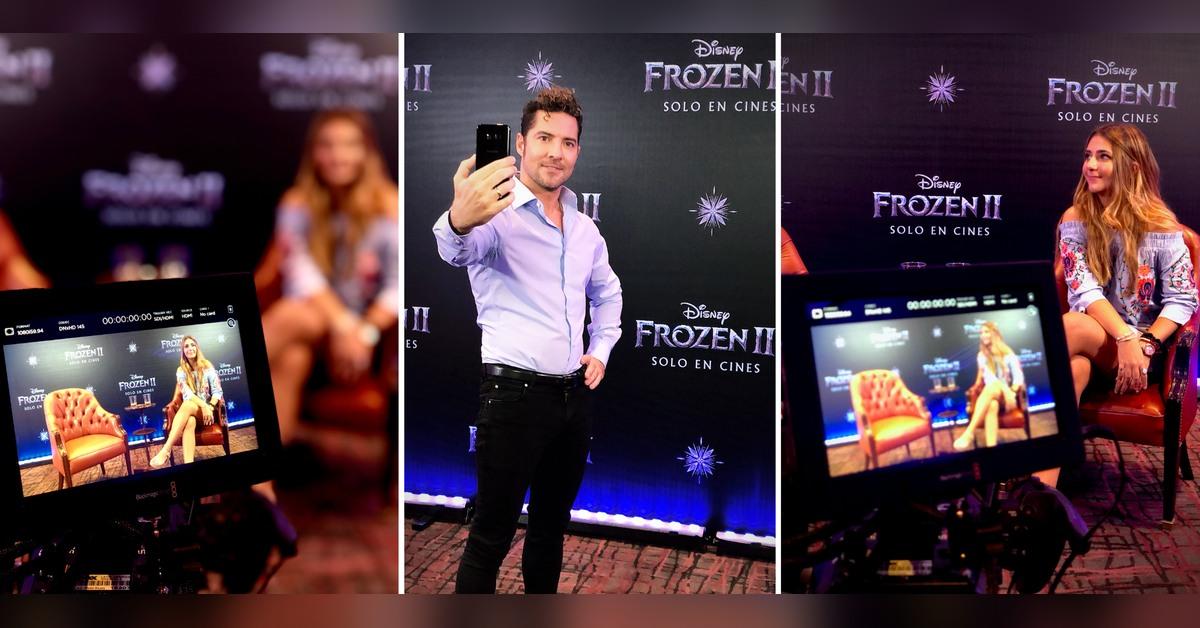
For Coco, her artist recommendations included Carlos Rivera for the Spanish-language end-credit performance of “Recuérdame” and Natalia Lafourcade, who performed alongside Miguel on “Remember Me (Dúo).” Her recommendations also included Danna Paola for Raya and the Last Dragon and Greeicy for the “Así es la vida” music video inspired by Soul. She also collaborated with Disney Spain on David Bisbal’s participation in Frozen 2. These choices connected global releases with audiences through familiar local voices. Coco went on to win two Academy Awards, including Best Original Song, bringing further international recognition to the film and its music.
The job had a very human side too. Her team organized premieres, talent tours, dubbing and music projects in Latin America. These initiatives helped bring the films closer to local audiences, allowing fans to meet the people behind the characters and giving regional artists a role in the wider release.
Encanto: A Global Story with Colombian Roots
Released five years ago this month, Encanto follows a Colombian family and its magical home. As part of Disney’s Latin American team, Sofia helped recommend Colombian artists Maluma and Sebastián Yatra early in the film’s regional planning. Those recommendations became part of the wider release: Maluma voiced Mariano, while Yatra performed “Dos Oruguitas,” which received an Academy Award nomination for Best Original Song. Yatra also performed the song live at the 94th Academy Awards.
“We wanted voices that Colombians would recognize as their own and that audiences across Latin America already loved. Maluma and Sebastián Yatra brought both: they are proudly Colombian, and their music travels far beyond the region. We proposed them for the regional campaign, and seeing that recommendation become part of the film audiences watched around the world showed me how much local knowledge can add when it arrives early”, Sofia shares.
Listening First
Looking back, Sofia holds on to one idea: “Local knowledge works best when it becomes part of a project from the beginning.” People who live within a culture notice details that others may miss, and those details often carry the feeling of a story. When local insight enters only at the translation stage, much of that meaning may already be lost.
For Sofia Carcavallo, this approach comes down to understanding the audience before making creative decisions. A story that feels authentic to the people whose culture it represents has a stronger foundation for connecting with audiences elsewhere.
The Same Question, a Different Industry
That attention to cultural context now informs Sofia’s work in hospitality. As Senior Manager, Marketing and Communications, Americas at Rosewood Hotel Group, she works with 17 hotels and resorts, as well as new openings, guided by the brand’s A Sense of Place philosophy. She led the implementation of Rosewood’s 2025 brand evolution across the Americas, translating it into local marketing plans, partnerships and communications.
In summer 2026, she also led Rosewood’s global campaign The Spirit of Celebration, drawing on the cultural energy surrounding the FIFA World Cup through art, design and community. A limited-edition team kit by artist Christian Jeffery provided a shared creative element, while properties adapted their programming to their locations and audiences. Whether celebrating a global sporting event or a tradition such as Día de Muertos, her work continues to involve understanding what matters to different audiences in different places.
For Sofia, the work has always involved understanding the people on the other side of the screen. That is what gives a global story the chance to feel personal, wherever it is seen. The industry has changed for Sofia now, but the question remains: how does a global story or brand come to mean something to people in a particular place?
So the next time a song from a film makes you think of someone you miss, give a thought to the people who helped it reach you. Some of them wrote it, some of them sang it, and a few of them spent years in an office making sure that when a story left home, it still sounded like home.