
Jai Sharma: The Next Wearables Wave Will Train the Brain, Not Just Track It
The Mave Health co-founder sees consumer neurotech moving from dashboards and data into daily intervention

Published July 24 2026, 1:22 p.m. ET

Most wearables are built around a familiar promise: they will tell you what is happening inside your body. A ring can report your sleep score. A tracker can flag stress. A dashboard can tell you that your recovery is off. Jai Sharma, co-founder and CMO of Mave Health, is building around a different bet. He believes the next stage of wearable technology will not be defined by better measurement alone. It will be defined by tools that help people change how they feel and function.
At Mave Health, Sharma and his team make a wearable headset that uses gentle, non-invasive electrical stimulation, known as tDCS, to train the part of the brain tied to focus, stress regulation, and decision-making. The daily use case is simple: 20 minutes a day. The larger idea is more ambitious. Mave wants to make brain training feel as practical and ordinary as going to the gym.
“Most wearable companies tell you what already happened,” Sharma says. “They can tell you that you are stressed after you already feel stressed. That is useful to a point, but people do not want a better report on the problem. They want something that helps them shift the state they are in.”
That distinction places Mave on the wellness side of wearables, actively supporting your mind rather than just watching it. Sharma sees a market crowded with EEG headbands, smart rings, HRV trackers, sleep bands, and brain-health features that give users more data. His view is that the field has spent years improving the mirror while paying less attention to what people can do once they see the reflection.
“The industry is over-indexed on measurement and under-delivering on outcomes,” Sharma says. “A tracker that tells you that you are stressed is basically a thermometer. Nobody wants the thermometer to be the end of the story.”
Consumer neurotech is becoming harder to ignore. Sharma points to wearable brain technology crossing roughly $2.6 billion this year and growing close to 20% annually. He also sees a wider shift in how people think about their biology. The same consumers who track sleep, take creatine, monitor recovery, and study their heart-rate variability are beginning to look at the brain as the next frontier for daily performance.
That interest brings both opportunity and confusion. Sharma believes the strongest companies in the field will be the ones that stay grounded in real science, clear protocols, and honest claims. He is wary of a market where hype can move faster than understanding, especially when the product touches something as personal as the brain.
“Neurotech has to earn trust,” he says. “The companies that are careful about the science and disciplined about what they claim will separate from the ones that treat this like another wellness trend.”
For Sharma, the category is not only about building hardware that works. It is about getting people to use it consistently enough to experience the benefit. That may sound simple, but he considers it one of the hardest problems in consumer health.
“The device matters, but the habit matters just as much,” Sharma says. “If someone does not use it long enough to feel the difference, the technology never gets a real chance.”
That belief shapes how he talks about Mave’s real challenge. A consumer neurotech company has to build a device, but it also has to build behavior. It has to help a skeptical person understand what tDCS is, why it is not fringe, how to use it, and why a daily 20-minute practice is worth making room for. In Sharma’s view, adherence is not a side issue. It may be the issue that decides the category.
“People think consumer neurotech is a hardware problem,” he says. “The harder problem is whether someone will come back tomorrow, and the next day, and keep going long enough for the routine to become part of their life.”
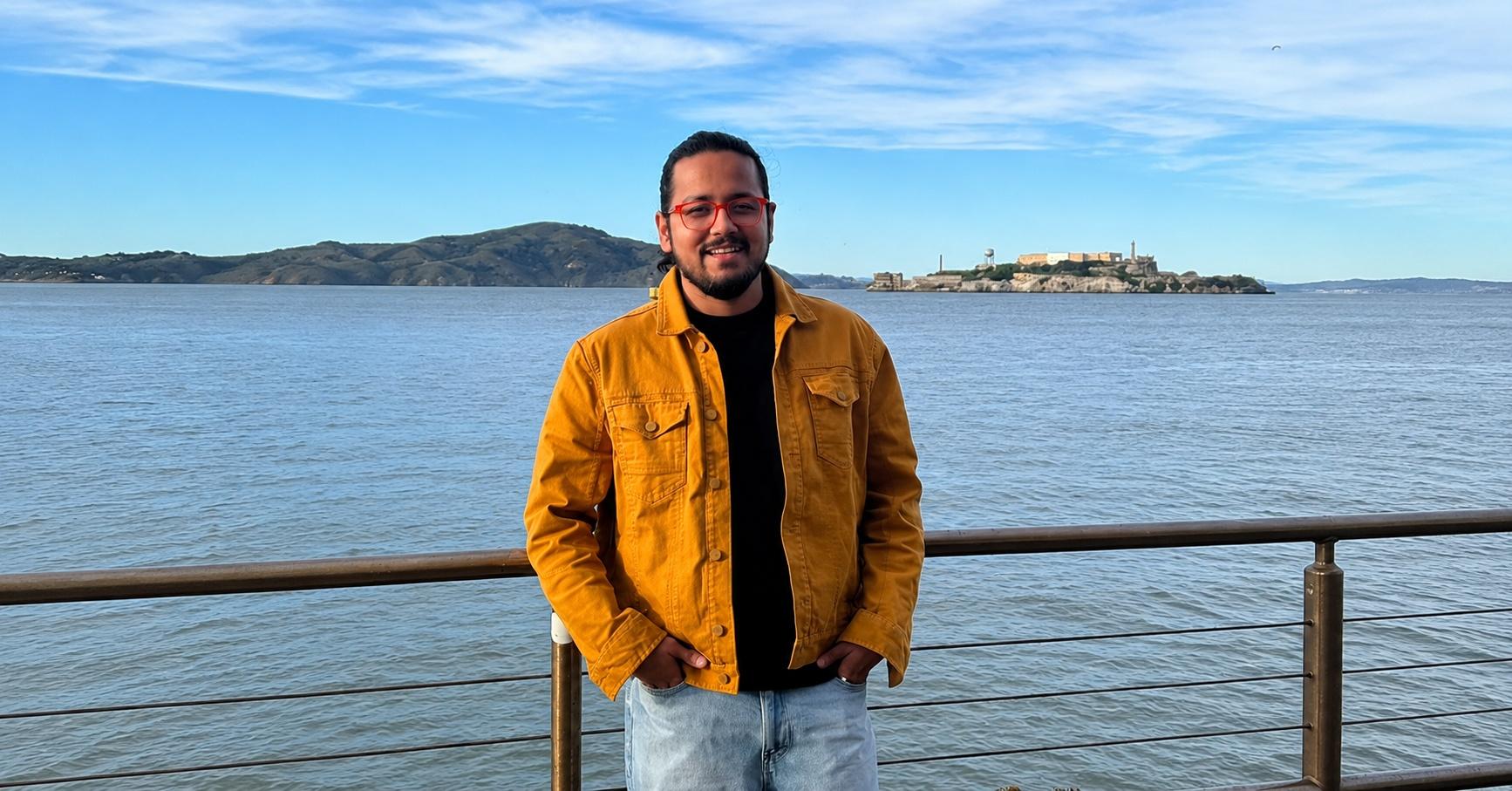
Sharma came to Mave with experience in another kind of behavior change: helping people adopt products they did not already know they wanted. He studied at BITS Pilani and built his career in growth marketing for early-stage startups. At Newton School, a $30M-funded Series B startup, he led growth for an education model that required people to bet on a new way of building their careers. That experience taught him how to create demand in a category where the market had not yet formed a clear opinion.
At Mave, the stakes became more personal. Sharma and his co-founders, Dhawal and Aman, lost a close friend to depression in 2023. The loss pushed them to look seriously at better mental-health solutions and eventually toward consumer neurotech hardware. Sharma joined the company with a specific question in mind: could they get people to buy a brain-training device and keep using it?
Today, Mave has shipped to hundreds of active users, raised about $2.85 million in funding, and expanded into the US market. Sharma leads marketing and user acquisition, which means he owns the journey from a person who has never heard of brain stimulation to a user who builds Mave into a daily routine.
That journey is complicated by public perception. Sharma says many people still assume electrical stimulation of the brain is unusual or intimidating, even though he describes tDCS as one of the most studied non-invasive techniques in neuroscience, with decades of research and home-use trials behind it. Closing the gap between the science and the public’s understanding has become part of his work.
“There is a perception gap,” he says. “A lot of people are reacting to the phrase before they understand the technique. Education is part of the product experience because trust has to come before adoption.”
Access is another part of Mave’s thesis. Sharma believes real tools for mental performance and stress regulation are too often locked behind clinics, specialists, waitlists, or stigma. That leaves many people trying to manage scattered focus, decision fatigue, burnout, and anxiety with apps, willpower, or generic advice. Mave is designed as a physical, at-home tool that gives users a more direct way to work on the underlying state.
His long-term vision is straightforward. Sharma wants mental performance and stress regulation to become as normal and unstigmatized as physical fitness. He imagines a world where reaching for a brain-training device after a hard day feels as ordinary as going for a run.
“If Mave works at the scale we believe it can, looking after your brain becomes a daily habit,” Sharma says. “Not something hidden, not something strange, and not something available only to people who can reach traditional care.”
That is the larger bet behind Sharma’s work. The first wave of wearables helped people see more about themselves. The next wave may be judged by whether it helps them do something with that knowledge. For Jai Sharma, the future of consumer neurotech is not another dashboard. It is a daily tool people can feel.