
Peter Nsaka: Here's How He Built His Career on Judgment, Not Hype

Updated July 23 2026, 2:23 p.m. ET

From early startup experiments to Shopify and Y Combinator, Peter Nsaka learned that great engineering is less about code and more about judgment. Judgement to know when to ship, when to scale, and when to walk away.
The first time Peter Nsaka wrote code, he saw more than a technical skill. He saw a way to make something from nothing.
It was the summer of 2008 in Abuja, Nigeria, and Nsaka was attending his first coding bootcamp. Until then, he had loved computers the way many curious kids do. He knew how to use them, explore them, and push them. At home, he was the unofficial power user of his father’s desktop. The bootcamp changed the question from what software could do to how software was made.
“That was the first time I understood that the tools I loved using were built by people,” Nsaka says. “Once that clicked, I wanted to become one of those people.”
The choice was not obvious to everyone around him. Nsaka grew up at a time when oil and gas companies still represented the safest and most prestigious version of technical success. His father was an engineer with one of the largest international oil companies of that era, and there was pressure for Nsaka to follow the expected path into electrical engineering.
He chose software instead.
“It was not the respectable answer where I grew up,” he says. “People could understand engineering in the oil industry. Software felt much less certain. But I was not chasing the safest version of success. I wanted to build.”
After the Abuja bootcamp, Nsaka spent the next two years teaching himself what he needed to know. JavaScript, HTML, PHP, and other tools became useful because he had something he wanted to make. Right out of high school, he launched his first startup, a social networking site called FistRocket.
He knew little about venture capital. His parents became his first investors. The company did not last once Nsaka moved to Canada for university, but the experience gave him an early lesson that still shapes how he thinks about software and entrepreneurship.
“I was never learning programming languages without purpose,” he says. “I had an idea in my head, and the learning followed the build.”
At the University of Alberta, Nsaka found eHub, the entrepreneurship incubator at the School of Business, and immersed himself in it. The space gave him his first serious look at how technology companies get formed beyond the thrill of writing code. He launched several startup ideas through eHub, some of which earned provincial and national recognition, including business pitch competitions.
Those early ventures gave him a taste for the speed that comes from being both technical and entrepreneurial. If he had an idea, he could build a working version within days. That ability made software feel alive.
Still, after university, Nsaka knew he needed a different kind of training. Startup projects had taught him how to move fast. He wanted to understand how software was built at real scale.
Shopify gave him that education.
Over more than four years at the e-commerce platform, Nsaka worked as a Senior Software Engineer with tech lead responsibilities, building infrastructure for systems serving millions of merchants. The scale changed his understanding of engineering. A clever solution was not enough. The work had to hold up under pressure, coordinate with other systems, and support businesses that depended on it.
“At scale, engineering stops being only about writing code,” Nsaka says. “It becomes judgment. What should exist? What should not exist? What risk are you creating with this decision? That is where the real work begins.”
That view now sits at the center of how Nsaka talks about the future of AI and software engineering. He believes the technology industry has become too preoccupied with impressive demos and raw model capability, while paying too little attention to the less glamorous engineering needed to make AI dependable inside real businesses.
Guardrails, cost control, observability, governance, and integration with existing systems may not produce the most hype. Nsaka argues they are exactly what will decide which AI products matter.
He says, “The winners will be the ones that make AI reliable enough for businesses to trust it with money, data, and customers.”
That perspective comes partly from Shopify and partly from Nsaka’s founder path. In his fourth year at the company, the startup itch returned. He applied to Y Combinator, the accelerator he had first tried to enter back in 2015 while building through eHub. He did not get in on the first try. Or the second. Or the third.
Nine years after that first application, Nsaka was accepted into Y Combinator’s S24 batch. He moved to San Francisco to build and later continued his work from New York, focused on AI and software engineering.
“Persistence mattered more than anything else,” he says. “I applied four times. That teaches you something about wanting the work badly enough to keep coming back.”
Nsaka’s career has also moved across countries. He spent his childhood and teenage years in Nigeria, lived in Canada from 17 to 29, and then moved to the United States. Each move meant rebuilding his network, proving himself again, and learning how technology ecosystems work from different vantage points.
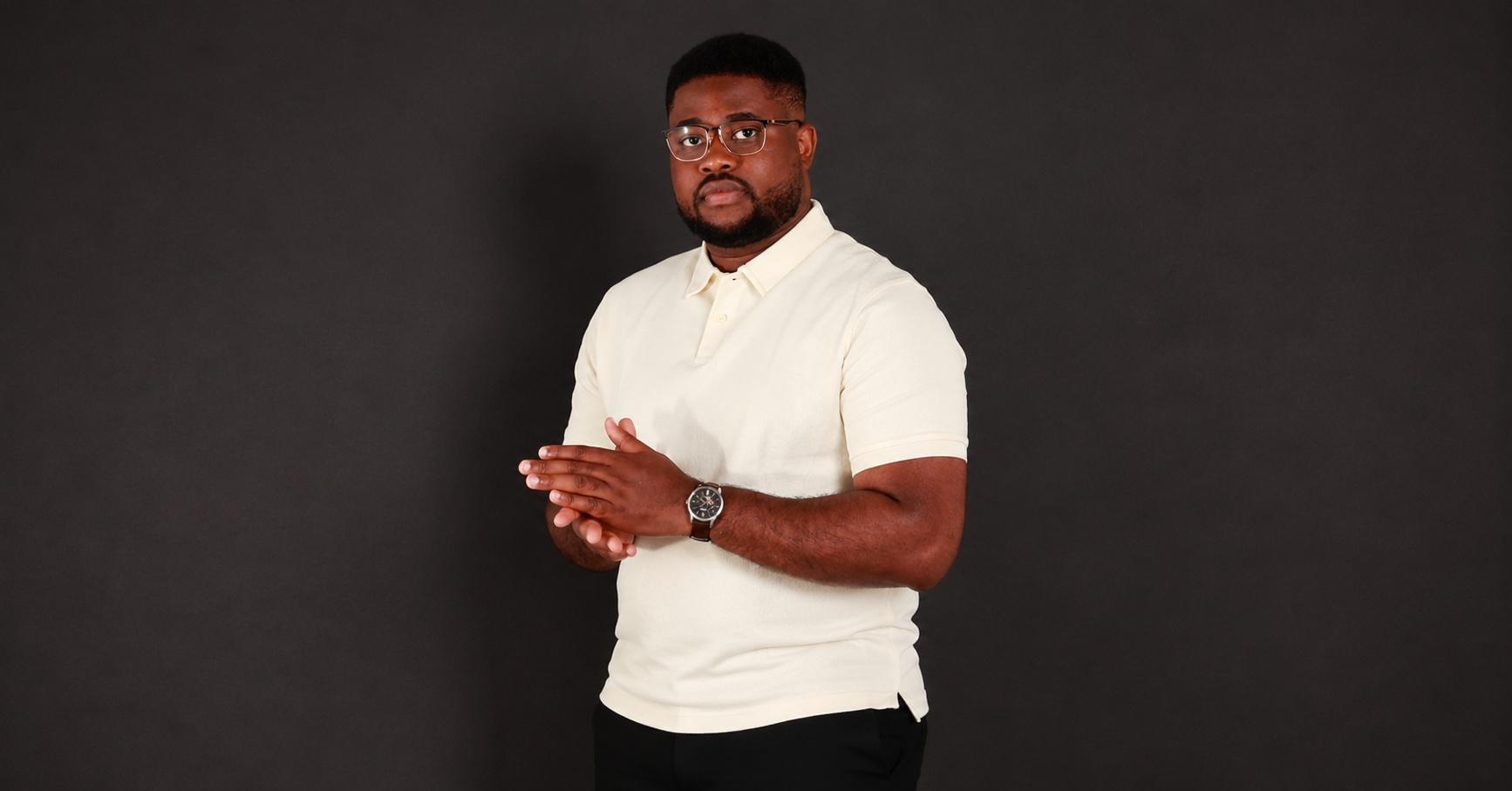
That global path has given him a wider view of the industry than the one often reflected in Silicon Valley conversations. He has seen how access, expectations, and opportunity shift by place. He has also learned that output can travel farther than credentials alone.
“Build things,” Nsaka says. “Do not wait for permission, a title, or the perfect idea. Your output is your credential.”
That message carries into his mentorship work. Nsaka has guided hundreds of engineers through Springboard, where he also serves on the Mentor Advisory Board. The role has placed him close to a generation of developers trying to understand what AI means for their careers.
He does not buy the easy panic that AI will make engineers irrelevant. He believes it will change the profession by raising the bar on judgment. Entry-level work may shift. Teams may be structured differently. AI-assisted development may absorb some tasks that once trained junior developers. Yet Nsaka sees that as a reason for engineers to build earlier, develop taste faster, and learn how to make decisions that tools cannot make for them.
“AI does not remove the need for engineers,” he says. “It removes some excuses. The engineers who thrive will be the ones who can judge what matters, not the ones who only know how to prompt.”
That emphasis on judgment also explains one of his most important lessons as a founder: knowing when to walk away. He shut down his first startup to focus on school. Later, he learned that building something does not obligate a founder to keep carrying it forever.
“People celebrate starting,” Nsaka says. “But ending well is also a skill. Sometimes the best decision is to stop investing in the thing you already built.”
Today, Nsaka continues to work at the frontier of AI and large-scale software systems, with a focus on the infrastructure that makes AI trustworthy enough for real business use. He also plans to expand his writing and mentorship around engineering careers in the AI era.
His path has never been only about code. It has been about craft, persistence, and the discipline to keep choosing harder problems. From Abuja to Edmonton, from Shopify to Y Combinator, Nsaka has built his career around a belief that the best engineers are not merely authors of software. They are editors of possibility.