
Piere Tamargo: Movement Artist Found His Power in Motion
The established movement artist turned a difficult transition into a creative life shaped by performance, discipline, and full expression

Published May 1 2026, 7:30 p.m. ET

Piere Tamargo did not come into dance through a polished studio path or a childhood built around formal arts training. Piere Tamargo came to it through need, instinct, and persistence. He moved from the Philippines to Australia at 10 with his single mother and sister, carrying a big personality, a deep love for performance, and the kind of emotional intensity that can make a new environment feel even harsher.
As a young queer Filipino immigrant adjusting to a different country and different customs, he learned early how quickly a person can start shrinking for safety. Dance became the place where that shrinking stopped.
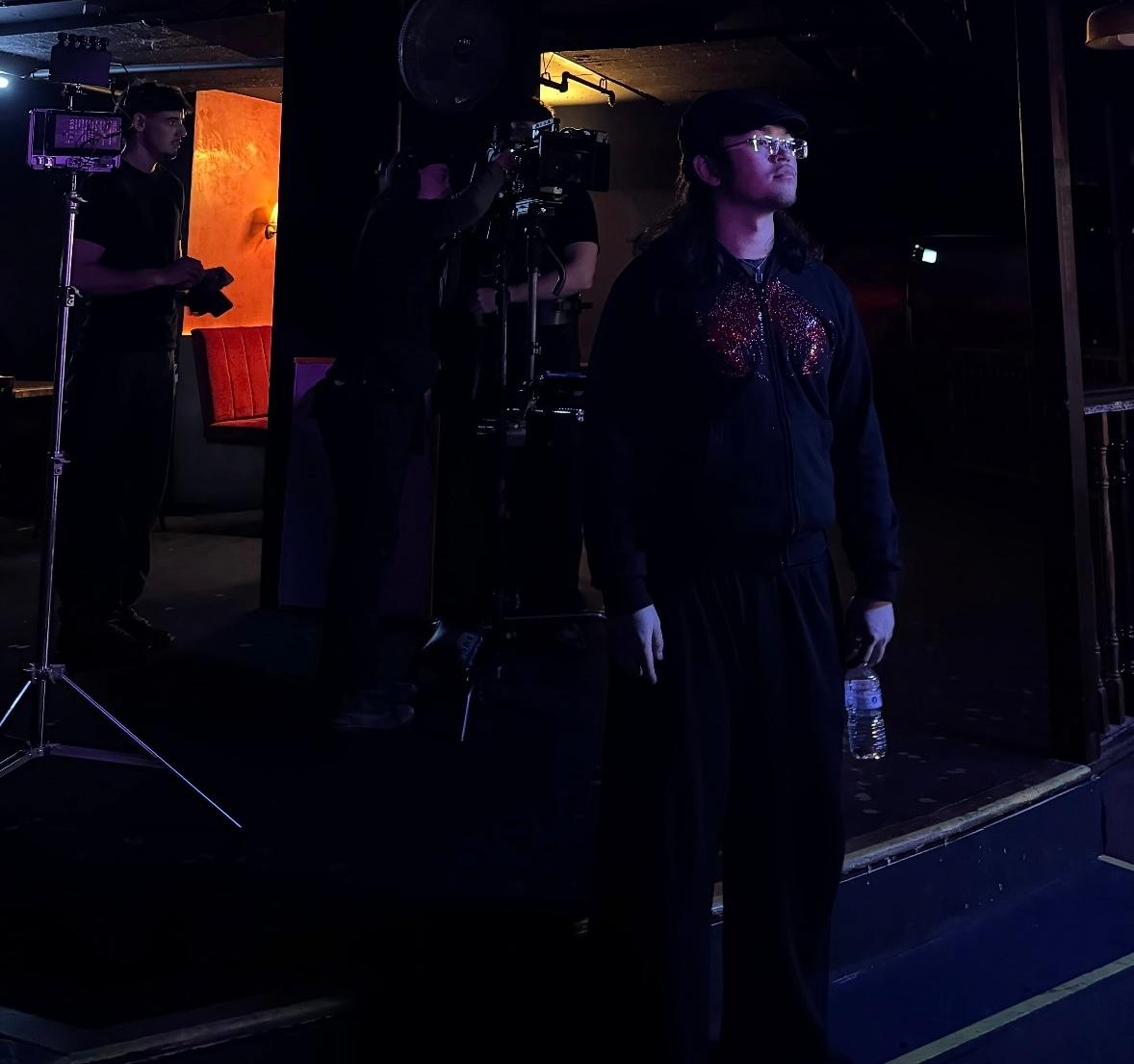
That shift did not happen inside a formal training program. It happened in fragments, through music, drawing, and whatever creative space he could claim for himself. His family had brought cultural expectations with them from the Philippines, and extracurricular arts were not something he was encouraged to pursue. Still, he kept finding his way back to expression.
“I was always drawn to performance,” Tamargo says. “Even when I did not have the structure for it, I kept finding my way toward it.”
Later, during the tail end of the YouTube era in dance, movement became more than a private outlet. It became focus. It became relief. It became language. He started with five-starred Just Dance choreography, then moved into learning pieces from K-pop videos and the choreographers behind them, taking in work from artists like Keone and Mari, Brian Puspos, Ian Eastwood, and 1 Million Dance Studio. He learned, however, he could, and built his foundation outside the systems that often determine who gets access and who does not.
“When I was dancing, everything else got quieter,” he says. “That was one of the first times I felt completely locked in.”
Then came the turning point. At a youth event, Tamargo stumbled across the crew scene in Blacktown. He was invited to a training, and that invitation changed the direction of his life. The environment was not polished or privileged. It was hungry. Young dancers his age who also could not afford classes were creating their own training ground, learning choreography, sharing ideas, and pulling from street and club styles through the Sydney battle scene. What they lacked in resources, they made up for with grit, repetition, and imagination.
That space gave Tamargo more than technique. It gave him a place to grow without apology. “Crew culture gave me room to express myself safely,” he says. “It gave me people, process, and a place to push.” Away from school and outside the limits that had shaped his earlier years, dance became both community and self-definition.
The results were real. Tamargo went on to win first place in two HHI divisions in one year and won first place in every national crew competition with Delinquents dance crew for a year, including HHI. He also represented Australia overseas several times with KCC and Delinquents, building a competition record that made clear he was not simply talented. He was tested. He was proven. He was established.
From there, his path widened. He trained under Diana Matos in MOTUS the Company and earned a scholarship to TakeFlight in Ireland. Those experiences expanded what he thought was possible, not just professionally but artistically. He began stepping into spaces that once would have felt closed to someone with his background. He danced for Alden Richards live in concert. He danced for Powerhouse Museum Parramatta. He appeared in music videos, dance films, and live performance work. He also found himself sharing space with artists he had long looked up to, including Isidro Rafael and Selene Haro, whom he will join in an upcoming theatrical dance show.
What makes Tamargo’s story especially compelling is that his evolution did not stop at performance. He became an educator, choreographer, director, and facilitator. He worked as a choreographer and facilitator at KCC for four of the seven years he was a member, helping train the next generation of movers after first leading by example as a featured dancer. He also facilitated at Brent Street, IMI Entertainment, Movement Nation, and Village Nation, among other spaces. In a field where many artists fight simply to secure their own opportunities, Tamargo has also made a point of creating them for others through music videos and live exhibitions.
His artistry also resists easy categorization. Tamargo says Sydney can sometimes box dancers in too tightly, training them to fit a narrow brief until too many performers start to look the same. His answer has been to build a broader creative vocabulary. He pulls from hip hop, house, contemporary, commercial, and other forms, blending them into a voice that feels personal rather than prepackaged. That approach carries into his original work, which often moves between dance on film, live exhibition, and movement-based storytelling shaped by his background in multiple art forms. “I never wanted to force myself into one mould,” he says. “I would rather build a language that actually sounds like me.”
That may be the clearest through line in his career. What once felt risky about who he was has become central to what makes his work resonate. Tamargo describes his art now as dramatic, loud, playful, unapologetic, raw, and ambitious, all qualities he used to run from while growing up. Now they are part of the point. They are part of the signature. “My work is a reflection of the person I stopped trying to hide,” he says.
That is why his story lands beyond dance alone. It is about craft, but it is also about permission. It is about what can happen when someone without the traditional advantages of formal training, clean industry pathways, or easy belonging keeps showing up anyway. Tamargo stands as a reminder that talent does not only come from the expected places, and that Western Sydney continues to produce artists with range, substance, and staying power.
He is now looking ahead to more stage and screen work, along with the long-term goal of choreographing and directing his own shows. That future fits. Piere Tamargo has already spent years building a creative life on his own terms. What comes next is not a beginning. It is a bigger stage for an artist who already knows exactly who he is.
For information on Piere Tamargo, visit his Instagram.