
"Possessed By A Demon": How Wellness Cult Led ‘Games of Thrones’ Fame Hannah Murray to a Psychotic Break
In a promotional video for the book, Murray described the experience as "a spiritual awakening that turned into a mental breakdown."

Updated June 25 2026, 7:12 a.m. ET

Game of Thrones actress Hannah Murray has revealed that her involvement in a “wellness cult” led to a psychotic break, involuntary hospitalization, and a diagnosis of bipolar disorder.
Murray, 36, is best known for playing Gilly on Game of Thrones and Cassie on the British series Skins.
In her new memoir, The Make-Believe: A Memoir of Magic and Madness, Murray shared how she was told by an “energy healer,” whom she refers to only as "Steve,” that a demon possessed her after her work in Kathryn Bigelow's 2017 crime drama Detroit.
In a promotional video for the book, Murray described the experience as "a spiritual awakening that turned into a mental breakdown."
Introduction to the Cult Organization
In previous interviews and in the memoir, Murray said she was 27 when she was drawn into the cult organization.
Murray claimed in her book that she had accessed her past trauma by portraying anorexic Cassie in Skins and Gilly in Game of Thrones, a young woman who had given birth to her father's child, but desired to delve further for a role in Detroit.
An acting coach "introduced me to the idea of opening yourself up as much as possible to let something 'come through you,'" she said, calling the practice as "almost shamanic."
"I realized, was what I wanted creatively—to connect with something outside myself," she wrote.
It was then she was introduced to the cult leader Steve and “his organization" and “discovered magic was real,” Murray said.
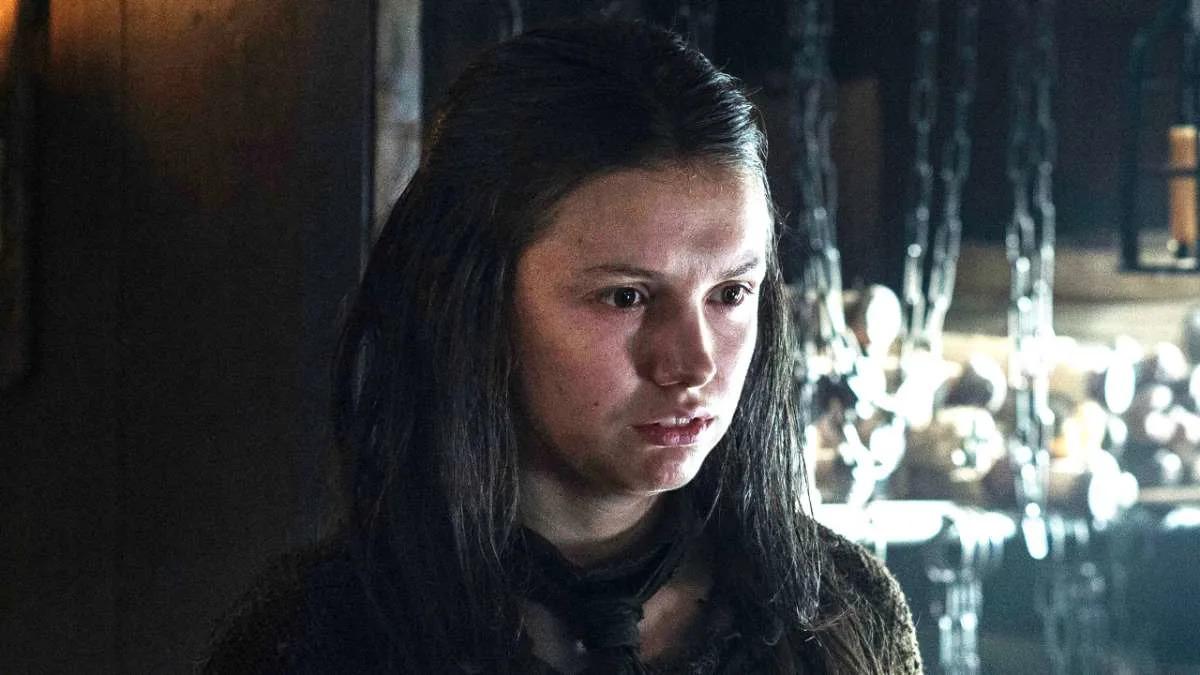
"He exuded power in a way I had never known anyone to exude it," Murray previously said of Steve. "Magical power… I knew I was in the presence of a magician,” she had told The Guardian.
The actress said she was not concerned about being hospitalized because Steve had told her she had been possessed by a demon while making Detroit and that he had performed an exorcism on her.
Once committed to the organization, Murray said she often reached out to Steve on WhatsApp, calling him “my King, my God, my great love.”
The breaking point came after she suffered a massive psychological breakdown in London, describing hiding in a toilet cubicle, hearing Steve’s voice in her head, and feeling pain like “giving birth through my skull.”
She was then rushed to a hospital and detained for 28 days under the Mental Health Act.
Murray Reached Out to the Leader While Hospitalized
Murray revealed that even while hospitalized, she continued to message Steve obsessively. "I probably sent about 20 messages for every one reply. I did not really care that the dialogue felt one-sided," she said. She also admitted to placing Steve on a "pedestal" throughout the period.
One evening during her hospitalization, Murray said she snapped and directed her frustration at Steve. "I was still very unwell and very confused. And one evening, I snapped. All day, anger had been simmering inside me. Anger at my situation, my hospitalization, my lack of understanding. By the evening, it was surging through me, and I knew exactly who I wanted to direct it at," she said.
Murray stated she sent Steve texts about how upset she was at her parents, the group and more. She asked him if there was "STILL 'SOMETHING BAD' INSIDE ME FROM DETROIT??!" and asked for clarification after her mother considered Steve to be "head of an evil cult."
After receiving two long messages from Steve in response, Murray said she apologized to him the following day. She described reading those messages in retrospect as making her feel "disgusted," noting their patronizing tone and their failure to acknowledge responsibility for the state she was in.
Hospitalization Could Not Break the Cult's Hold
During her involuntary stay, Murray was diagnosed with bipolar disorder.
Despite spending two weeks in psychiatric care, Murray said the hospitalization did little to shake her devotion to the organization. She said she left the facility no less committed to its beliefs.
“I was not well when I left the hospital. This is not the story of my recovery — or at least not a simple, straightforward one. I did not enter ill and leave well. I entered extremely psychotic and left somewhat less so,” Murray wrote.
"The reality was that I was still out of my mind. All my delusions were still intact; the hospitalization had done nothing to shake them. I had walked out of the ward and straight back into the life that had put me in there. I was still zealously devoted to the organization. And Steve was still everything to me," she said.