
Steven Jiang Is Teaching Kids to Question AI Before They Touch the Screen

Published Aug. 17 2026, 2:37 p.m. ET

Steven Jiang
Through Overture, the co-founder and COO is building paper-and-pencil AI lessons that help young students spot mistakes, think critically, and create with confidence.
The question Steven Jiang keeps hearing is whether young children should learn about artificial intelligence at all. He thinks that question arrives too late. Children are already meeting AI in search results, images, videos, homework tools, games, and conversations around them. The more useful question, he says, is whether adults will help them understand what they are seeing.
“There's already an AI literacy gap,” Steven shares. “Kids are growing up around AI but not getting a proper introduction to understanding it. Bridging that gap is the important work, and it has to happen now.”
That idea is at the center of Overture, the education company Steven co-founded and now runs as COO. Overture brings AI enrichment programs into schools and community-based organizations, with hands-on classes taught by trained, certified Overture instructors. The company currently runs programs in more than 50 schools across Chicago and Boston, and it is on track to serve more than 120 programs across multiple states.
The model is practical, but the teaching philosophy is unusual. For young students, Overture’s AI classes are 100% paper-and-pencil. No dashboards. No prompt boxes. No rush to put a child in front of a tool that may change by next year.
Steven knows that can sound strange at first. An AI class without screens feels almost backwards until he explains what the class is actually trying to teach.
"AI tools move so fast that trying to keep up is a losing game. So we don't chase the latest product, we teach the fundamentals: critical thinking, creative problem-solving, actually using their own brains. Those don't go out of date," he says.
That distinction matters because the national conversation around AI education is still unsettled. Some educators argue that children need prompt-writing skills. Others are more focused on conceptual understanding, ethics, creativity, or the ability to spot errors. Steven does not pretend that one company has solved the debate. He is more careful than that. What he can say is that Overture is testing a structured approach in real classrooms every week, and the early lessons are clear.
A child can use an AI tool without understanding AI.That gap is what Overture is trying to close.
"After teaching all the first classes myself, I see the same pattern: kids can make something genuinely cool with AI but can't explain the why or the how behind it. That's the gap we're closing. We want students to understand AI, not let it do the thinking for them," he says.
One of Overture’s most popular activities is called “Real or AI.” Students look at images and try to find signs that something was generated by artificial intelligence. Maybe the hands look wrong. Maybe the lighting does not make sense. Maybe a detail in the background seems almost right, but not quite. The activity feels like a game, which is part of why it works. Students are not being lectured about machine limitations. They are discovering them.
“When kids find the mistake themselves, the lesson lands differently,” Steven says. “They realize technology can look confident and still be wrong.”
That is a powerful lesson for elementary-age students because AI can produce work that feels polished before it is accurate. Overture’s paper-and-pencil model slows the experience down enough for children to notice. They draw, compare, explain, debate, and create. They are not only learning what AI can make. They are learning how to inspect it.
The approach also reflects a larger concern in education. Elementary schools are behind older grade levels in AI exposure. Recent RAND research cited by Steven shows that only 42% of elementary teachers have introduced AI, compared with more than 60% in middle and high school. The divide becomes sharper when training is considered: 43% of low-poverty districts have trained teachers on AI, compared with only 6% of high-poverty districts.
For Steven, that equity gap is not a side issue. It is the issue.
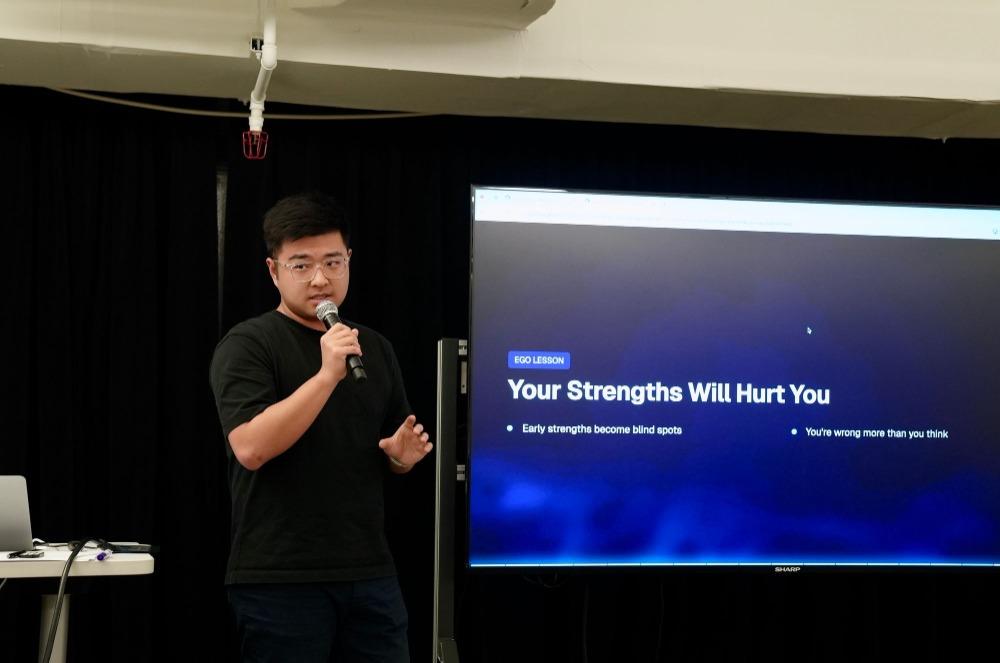
Teaching Kids to Question AI
“The students least likely to get access are often the ones who most need guided access,” he says. “If AI literacy becomes something only well-resourced schools can offer early, we are going to repeat the same pattern we have seen with other technologies.”
Overture’s work is built around a different premise. Schools and youth centers should not have to become AI curriculum experts before giving students meaningful exposure. Overture supplies the curriculum, trains and certifies instructors, schedules programs, and delivers the classes. That operating model matters, but in this story, the deeper point is what those programs are teaching once instructors are in the room.
Steven wants children to create with AI, but he does not want them to become passive consumers of it. He wants them to understand that technology reflects choices. It can make mistakes. It can miss context. It can sound certain while being incomplete. A child who learns that early is better prepared for whatever tools come next.“
Creation is important because kids learn by making,” he says. “But questioning is just as important. We want them to ask, ‘How do I know this is right?’”
Steven’s own background helps explain why he thinks this way. He studied in Northwestern University’s dual degree program in music and economics, and Overture began in 2022 as a video game to help kids compose music. He and co-founder Aspen Buckingham met while studying music, and that creative foundation never fully left the company. Even as Overture pivoted toward AI education, the belief that children learn through making stayed at the center.
The company has since gone through Techstars, and Steven has been named to Forbes 30 Under 30 and Inno 25 Under 25. He has also spoken at Tulane University and Northwestern University. Those credentials give him visibility, but he is more interested in the proof that comes from classrooms: thousands of students served, dozens of sites, and lessons refined through real programs rather than theory alone.
“I do not think this field needs more people claiming they have the final answer,” Steven says. “It needs people doing the work carefully and learning from what actually happens with kids.”
That humility is important because AI education for young children is still being shaped. Steven is not arguing that every child should become a technologist. He is arguing that every child deserves the chance to understand a technology that will shape the world around them.
The pencil matters because it gives children space to think before they click. The paper matters because it makes learning visible. The game matters because a child who spots an AI mistake once may begin looking more carefully everywhere.
Steven Jiang’s goal is not to make AI feel magical. It is to make it understandable enough for children to question it, use it, and create with it on stronger terms.“
AI literacy should not belong only to the kids whose schools can figure it out first,” he says. “Every child deserves to know how to think in a world where machines can make things that look real.”