
The $600M Comeback: How Clive Davis Rebuilt His Fortune After a Career-Threatening Scandal
Davis left an indelible mark on the industry, though his legendary career was nearly derailed decades ago.

Updated June 24 2026, 7:53 a.m. ET

Clive Davis, widely regarded as a powerhouse in American music history, died on Monday at his home in Manhattan. He was 94.
His family said he died of age-related illness, surrounded by family and loved ones. He had recently been hospitalized with respiratory problems.
Long before his death, Davis left an indelible mark on the industry, though his legendary career was nearly derailed decades ago.
Davis entered the music industry in 1960, joining Columbia Records as assistant counsel. By 1967, he had been appointed president of Columbia Records, where he steered the label into the rock era, signing or developing Janis Joplin, Carlos Santana, Bruce Springsteen, Billy Joel, Aerosmith, Chicago, and Earth, Wind and Fire.
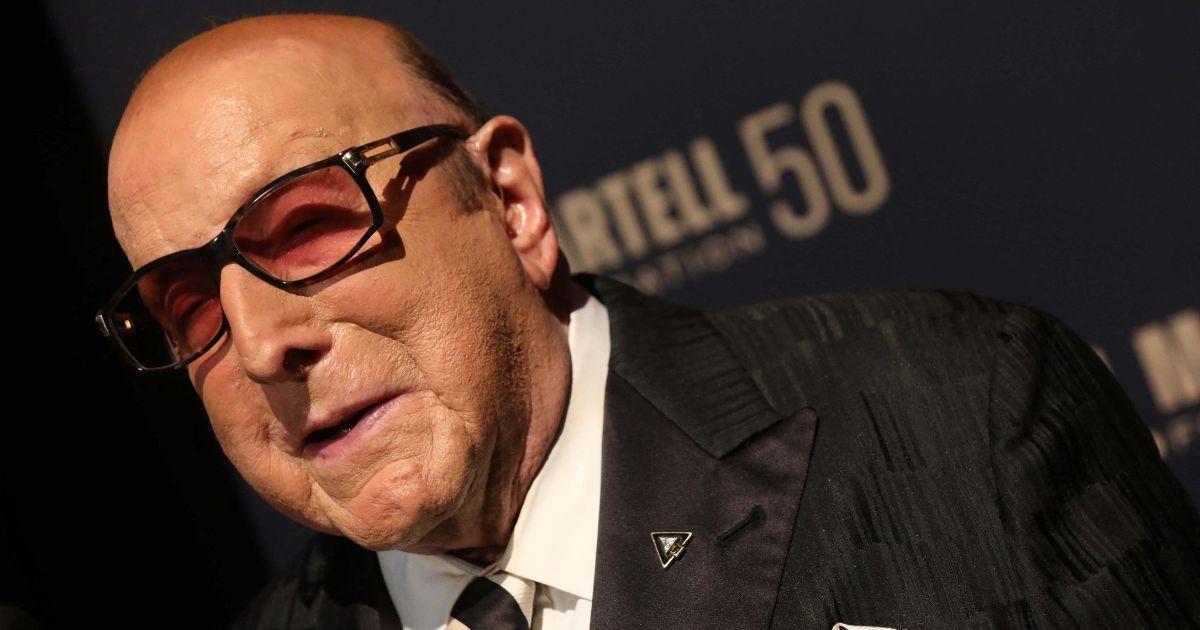
Under his sharp artistic and business leadership, Columbia experienced a historic boom period where company profits soared to unprecedented heights. However, he was soon faced with a professional impasse.
A Look Back at Clive Davis' Legendary Career and Massive Fortune
Davis’ tenure at Columbia ended abruptly in May 1973 when he was fired over allegations that he misused approximately $94,000 in corporate funds, amounting to roughly $700,000 in today's dollars, to cover personal expenses such as expenses tied to his son's bar mitzvah and apartment renovations, according to The New York Times.
At the time of his termination, he had already cemented his reputation as a mastermind record producer.
Davis denied knowingly misusing funds, arguing that the label was simply using him as a corporate scapegoat. The legal matter was resolved in 1975 when he pleaded guilty to a reduced charge of tax evasion for failing to declare $8,800 in vacation expenses, paying a $10,000 fine.
Davis rebounded quickly. He took the reins of Bell Records in 1974 and rebranded it as Arista Records, according to Los Angeles Times. Under his leadership, Arista became one of the most commercially successful labels in the industry. Its roster included Barry Manilow, Dionne Warwick, the Grateful Dead, Rod Stewart, Aretha Franklin and Santana.
Davis's most consequential signing at Arista came when he discovered Whitney Houston performing at a New York nightclub. He signed her at age 19.
Davis also backed the formation of LaFace Records under producers L.A. Reid and Kenneth "Babyface" Edmonds, an Arista-distributed label that launched the careers of TLC, Toni Braxton, Outkast, Usher and Pink.
When parent company BMG made the controversial decision to push Clive Davis out of Arista Records in 2000, they alienated the industry's biggest artists, who were loyal to Davis.
To smooth over the transition, BMG offered Davis an unprecedented corporate exit package to back his next venture, J Records, and poured $150 million in capitalization into the startup label. Most remarkably, Davis negotiated a 50% personal equity stake in the new company.
The label's first major signing was Alicia Keys, whose 2001 debut album Songs in A Minor sold more than 10 million copies worldwide and won five Grammy Awards. BMG subsequently acquired Davis's stake in J Records.
While the exact financial details of the final transaction were kept strictly confidential, music industry insiders estimated the enterprise value of J Records to be well over $300 million at the time of the acquisition. Consequently, Davis's 50% equity stake likely rewarded him a whopping $150 million, according to Celebrity Networth.
Davis owned multiple units inside Ritz Tower at 465 Park Avenue. He listed a single standalone unit there in 2017 for $7.8 million, which carried an astonishing monthly HOA fee of $11,700.
He also maintained an expansive estate in Westchester County that boasted an 8,000-square-foot main mansion, a 6,000-square-foot guest house, professional tennis facilities, and a custom 30-seat private theatre, according to the report.
Davis’ private art holdings featured masterpieces from blue-chip artists, including Pablo Picasso, Andy Warhol, Damien Hirst, Dale Chihuly, and Adolph Gottlieb. Depending on market appraisals, this collection alone was estimated to be worth between $100 million and $200 million.
With a massive $600 million net worth at the time of his death, Clive Davis left his legacy as one of the wealthiest non-performing executives in the history of the entertainment industry.