
The Editor’s Invisible Hand: Zeqian Wang on Time, Absence, and the Shape of Feeling
Zeqian has two new shorts, the documentary, 'Burning My Poems,' and the horror film, 'Pigmentosa.'

Published June 10 2026, 2:00 p.m. ET

In the editing room, Zeqian Wang has learned to listen for what isn't there. A pause held a beat too long. A reaction withheld. The space between a character's gesture and its consequence. "Cutting is often thought of as removal," Wang says. "But I think of it as creating room—the room for the audience to feel something on their own."
Wang, a Los Angeles–based editor working across independent film, documentary, and high-volume short-form drama, has built a reputation on restraint. Her earlier work, including the short Snow Whisper, the documentary May the River be Clear and Life be Long, and the vertical drama My Husband's Nephew Is My Guilty Pleasure, has screened at Academy Award– and BAFTA-qualifying festivals such as Cinequest and Flickers' Rhode Island International, and earned a Best Romance Award at the Vertical Shorts Festival. In the commercial space, her editing on vertical drama series such as Blood and Bones of the Disowned Daughter, which has accumulated over 32.2 million views, has demonstrated how rhythmic precision drives audience retention; her restructuring of a key confrontation scene through shot compression and reaction-shot repetition became one of the series' most memorable moments.
But two new 2026 shorts, the documentary Burning My Poems and the horror film Pigmentosa, reveal the full arc of her editorial thinking. One moves through grief by holding still. The other generates dread by slowly tilting the world off its axis. Together, they make a case for editing as the central architecture of emotional experience.
Burning My Poems: Editing the Unresolved
Burning My Poems is a documentary short for which Wang served as director, producer, and editor. Its subject is the father of a passenger from Malaysia Airlines Flight MH370. Over ten years, the man has built a life around waiting, not for answers, but for a form of absence that has become permanent.
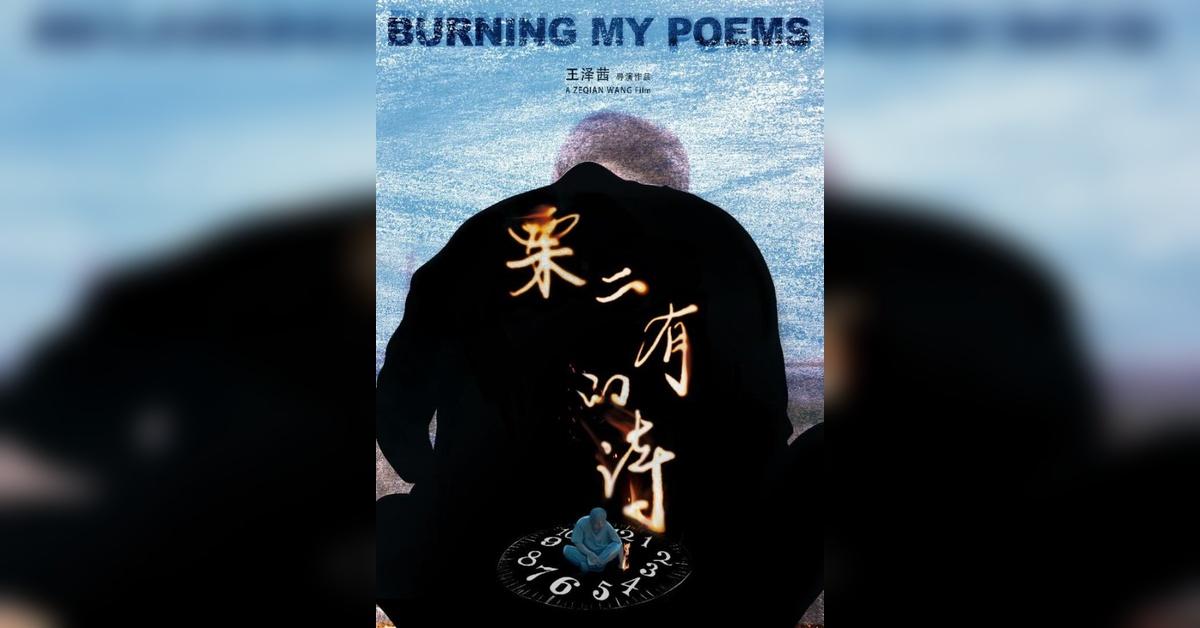
Wang faced an unusual editorial problem: how do you shape a film whose central event never appears on screen? "Most documentaries structure themselves around a revelation or a resolution," she explains. "But here, there is no resolution. There is only continuation."
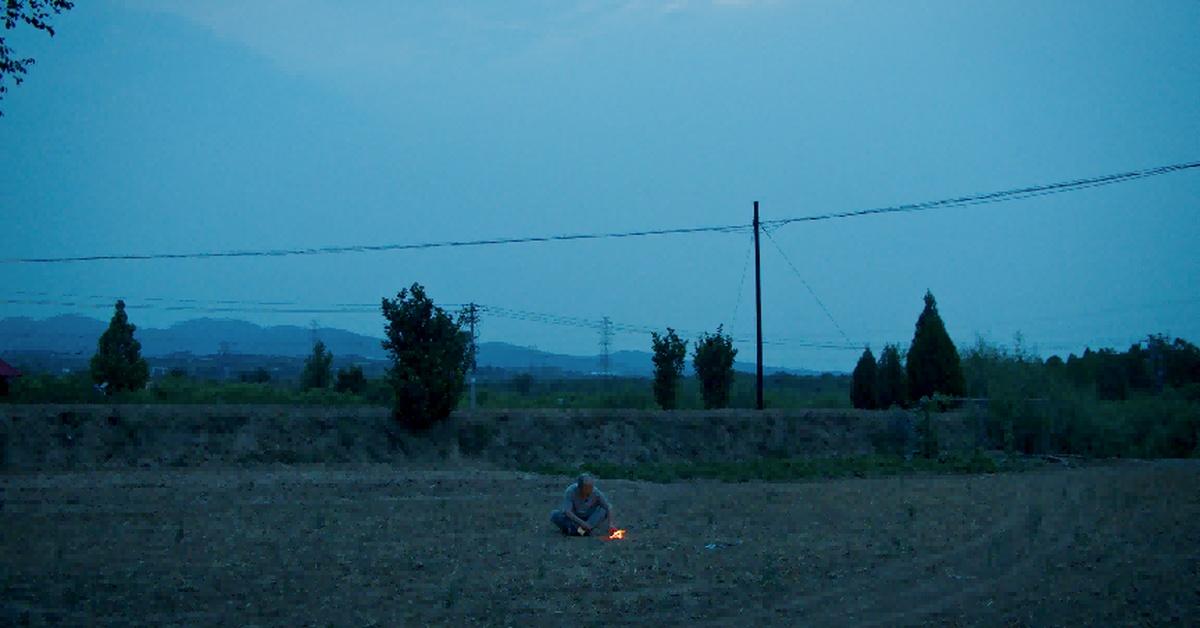
Her solution was to reject conventional documentary pacing. The film contains no archival news reports, no talking-head experts, no timeline of the search effort. Instead, Wang builds scenes through daily rituals: taking medication, tidying up, reading, sitting by a window. Shots are held longer than standard editing would allow. Silence is not an absence of sound but a presence of its own.
"A cut is a decision about attention," Wang says. "When I hold on an image—a hand resting on a table, a half‑closed curtain—I am telling the audience: stay here. This matters."
In one sequence, the father still picks up the phone to call his son's number, a ritual he has never stopped. Wang does not cut away. She lets the silence after the unanswered call settle into the frame, a quiet acknowledgment of a grief that needs no explanation. The film was selected for the Carmarthen Bay Film Festival 2026, a BAFTA‑qualifying festival. It marks a rare approach to editorial storytelling: one where the cut is used not to advance plot, but to honor the texture of unresolved time.
Pigmentosa: The Rhythm of Dread
Where Burning My Poems asks for patience, Pigmentosa demands tension. The psychological and body horror short follows a woman whose perceptual reality begins to fragment. The film has won Best Horror at the New York International Film Awards and Los Angeles Film Awards, as well as a Winner recognition from the Top Shorts Film Festival.
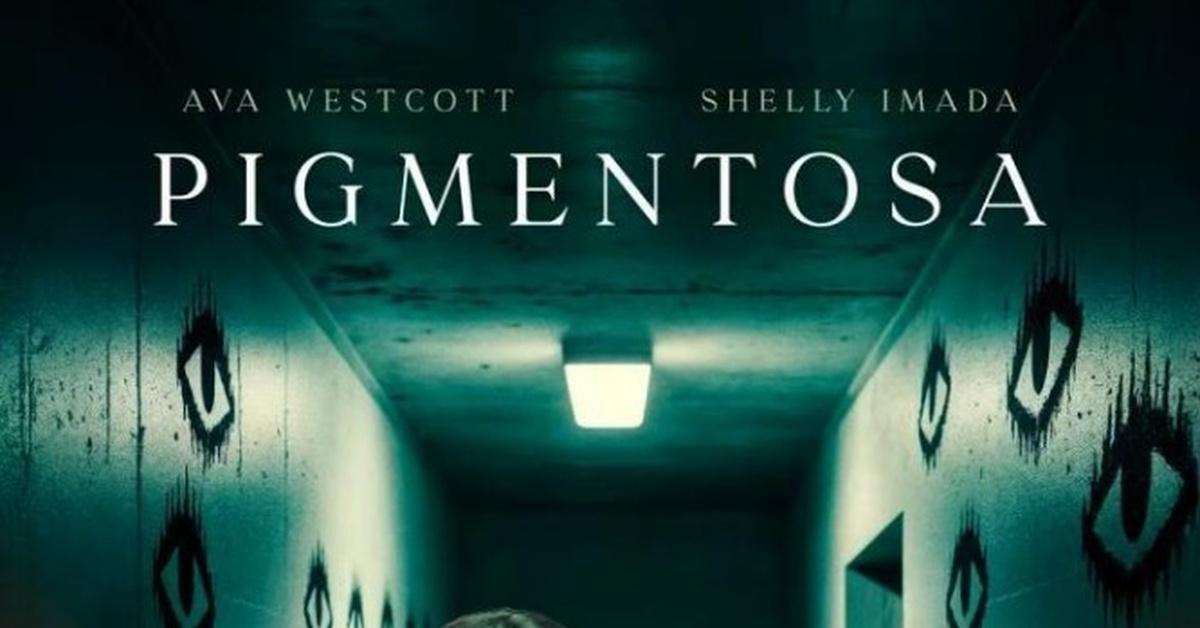
Wang's editorial challenge was to translate internal disintegration into external experience. "In the initial cut, the sequence was clean and logical," she recalls. "But horror shouldn't feel clean. It should feel like the ground is shifting under your feet."
She introduced three layers of editorial distortion. First, slow zoom‑ins that never reach their destination, creating a constant sense of approach without arrival. Second, a fractional rotation of the image, so subtle that viewers might not consciously notice it, but enough to induce unease. Third, layered sound design where ambient noise drifts slightly out of sync with the visuals.
"None of these are effects in the VFX sense," Wang emphasizes. "They are editorial decisions. They happen in the cut. The timing of a zoom, the moment the image tilts, how long the sync drifts before it corrects—that's all pacing."
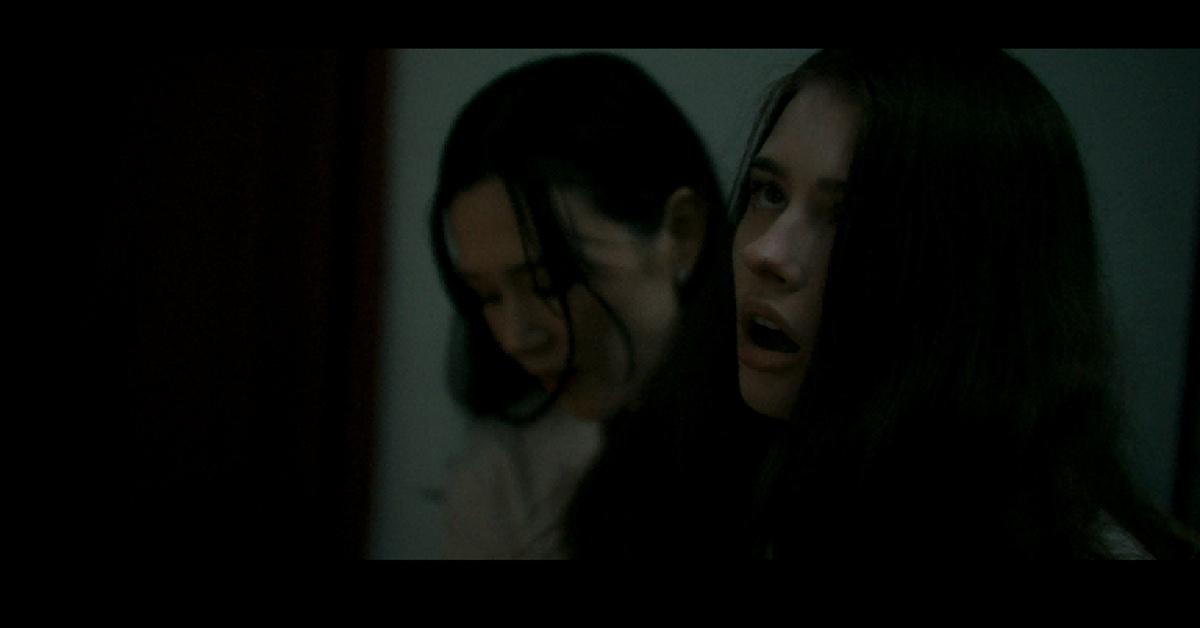
A key hallway sequence became a case study in suspense editing. Wang intercuts reaction shots, POV shots, and delayed reveals. The audience sees what the protagonist sees—but not everything. The source of danger remains just outside the frame, hinted at through sound and peripheral motion. The full reveal comes only in the final moment.
"Anticipation is more powerful than surprise," Wang says. "Surprise is a single beat. Anticipation is sustained pressure. Editing is about managing how long that pressure builds before you release it."The film was praised for its rhythmic control and psychological precision, demonstrating Wang's ability to apply restraint even within the heightened vocabulary of horror.
From Documentary to Genre, Silence to Scream
Wang sees her two new works as less opposed than they might appear. "Both are about what you don't see," she says. "In Burning My Poems, the absence is a person who will never return. In Pigmentosa, the absence is a stable reality. The editorial question is the same: how do you shape time so that emotion accumulates in the spaces between cuts?"
Her experience in vertical short‑form drama has sharpened her instinct for immediacy. But independent projects allow her to explore duration and silence. "In commercial work, every second is a fight for retention," she notes. "In documentary or horror, every second is an argument about feeling. The speed is different. The logic is not."
The Future of the Invisible Craft
As the line between cinema and short‑form digital content continues to blur, Wang sees editing as an increasingly essential force in storytelling. "The tools are becoming easier to access," she says. "But the decisions—when to cut, when to hold, when to remove—those remain the core of the craft."
Looking ahead, Wang plans to continue bridging documentary realism, genre precision, and commercial pace. "I don't see them as separate tracks," she says. "Every project teaches you something about timing. Every cut teaches you something about restraint."
She returns to a central belief that has guided her work since before she formally entered film: that editing is not about making things invisible, but about making feeling visible. "People often say good editing goes unnoticed," Wang reflects. "I disagree. Good editing is felt. You might not name it, but you feel when time is being shaped. You feel when a pause lands. You feel when a cut arrives exactly when it should. That feeling—that's the work."
For Zeqian Wang, the cut is never just a transition. It is a decision about how to live inside time and what to leave behind.