
The Robotics Founder Who Turned a Hotel Chore Into a Real-World AI Breakthrough
As industries increasingly explore automation to address labor shortages and operational efficiency, systems like the ones developed at Peanut Robotics offer a glimpse of what the next generation of service robotics may look like.

Published April 13 2026, 1:57 p.m. ET

When people imagine robotics, they often picture futuristic machines inside research labs or flashy demonstrations designed for viral videos.
But for robotics engineer Ashis Ghosh, the real challenge was never building a robot that worked once. The challenge was building one that could work every day in the real world, where environments constantly change and humans rarely behave the way algorithms expect.
That philosophy shaped the work Ghosh led as co-founder and CTO of Peanut Robotics, a company he helped launch in 2018, during a time when robotics hardware was still expensive and difficult to deploy commercially.
What followed was something the robotics industry rarely sees: a system that moved beyond demonstrations and into real operational environments.
From Lab Idea to Real Hotels
Peanut Robotics set out to solve a very specific challenge inside the hospitality industry.
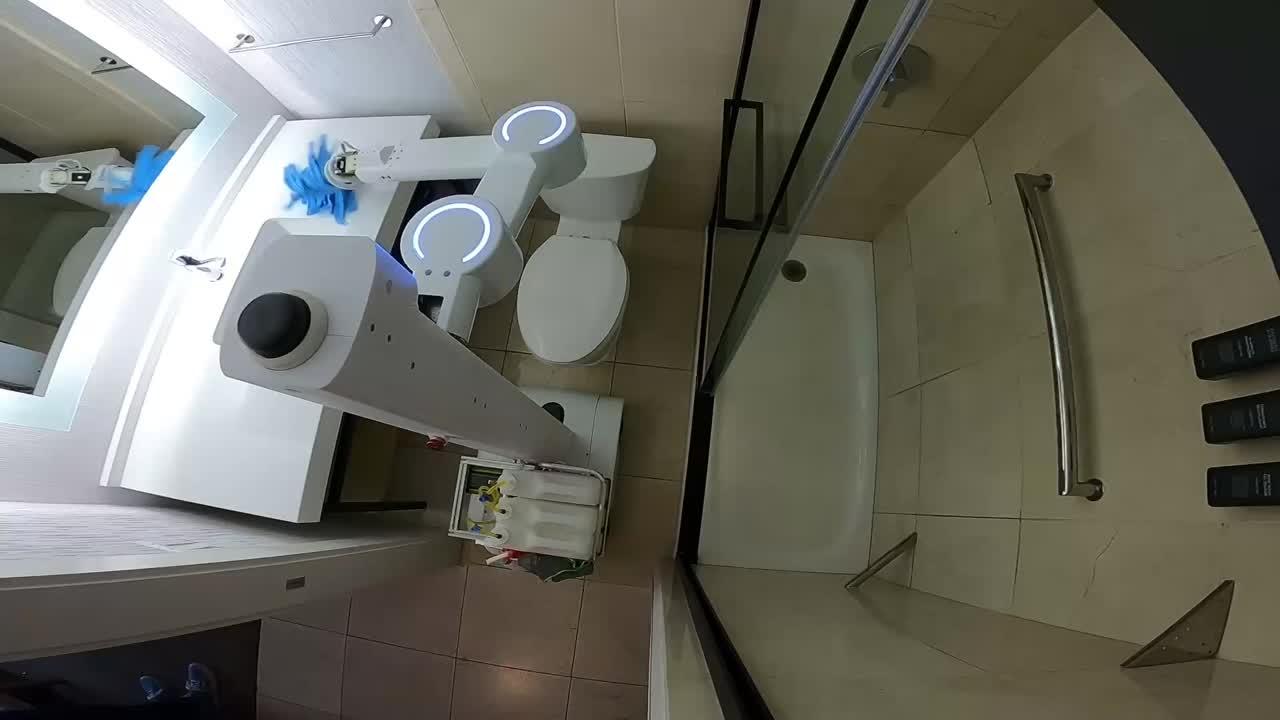
Hotel bathrooms are among the most time-consuming spaces for housekeeping staff to clean. Automating that process requires far more than simple navigation. A robot needs to perceive objects accurately, maneuver in tight spaces, and manipulate tools while interacting safely with environments designed for humans.
The team developed a robotic system combining mobility with manipulation, creating one of the earliest commercially deployed viable mobile manipulators capable of autonomously cleaning hotel bathrooms.
Unlike many robotics projects that remain confined to prototypes, Peanut Robotics moved quickly into real deployment. The system operated inside active hospitality environments, including major hotel brands such as Sheraton and Hilton.
Over time, the robots accumulated more than 13,000 hours of commercial cleaning operations, demonstrating that mobile manipulation could function as a reliable service rather than a one-time demonstration.
Engineering for Reality, Not Demonstrations
Building robots that work in real environments requires a very different mindset than building laboratory prototypes.
In hotels, lighting conditions shift throughout the day. Objects move unpredictably. Guests and staff walk through workspaces. Surfaces vary in shape, texture, and cleanliness.
All of those variables create challenges that robotics systems must handle autonomously.
Rather than focusing purely on performance in controlled settings, Ghosh’s work centered on building systems capable of adapting to these changes in real time.
The robots combined perception algorithms, navigation planning, and robotic manipulation to interact with everyday environments while maintaining safe and repeatable operation.
Just as importantly, the system was designed with economic constraints in mind.
Peanut Robotics engineered a platform with a bill of materials around $10,000, making it dramatically more affordable than many robotic platforms of the time. That decision allowed the company to test, deploy, and refine its systems in real-world environments rather than limiting development to research demonstrations.
Industry Attention and Global Interest
The work quickly drew attention across the robotics and hospitality sectors.
In addition to active deployments across the United States and international customers, the technology generated exploratory conversations with major global organizations.
These included discussions with companies such as Singapore’s Changi Airport and a large entertainment company operating under a non-disclosure agreement.
While not all conversations resulted in deployments, the interest highlighted the growing demand for automation in industries facing labor shortages and operational challenges.
Peanut Robotics represented an early example of mobile manipulation moving beyond theory and into commercial service.
A Turning Point for Real-World Robotics
The robotics field has long promised machines capable of performing useful work in human environments. Delivering on that promise has proven far more difficult than expected.
Many systems demonstrate impressive capabilities in controlled settings but struggle once deployed in real buildings filled with unpredictable activity.
Ghosh’s work at Peanut Robotics focused on closing that gap between demonstration and reality.
By combining autonomy software, robotic manipulation, and cost-conscious hardware design, the company created systems capable of performing practical work while generating real operational data.
That approach helped push robotics closer to what many engineers have been working toward for decades: machines that do not just impress in demonstrations but deliver reliable value in everyday environments.
As industries increasingly explore automation to address labor shortages and operational efficiency, systems like the ones developed at Peanut Robotics offer a glimpse of what the next generation of service robotics may look like.
And for Ashis Ghosh, the real milestone was never a viral demo.
It was the quiet moment when the robots kept working.