
Urja Dwivedi Reveals The Rule for Staying Creative in Advertising
The NYC art director and designer has learned that a sustainable creative life comes from loving art beyond just the job.

Published May 11 2026, 9:08 a.m. ET

Urja Dwivedi believes advertising should be just one of an art director’s creative loves... That belief sits at the center of how she has built her life and career, and it may be the reason she has been able to keep making strong work without losing inspiration. Her mantra is simple: make art your life and advertising just one way of expressing it. It is not a rejection of ambition. It is a way of protecting it.
That distinction matters in an industry that can demand endless innovation . Dwivedi has led standout work for Garnier, reimagining CRM through “Gretchen,” a persona that made branded texts feel personal and grew subscribers from 0 to 81K in a year. She also interviewed Guy Fieri on the street for Waterloo Sparkling Water and created summer-driven content for Android’s Tiramisu features. She likes the breadth of advertising and the challenge built into it. For her, the work can feel like solving a puzzle or making a collage. You have the brand’s tone, the cultural moment, the client’s message, the visual language, and the emotional effect the piece needs to create. When it clicks, she genuinely enjoys it.
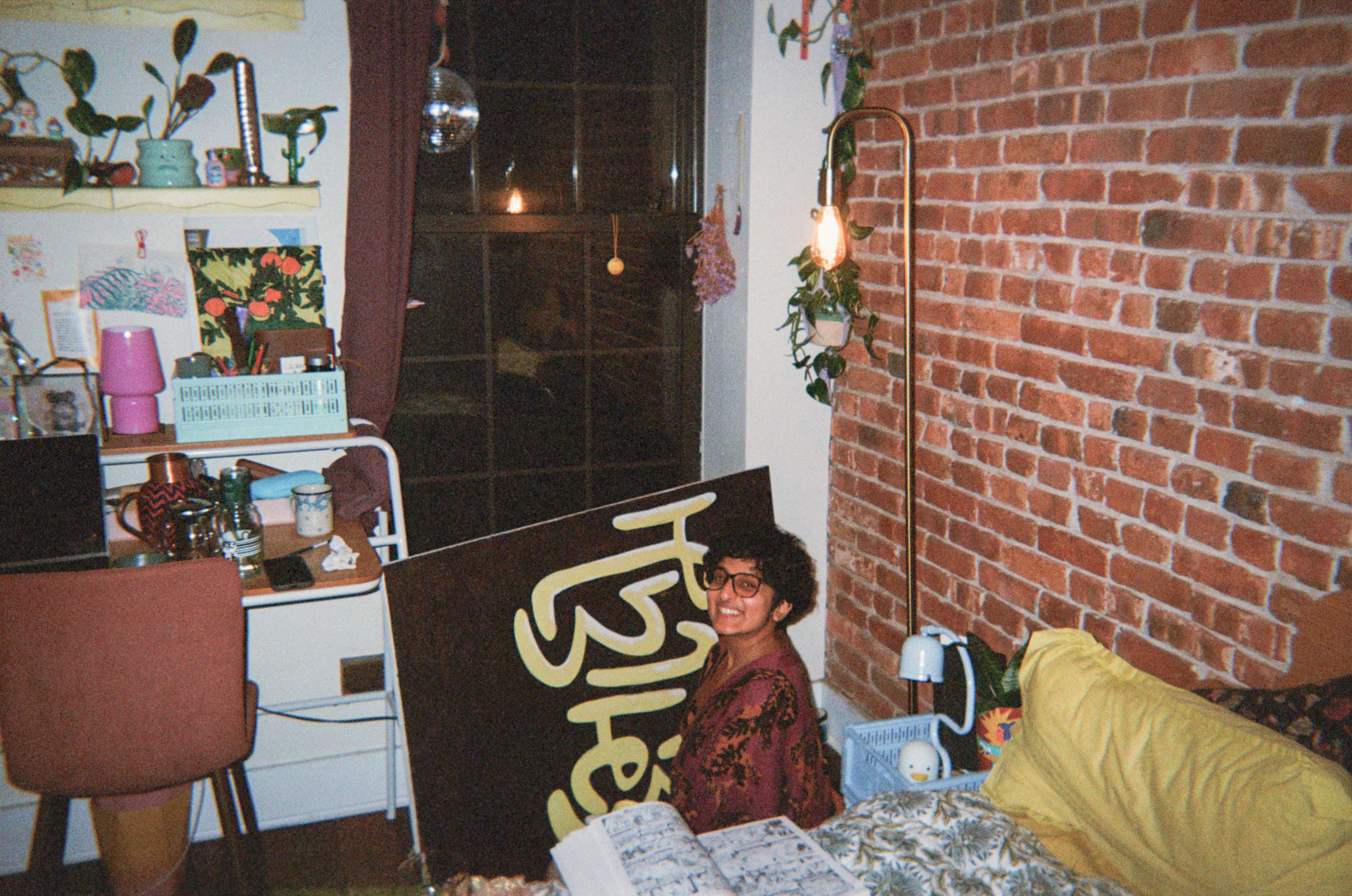
“I love that advertising asks you to think about many things at once,” she says. “You are shaping tone, image, feeling, message, and timing all at the same time. It can be very exciting when all those pieces finally lock together.”
But she is just as clear about the other side of it. Advertising can drain the very creative energy it depends on. Fast deadlines wear people down. Extra work hours build up. Small teams carry large demands. Even for someone who loves the work, that pressure accumulates.
“These circumstances can easily add up to a burnout,” she says. “We have to think about how to sustain our creativity while meeting the high demands.”
That is where the rest of her life comes in.
To protect her creativity, Dwivedi keeps making things that do not belong to a client. She works on collages, crafts, zines, and stickers. She describes collage in particular as a place where she can loosen up and document her life without the pressure of the brief.
“Collage lets me breathe differently,” she says. “It is one of the few places where I do not have to solve for anyone else. I can just notice what I am feeling, what I am seeing, and what wants to come together.”
That practice seems connected to a larger truth she has learned over time. Sustainable creativity is not built only through output at work. It is built through the other parts of life that make creative work possible in the first place. Dwivedi talks openly about needing to find inspiration from sources as diverse as hiking with friends or getting coffee with other artist.
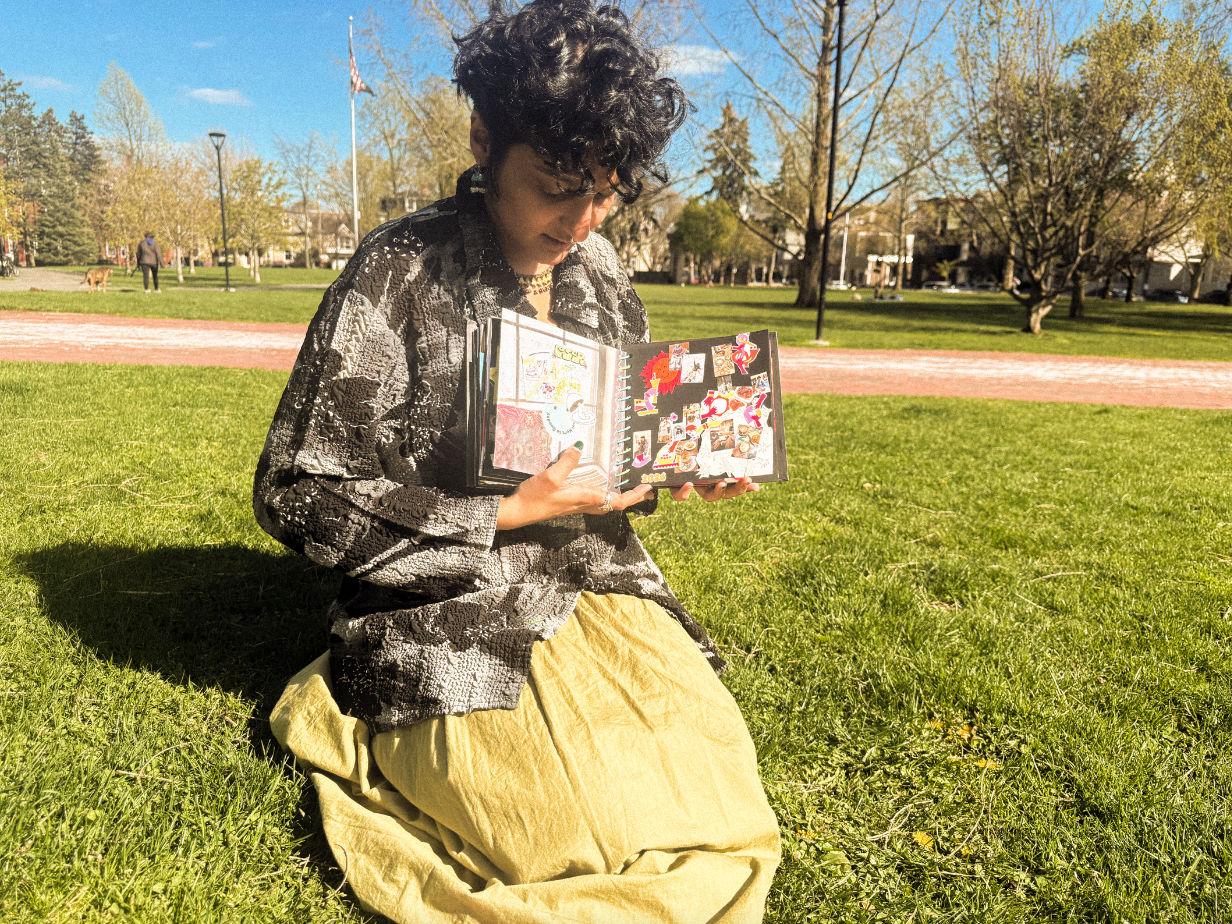
That clarity was hard won. Dwivedi comes from Vadodara, India, and says she fought to be a creative. Once she reached art school, she felt she had finally found her space. She started freelancing while still in school and helped build small businesses in her city. Then came the moment that shifted everything. Someone at Ogilvy saw her portfolio, thought she would be a good fit for advertising, and offered her an internship. This opened up the world of advertising and she decided to get an MFA. At Savannah College of Art and Design, she collected awards and gained agency experience through SCADPro, the school’s in-house agency. “I did not grow up with a direct path into this industry,” she says. “Every step felt like I had to claim a little more space for myself, then learn what to do with it.”
Her journey is not only professional. It is also personal in a way that informs the work. While at SCAD, Dwivedi came out as queer. She says her recent years have involved trying to build a community that celebrates intersectionality. In New York, she led Type Thursday monthly meetups to foster a design network that eventually became a group of close friends. Outside her full-time role, her passion projects are also part of that same effort to make space for the community she wants to live inside.
That desire for community connects directly to why storytelling matters so much to her. She says stories gave her hope. As a queer child in India, the future often felt uncertain. The stories she read and saw helped her imagine a life she was allowed to want. That experience shaped the way she sees advertising now.
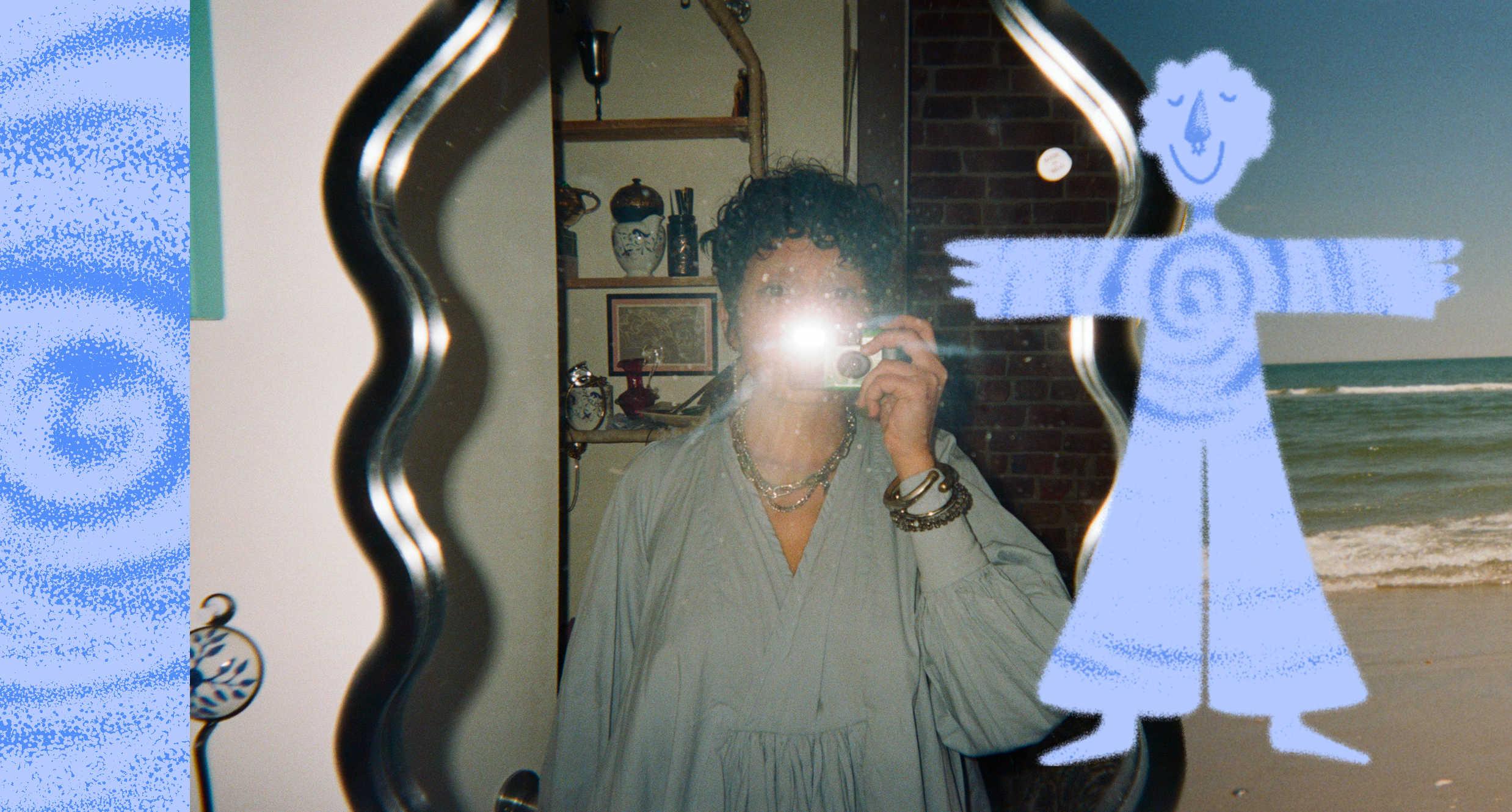
“If it was not for stories, I do not think I would have known what was possible for me,” she says. “That is why I care about making things that feel human. Even a small emotional shift in a piece of work can matter more than people realize.”
Looking ahead, she wants to work with brands she feels more personally connected to, names like Book of the Month, Pinterest, and Papier. She imagines making whimsical, magical little ads for dreamers and story collectors. That direction makes sense for someone who has already decided that the most important creative work is not only what you make for a living, but what keeps your inner life intact while you make it.
Urja Dwivedi has figured out something many people in creative industries learn too late. Loving the work is not enough. You also have to build a life that can protect your imagination from the work. That may be her best creative strategy of all.
Learn more about Urja Dwivedi here.