
Vladimir Sainciuc Is Reframing Automotive Recycling as a Decision Business
Behind every salvaged vehicle is a sequence of choices involving reusable parts, recovery value, pricing, inventory speed, marketplace visibility, and data.

Published July 20 2026, 7:08 p.m. ET

A salvaged vehicle does not enter an automotive recycling workflow as one simple asset, and Vladimir Sainciuc believes that misunderstanding is where many people misread the industry. Inside one vehicle may be reusable OEM parts, metals, electronics, components with online demand, materials with recovery value, and items that are not worth the labor it would take to remove them. The business challenge is knowing the difference soon enough.
That is the part of automotive recycling most people never see. The vehicle may look like one piece of inventory from the outside. In practice, it becomes a sequence of choices. What should be inspected first? Which part still has a resale window? What needs to be photographed before it disappears into storage? Which item should become a listing, and which should move toward scrap recovery? How much value will be lost if the wrong choice is made early?
Sainciuc, an entrepreneur and systems builder, has built his work around that decision trail. His AI-supported operating model is designed for automotive recycling, reusable OEM parts, scrap recovery, and high-volume eCommerce, but his point begins with a simpler observation: recovery value is not automatic. It has to be recognized, routed, and converted before it is lost.
“A vehicle is full of potential value, but potential is not the same as recovered value,” Sainciuc says. “The business has to know what to do with that vehicle before time, labor, and missed information start working against it.”
The first stage is assessment. Before dismantling begins, the operation needs a clearer picture of what the vehicle might produce. A part may have strong online demand. Another may be expensive to ship or too weak in the market to justify removal. A material stream may matter more than a component. The wrong plan can send labor toward low-value work while better opportunities remain hidden.
That is why Sainciuc sees vehicle analysis as more than an intake step. It is the beginning of the recovery map.
“If the first decisions are disconnected from the rest of the workflow, everything after that gets harder,” he says. “The vehicle should not be processed blindly. The system should help the team understand where the value likely is.”
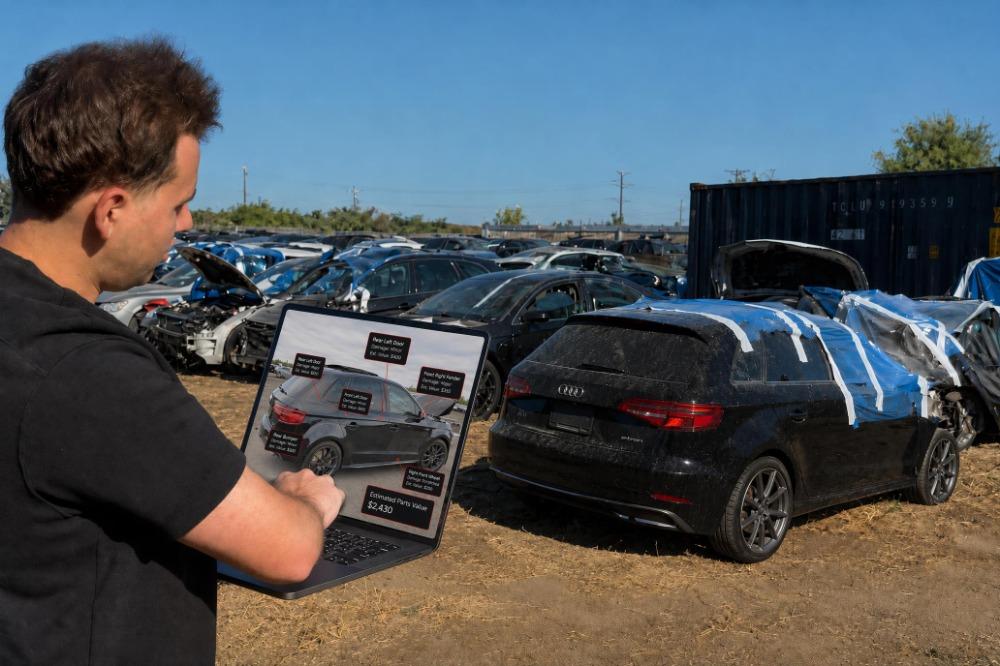
The next stage is dismantling, where the plan meets the physical condition of the vehicle. Automotive recycling is difficult because no two vehicles are identical. Year, make, model, trim, damage, mileage, part condition, electronics, and compatibility all affect what should happen next. A dismantler may have only a short window to make the right call. If the instruction is vague or the priority list is wrong, the loss may not appear immediately. It may show up later as unused inventory, wasted storage, delayed listings, or missed resale opportunities.
Sainciuc’s view is that a dismantling decision should not stand alone. It should be connected to what the marketplace is already signaling and what the business knows about recovery value.
“Dismantling is not only removing parts,” he says. “It is deciding which parts deserve labor. That decision should be supported by data, not left entirely to habit.”
After dismantling comes the photo and inventory path, where another kind of value can disappear. A recovered part needs to become market-facing inventory. That means it has to be identified, photographed, described, priced, and listed in a way a buyer can find and trust. A usable OEM part sitting on a shelf has not completed the recovery process. It is still waiting to become visible.
This is where automotive recycling has changed most sharply. The industry is no longer limited to the local yard. Recyclers now compete through marketplace search, listing quality, image clarity, pricing decisions, shipping expectations, and response speed. A part with demand can lose momentum if it is photographed poorly, titled vaguely, or listed too late.
“The shelf is not the finish line,” Sainciuc says. “The part has to become understandable online. If the listing does not communicate value, the recovery work is incomplete."
His system is used in operating environments that include a family business context with approximately 50,000 active eBay listings and a top 1 percent seller ranking in its category. That scale has shaped how Sainciuc thinks about the cost of inconsistency. A single weak listing may seem small. Thousands of slightly weak listings become a structural problem.
Pricing adds another layer. Used OEM parts live in a shifting marketplace. Demand can change. Competitors adjust. Condition matters. Shipping can affect the final decision. If pricing is handled only by memory or guesswork, the business risks either leaving money behind or letting inventory sit too long.
Sainciuc does not argue that AI should make every decision without human judgment. His model is built around support. It gives operators a better structure for repeated choices while leaving room for the experience that comes from working with vehicles, parts, and buyers.
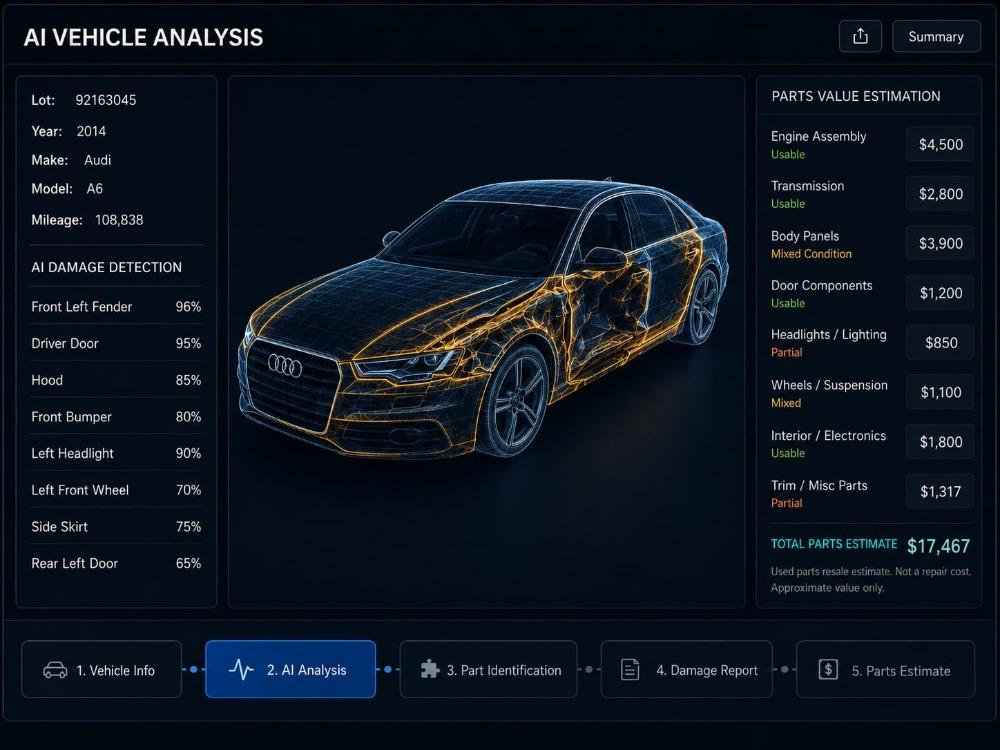
“AI should not flatten the work,” he says. “It should help people see the decision more clearly. The best system supports judgment instead of pretending judgment does not matter.”
The final stage is recovery beyond resale. A vehicle may still hold value through metals, electronics, and materials even after reusable parts are removed. Scrap recovery is not an afterthought. It is part of the same value sequence. The stronger the workflow, the better the business can decide what should move toward resale, what should move toward recovery, and how those paths should be coordinated.
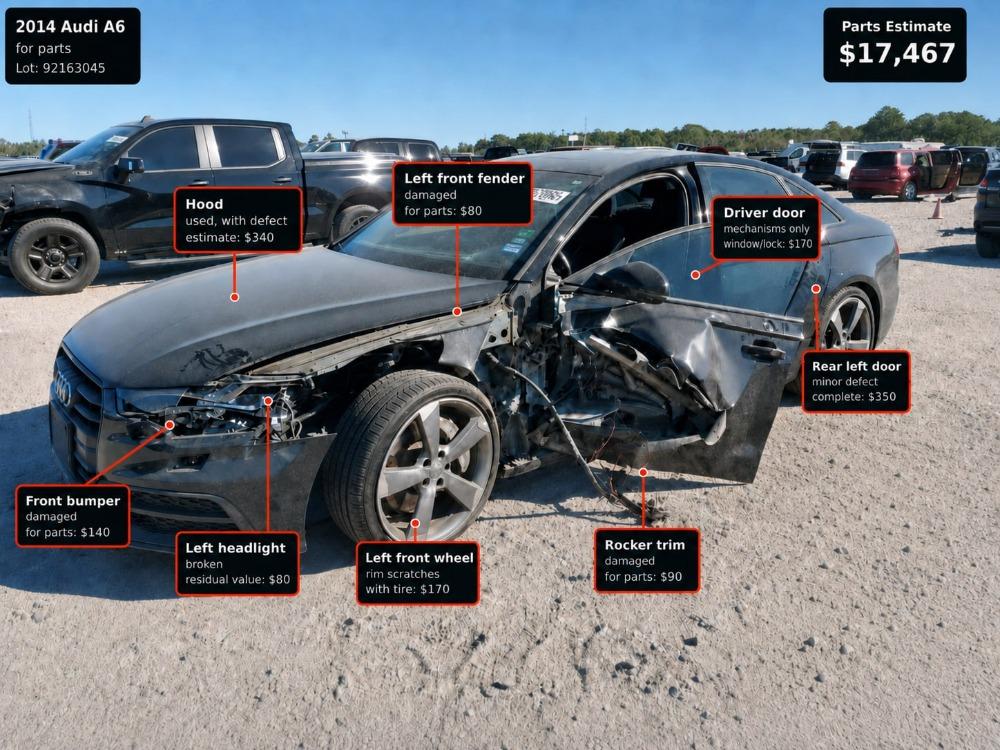
That framing changes how automotive recycling should be understood. It is not only a labor business. It is not only an eCommerce business. It is a recovery-intelligence business where physical handling, digital inventory, online demand, pricing, and material value all meet around the same asset.
For Sainciuc, that is why the industry deserves more attention. Traditional sectors are often described as old or simple because outsiders do not see the decisions beneath the work. Automotive recycling is one of those sectors. Its complexity is visible only when the vehicle is followed through the whole path from arrival to assessment, dismantling, inventory, listing, sale, and recovery.
“The industry is more advanced than people think, but it is also under-systemized,” Sainciuc says. “The opportunity is to connect the decisions that already exist and make the whole process more intelligent.”
His broader vision includes expanding AI-supported operating systems across automotive and related industries, along with a future automotive platform concept where parts, services, repair resources, marketplace information, and other vehicle needs could be handled in a more connected environment. Still, the clearest example begins with one salvaged vehicle and the choices hidden inside it.
A vehicle can be dismantled. It can be listed. It can be scrapped. Or it can move through a smarter sequence that helps the business understand where value sits and how to recover it with less waste.
“The future of automotive recycling belongs to operators who understand the full decision path,” Sainciuc says. “The more connected that path becomes, the more value the industry can recover from what is already in front of it.”