
Inside Voyage, Khalil Ismail’s Maison for Mind Computing
The British founder is introducing neural interfaces as objects of desire, trust, and human agency in the age of AI.

Published July 23 2026, 4:24 p.m. ET

Khalil Ismail
The first public introduction of Voyage is not built around a device reveal. For Khalil Ismail, Founder and CEO of the Maison for Mind Computing, the larger announcement is a thesis: the next era of computing will not be defined only by faster models, sharper screens, or more talkative machines. It will be defined by whether humans can remain present, creative, and in control as intelligence moves closer to the body and the mind.
Voyage is entering the field at a strange cultural moment. AI has become more capable at a pace that still feels difficult to absorb. Machines can write, summarize, generate, reason, respond, and increasingly behave like agents. Yet the ways people interact with these systems remain strangely blunt. We still type into boxes. We still tap glass. We still speak commands out loud and wait for software to translate them into action.
Ismail sees that mismatch as one of the defining problems of the AI age.
“The intelligence is moving quickly, but the interface has barely caught up,” he says. “We are asking humans to communicate with systems of growing complexity through tools that were designed for a different relationship with computing.”
Voyage’s answer is Mind Computing, a field the company is positioning around everyday neural interfaces that are non-invasive, intentional, and designed for real life. The company is not launching as a clinical device company or a science-fiction brand. It is launching as a Maison. In his view, the category cannot be built through engineering alone. It also needs taste, trust, craft, and cultural meaning.
That distinction is central to how he talks about neural interfaces. Ismail does not believe the consumer future of neural technology will be decided only by signal quality or algorithms, even though both matter. He believes adoption will depend on whether the interface becomes something people can imagine inviting into their lives.
“People do not build relationships with specifications,” he says. “They build relationships with objects, rituals, and feelings. If neural interfaces are going to matter outside a lab, they need to earn that kind of place.”
Voyage is built around that argument. The company introduces the identity, philosophy, and category-defining language before it introduces a product to the public. That may seem unusual in a market trained to expect hardware demos and product pages, but Ismail believes the order matters. A new interface, especially one as intimate as a neural interface, needs a social and philosophical foundation before it can become ordinary.
He is also careful about how the technology is described. To him, the common public framing around brain-computer interfaces often misses the point. The near-term future is not about “mind-reading,” a phrase that can flatten the field into fear or fantasy. Ismail frames the problem around intent.
“The goal is not to expose private thought,” he says. “The goal is to create a more natural way for a person to express intent to digital systems, with control and consent at the center.”
That control is not a side note for Voyage. It is part of the company’s reason for existing. Ismail believes the future of AI should orbit the human, not replace the human as the center of attention. He resists the over-anthropomorphism of AI, the tendency to give machines names, personalities, and social roles that make them feel like companions rather than tools. In his view, AI should feel closer to an extension of one’s own thinking.
“Conversing with AI should feel less like talking to another character and more like voyaging into your own mind,” he says. “The human has to remain the source of agency.”
That view comes from an unusual career path. Ismail has worked across engineering, design, AI, neuroscience, and human-computer interaction. He studied Innovation Design Engineering through Imperial College London and the Royal College of Art. He has worked at Apple in spatial computing, joined Microsoft AI, collaborated with Snap Inc. on wearable computing, conducted neural-interface research at MIT Media Lab, and worked on AI research at Harvard. His background gives him a rare fluency across technical systems and cultural objects.
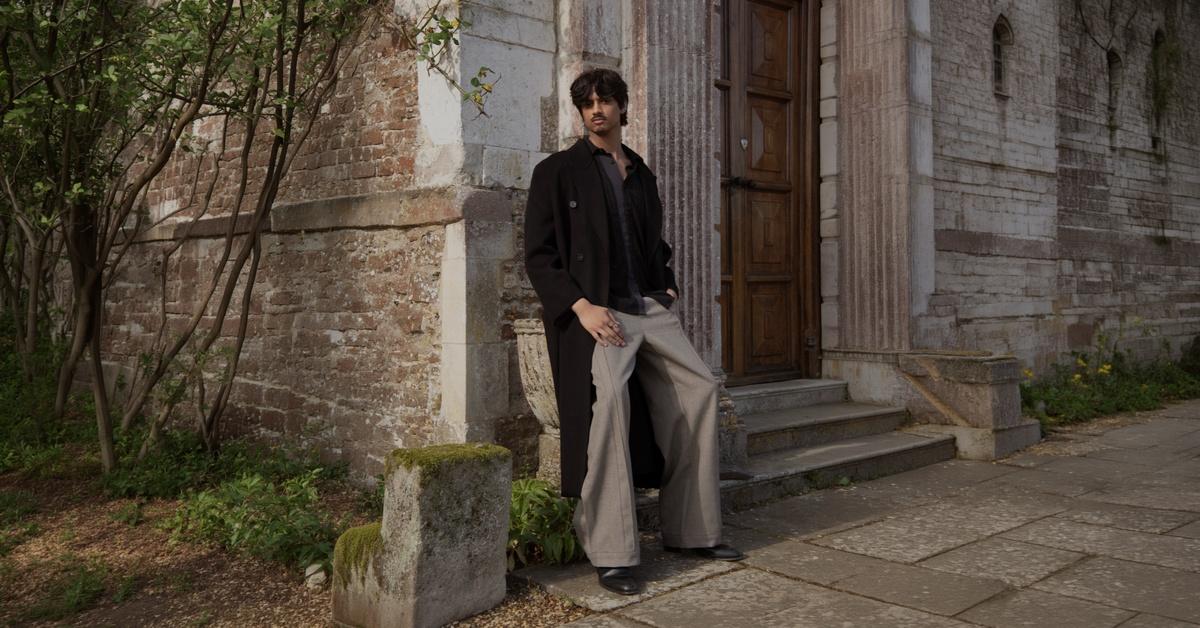
Khalil Ismail: Technical Philosopher
He describes himself as a Technical Philosopher, equal parts designer and engineer. It is not a label meant to sound poetic. At Voyage, it reflects a belief that neural interfaces require people who can think across signal, form, emotion, ethics, and meaning at once.
“The field has often been too vertical,” Ismail says. “There are brilliant people working on important pieces of the problem, but the pieces are not enough. With something this intimate, the science, the form, and the cultural relationship have to be designed together.”
That is where the Maison concept becomes more than branding. Ismail sees historic maisons as institutions that did not simply sell objects. They shaped materials, techniques, aspiration, and taste. He points to the idea that a house can build cultural gravity around a new material or craft. Voyage wants to do that with neural interfaces.
The challenge is not only to make technology wearable. Hiding sensors inside familiar shapes or offering different colors is not enough. The deeper question is what the object signals, how it feels on the body, why it becomes habitual, and whether it can carry trust without feeling clinical or strange.
Taste takes years of craft. It is more than the ability to curate. Taste is intuition plus experience.
“Taste is not decoration,” Ismail says. “In consumer technology, taste becomes trust. It determines whether something feels alien or intimate.”
That philosophy also shapes the company’s technical ambition. Ismail believes non-invasive neural interfaces have historically been limited by sensor quality and the difficulty of collecting meaningful data in real-world contexts. He argues that AI and reinforcement learning have changed the shape of that problem, but only if the technology is paired with a strong distribution and desire thesis. In simpler terms, useful models need meaningful, everyday contexts. People need a reason to wear the interface often enough for the technology to learn.
For Voyage, desire is not an afterthought. It is part of the technical system.“The data problem is also a desire problem,” Ismail says.
“You cannot understand the mind in everyday life if the object never becomes part of everyday life.”
That is why the company’s first public move is cultural as much as technical. Voyage is introducing a world, not asking the public to accept a finished category. Its long-term vision is to build non-invasive neural interfaces that make interaction with intelligent systems feel more fluid, private, and human-directed. The product is not being publicly launched yet, yet Ismail is excited about the innovations they will bring to the market.
In his view, the next interface should help people spend more time in the real world, not less. It should make ambient intelligence more useful without forcing humans deeper into screens. It should support creativity, introspection, and presence rather than turning the person into a passive endpoint for machine intelligence.
“The future I care about is not one where technology becomes louder,” he says. “It is one where the human becomes more capable, more aware, and more sovereign.”
Voyage’s bet is that the next computing era will not be won by intelligence alone. It will be shaped by the interface that allows humans to meet that intelligence without surrendering agency. For Ismail, that means building from the mind outward, but with the discipline of craft and the restraint of a house that understands intimacy.
The Maison is not trying to make neural interfaces feel futuristic. It is trying to make them feel inevitable.