
Why Do Rockets Curve After Liftoff? The Science Behind the Turn
The curve you see after liftoff is all about speed, not style. It’s what keeps rockets from falling.
Published April 2 2026, 12:11 p.m. ET

During Artemis II liftoff on April 1, many viewers noticed the rocket seemed to bend instead of shooting straight up.
Artemis II lifted off at 6:35 p.m. EDT from Kennedy Space Center and began a roughly 10-day trip around the Moon and back. The launch looked similar to past missions, but the curve caught attention. Rockets curve on purpose. They do it because orbit requires sideways speed, gravity punishes wasted energy, and the smartest way to leave Earth is to work with physics, not against it.
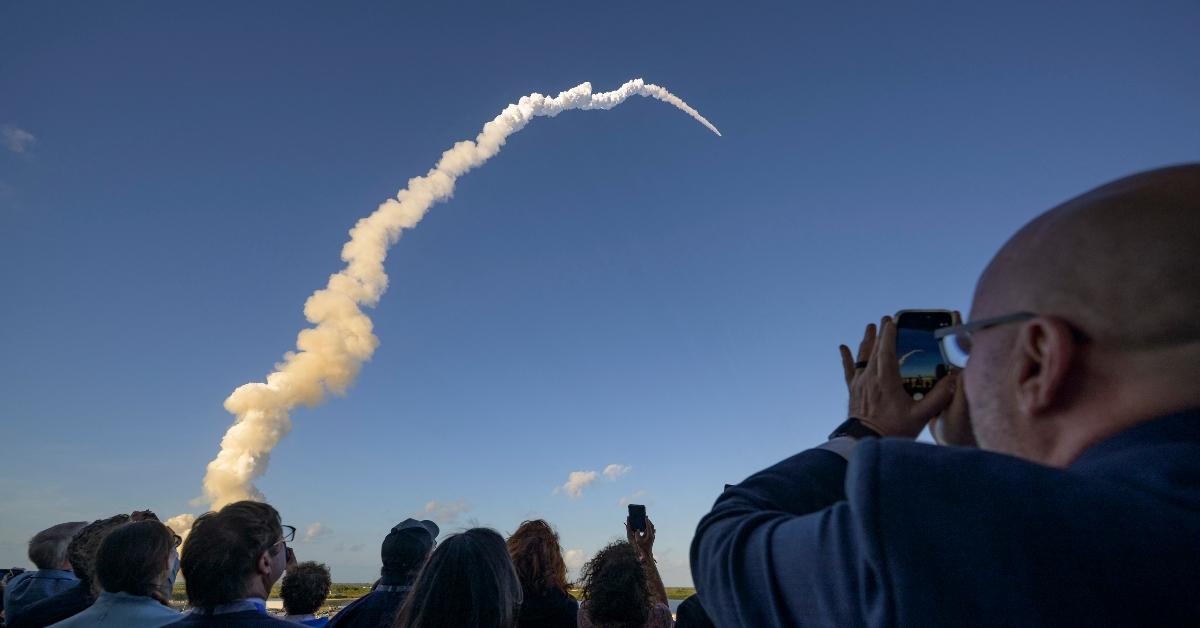
Why do rockets curve when launched?
According to NASA, Rockets curve because reaching space is not the same as entering orbit. A rocket can climb straight up for a short time, but if it only goes vertical, gravity pulls it back down. To stay in orbit, the vehicle must build strong sideways speed.
NASA says powered flight continues until a launch vehicle accelerates to at least orbital velocity, and the agency notes that a launch near the equator already gets a boost from Earth’s rotation of more than 1,650 kilometers per hour toward the roughly 28,000 kilometers per hour needed for orbit. That is why launch teams pitch the vehicle over after liftoff instead of keeping it pointed straight at the sky. This maneuver is called the gravity turn.
“Gravity Turn minimizes aero loads on vehicle and uses Earth G to turn vehicle horizon,” NASA says. The rocket rises straight up just long enough to clear the pad and the thickest part of the atmosphere. Then it leans over. This shift sends more thrust into forward speed and avoids wasting fuel fighting gravity head-on.
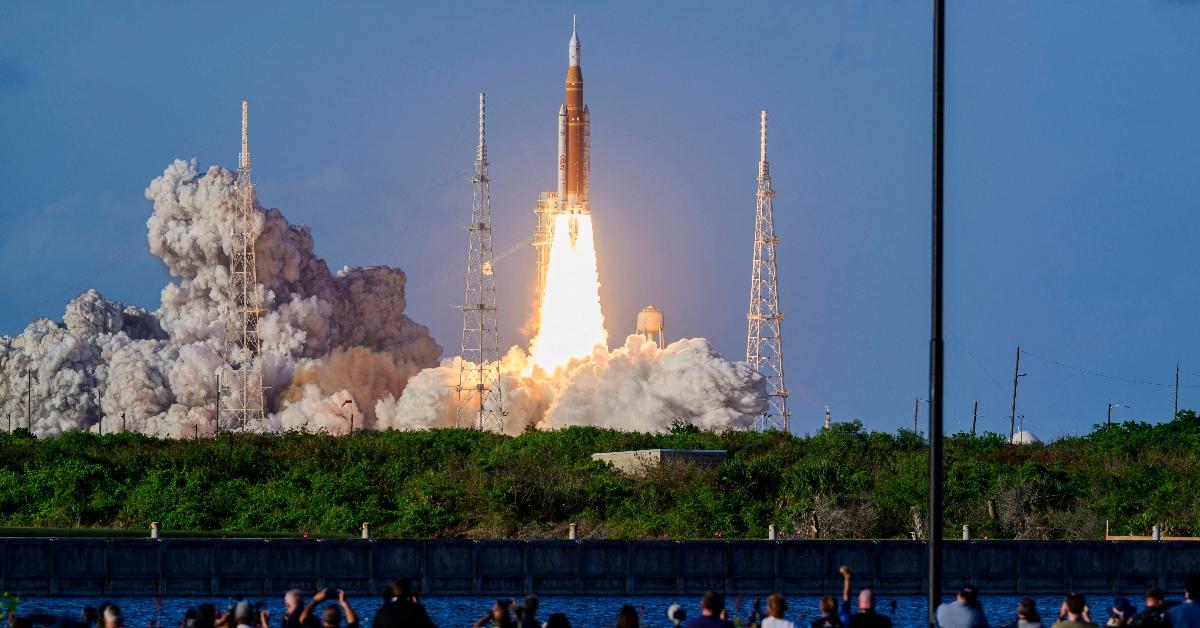
What happens after takeoff?
The launch action doesn't stop when the rocket leaves the ground. The huge launch cloud that people call “smoke” is really steam. NASA says its Pad 39B sound suppression system dumped about 450,000 gallons of water during a 30-second test and can hit a peak flow rate of more than 1 million gallons per minute. The point is not just to look dramatic.
“SLS will create about 176 decibels at liftoff, which is significantly louder than a jetliner,” said Launchpad Element Deputy Project Manager Nick Moss. “The sheets of water created by the flow will curb that sound by knocking it down a few decibels.”
The exhaust itself depends on the fuel. NASA says liquid oxygen and kerosene engines produce water vapor, carbon dioxide, and carbon monoxide. Solid rocket motors can also release hydrogen chloride and aluminum oxide.
As for how rockets land back on Earth, that depends on what part of the mission you are talking about. Crew capsules like Orion do not land like airplanes, according to NASA. Orion will slam back into Earth’s atmosphere at nearly 25,000 mph, slow to about 325 mph, then deploy 11 parachutes in sequence to bring the capsule down to about 20 mph for splashdown in the Pacific. Recovery teams then move in with Navy divers, attach flotation gear, help the astronauts out, and tow the capsule into a ship.