
Yitong Deng Spent Years Feeling Average Until One Assignment Made Everything Click
"What had once felt like scattered talent had turned into a sense of purpose, and that’s been really empowering.”

Published May 13 2026, 7:30 p.m. ET

Yitong Deng used to carry an uncomfortable thought. He was good at a lot of things. None of them felt like the thing that he could take to the next level.
He played piano. He practiced calligraphy. He sketched. He wrote. He translated. He collected small wins, including a national first prize in calligraphy and a city-level third prize in piano for his age group. He also felt stuck. The skills looked respectable in isolation. They did not stack into an identity.
“I kept thinking I was always drifting,” Deng says. “I wanted one direction that could hold me.”
Math and science were never the problem. He could do them. But it did not strike him as what he wanted to do. An equation felt flat compared to making something that carries emotion. Art felt alive, but art also felt like a narrow tunnel. He wanted rigor, too. He wanted structure that could still make beauty.
The tension followed him into college. He knew he was capable. He just felt replaceable.
“I told my family once that my life felt like constant digression,” he says. “I was frustrated with myself for not being able to pick one track and go all in.”
Then, in his freshman year of college, a small assignment in his Intro to Computer Science course changed the story.
The assignment was simple. Use Python Turtle to create the best picture you can. Most students finished quickly. Deng did not. He stayed up refining shapes and reworking the logic until the image matched what he imagined. To his surprise, a passion was ignited. The task demanded creativity, but it also demanded geometry and structured reasoning. It did not ask him to choose.
“Suddenly, my talents were working together,” he says. “I finally had a place where all my instincts were useful.”
He learned what he had been brushing up against. That assignment was an entry point into computer graphics.
“I did not feel scattered anymore,” he says. “I felt aligned.”
He found a mentor who raised the standard instead of lowering it. Deng approached Professor Bo Zhu, who was at Dartmouth at the time and is now at Georgia Tech. Deng asked to work with him. Zhu gave him two goals that were simple to say and hard to achieve: have a first-author paper accepted at SIGGRAPH -- the most prestigious publication venue in computer graphics; and earn admission to the Stanford computer science PhD program, where Dr. Zhu earned his own doctorate, a highly selective program that has incubated many of the groundbreaking results in the history of computer graphics.
“These two goals that Professor Zhu laid out for me as a motivation became my unattainable dream, the holy grail. But I didn't think I'd be able to make it,” Deng says.
Professor Zhu gave him both an opportunity and a goal. After Deng found his passion, he had something concrete to channel his energy into.
He also stopped treating his range as a liability.
“Graphics rewards the person who can think like an artist and like an engineer,” he says. “It was the first time my seeming lack of focus felt like a strength.”
Everything came together when he was on a plane from San Francisco to Sydney for SIGGRAPH Asia 2023. He was a first-year PhD student at Stanford. He was traveling to present his first-author work and receive a Best Paper Award.
The paper was titled Fluid Simulation on Neural Flow Maps.
He remembers the moment as a mirror. He thought about his high school self, tired of being merely decent at too many things. He thought about the freshman who stayed up drawing with code, drawn in by the feeling that all his instincts were finally working together. Then he looked at the podium ahead and understood the connection.
“It did not feel like luck,” he says. “It felt like I finally found the niche that really fits me.”
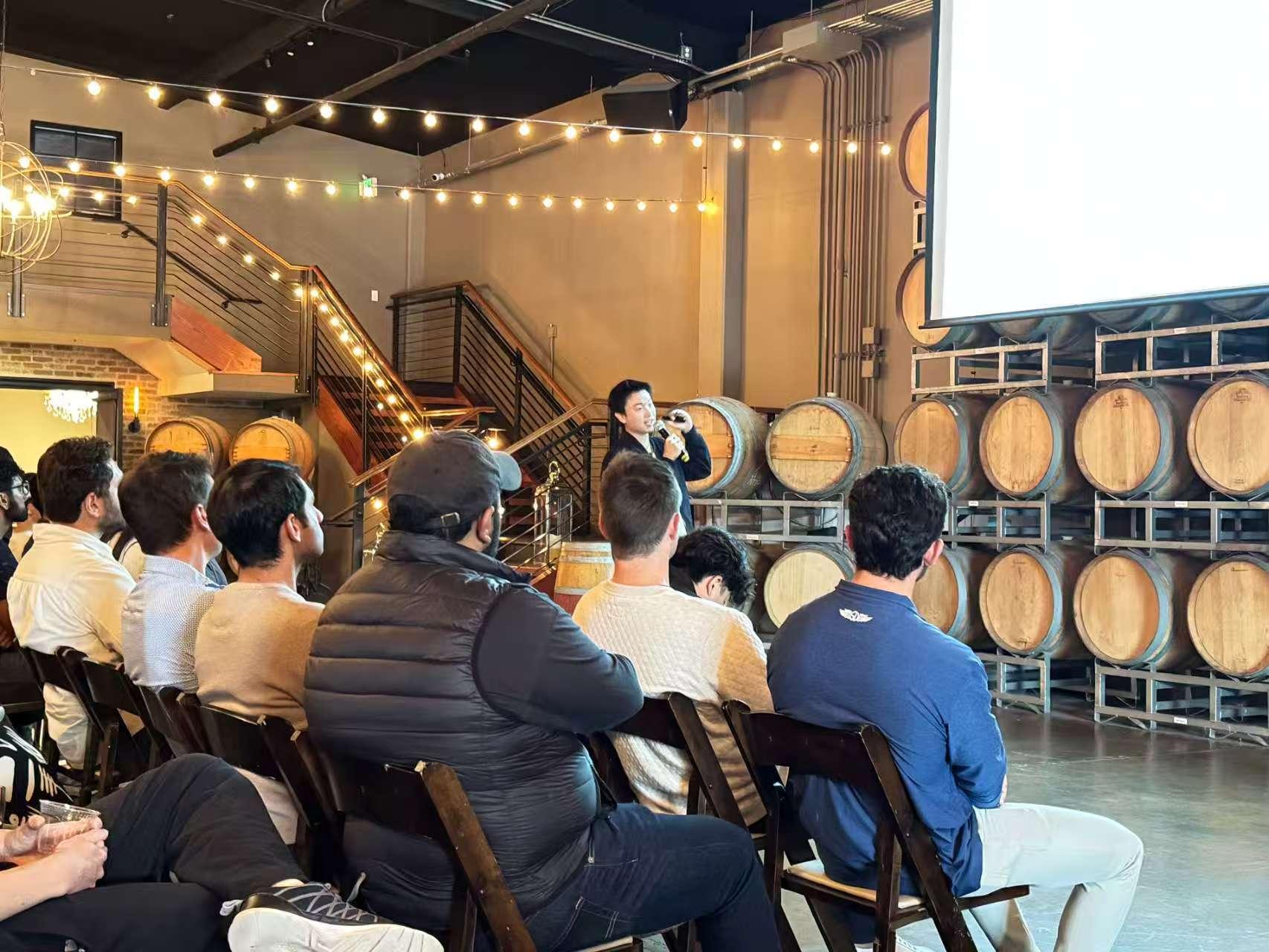
Deng’s research sits in computer graphics with an emphasis on AI-driven methods. He focuses on methods that help visual content look more physically believable while staying controllable for creators. His publications appear in leading venues such as SIGGRAPH, SIGGRAPH Asia, ICLR, NeurIPS, and CVPR.
He does not talk about that list as a victory lap.
“Recognition matters,” he says. “For the first time, I felt coherent to myself. What had once felt like scattered talent had turned into a sense of purpose, and that’s been really empowering.”
Music never left the picture. It stayed close and serious.
He won a concerto competition in college and performed Rachmaninoff’s Second Piano Concerto as a soloist with his college orchestra at an end-of-season concert. A separate music project was featured by Classic FM.
“Music teaches you structure with feeling,” Deng says. “You learn timing and tension. You learn how detail changes emotion.”He links that to graphics easily. He thinks of a simulated fluid the way he thinks of a musical line. He wants motion that obeys rules but still feels alive.
Deng’s story is not just motivational. It is a specific argument about talent. Some people look average because their strengths are spread across categories that do not talk to each other. The right niche can make those parts interlock.
“The mistake is thinking you are mediocre,” he says. “Sometimes you just have not found the medium that needs all of you.
”He wants younger students to hear that before they waste years trying to become a narrower version of themselves.
“Digression is not always a weakness,” he says. “It can be the thing that makes you rare once you find the right medium.”