
4 Lessons I Wish I'd Known Before Founding My AI Startup

Published Aug. 15 2026, 2:42 p.m. ET

'Founding My AI Startup'
On paper, Oscar Brisset's trajectory looks like a smooth ride. An economics degree from Oxford. A consulting career at Boston Consulting Group working on billion-dollar transformations for Fortune 500s. AI engineer at BCG X, the firm's technology build arm, shipping platforms used by millions. Then, in his twenties, founding Remy AI, an AI robotics company that won a place at Y Combinator, the famed accelerator behind Airbnb and Stripe, attracted angel investors from Meta Superintelligence, Two Sigma and Stripe, and signed its first paying customer just four months in, while the technology was still in development.
Which is exactly why his account of how it actually felt is worth hearing. "From the outside it looks like one confident decision," Brisset says. "The truth is it was months of doubting myself, and slowly building up the nerve to jump."
The Part Nobody Talks About
Brisset is candid that the hardest work of founding a company happened before the company existed: the idea was sound; what was missing was the feeling that he had permission.
"Nobody hands you that," he says. "You're leaving a salary, a title, a path everyone around you understands, for something with no money, no revenue, and a decent chance of public failure. Most of the journey to founding a company is internal, talking yourself into believing you're allowed to try."
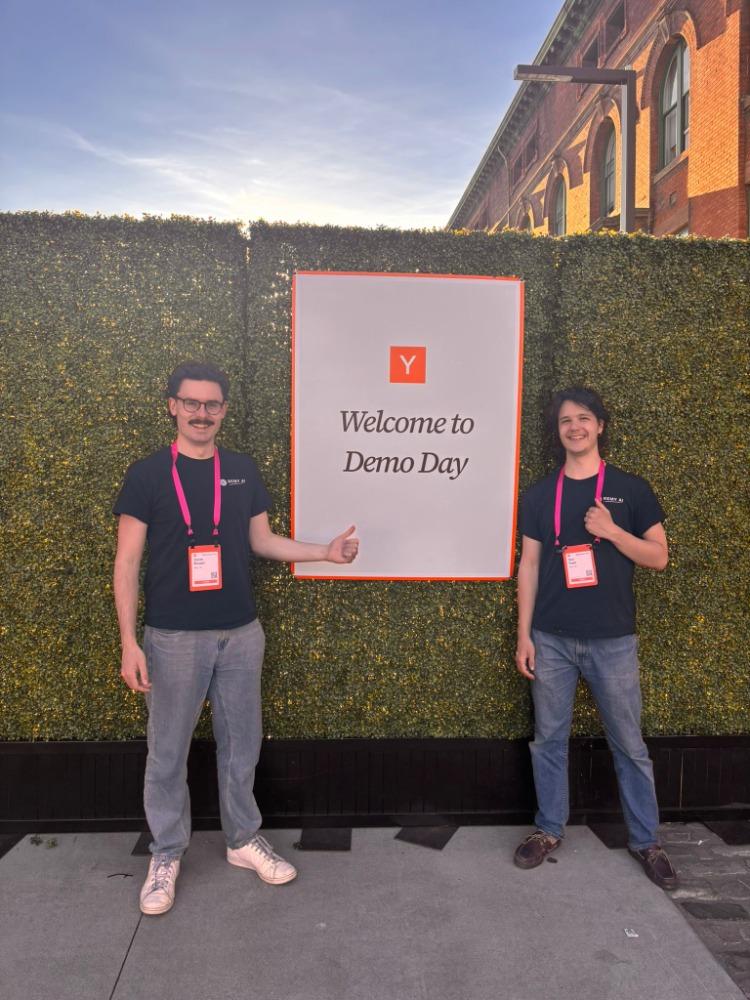
What tipped him was reframing the risk. Quitting, building, and failing does not leave you at zero; you re-enter the job market a couple of years later with rarer experience than you left with. The regret of never trying, by contrast, compounds for decades. Seen that way, the cliff edge turned out to be a step. He and his co-founder quit their jobs and boarded a plane to San Francisco, and Brisset spent the following weeks racing between investor meetings until the funding, and then Y Combinator, came together.
Founding My AI Startup
Starting a company, he stresses, remains genuinely difficult: a daily grind across engineering, sales and operations that no amount of reframing softens. But the barrier that stops most people is not the grind. It is the doorway. He sat down with us to share four lessons he wishes he'd known before starting.
Ask For Things
Many of Remy's first investors came through introductions from friends and former colleagues, connections that existed all along. "You can get a lot just by asking," Brisset says. "Too many projects were never started because of the fear of rejection." The worst realistic answer is a polite no.
Sell To Believers
Don't pitch everyone; find design partners, customers excited by new technology and willing to work through its rough edges. Early products are imperfect by definition. The right first customers treat that as a shared project, not a broken promise. Filtering for enthusiasm is what got Remy to revenue in four months.
Substance Beats Spectacle
Robotics is awash with viral demos engineered to impress investors rather than customers. "People in our field are too focused on flashy demos, and not enough on the reliability required for production," Brisset says. "Robots will only be useful when they can do certain tasks really well, rather than lots of tasks poorly."
Founding My AI Startup
Reliability is not a slogan at Remy; it is where Brisset spends his days. He leads the data collection that trains the company's machine learning models, builds the simulation environments used to train its reinforcement learning policies, and runs the experiments that pull the latest academic research into the robots that ship. In any sector, the lesson holds: revenue comes from making something dependable, not from applause.
Limited Resources Are Your Comparative Advantage
It sounds paradoxical, but scarcity is often the startup's sharpest weapon against incumbents. Big companies have money, headcount and brand, and the committees, sign-offs and caution that come with them. A small team with limited money and time is forced to prioritise ruthlessly, decide quickly, and stay close to the customer, because it cannot afford anything else.
Remy spans firmware, mechanical engineering, electronics, computer vision and machine learning, and competes against robotics companies with vastly deeper pockets; Brisset credits the company's constraints, not despite them, for the focus that compressed its path to revenue. Comfort is a quiet killer of early-stage companies. Hunger is an underrated co-founder.
The Step
None of this makes the leap easy, only survivable, and worth taking. And what carries a founder through the grind, Brisset argues, is not the tactics but the mission: at the end of the day, the thing that matters most is working on something you are genuinely passionate about. For him, that is Remy's purpose: bringing serious automation within reach of the thousands of ordinary warehouses that today have none, so they can stand toe to toe with giants like Amazon.
"What motivates me is working on cutting-edge technology, and helping entrepreneurs across America get the tools they need to win in their markets against the big guys," he says. "It's the same fight we're in every day, competing against the big robotics companies. If you find the thing you'd do that for, the confidence follows."