
Hajra Arbab Knows What Happens Before a Story Even Reaches the Screen

Published Aug. 21 2026, 1:23 p.m. ET

The media executive, producer, and arts leader works across global entertainment, independent film, and The Colony Lahore to help stories find the people they were made for.
Hajra Arbab thinks about the moment before the moment most people notice. Not the premiere photo, not the trailer drop, not the headline announcing where a film can be streamed. She thinks about everything that had to happen first: the delivery files, the platform requirements, the people checking details no audience member will ever thank them for, and the creative choices that make a story worth sending into the world at all.
That is where much of her career lives.
Arbab works in media operations at Warner Bros. Discovery, helping film and television content move from studio systems to streaming platforms and digital retailers around the world. She also produces independent films and serves as Managing Director of The Colony Lahore, a creative arts organization that supports actors, filmmakers, and artists through training, productions, and cultural initiatives.
Those parts of her work do not sit in separate boxes. To Arbab, they belong to the same larger effort.
“I have always been interested in the life of a story,” Arbab says. “How it is made, how it travels, who gets to tell it, and who finally gets to experience it.”
That view makes her unusual in an industry often split between the visible and the invisible. There is the side audiences recognize: actors, directors, red carpets, posters, reviews, streaming thumbnails. Then there is the side that makes the viewing possible, where operations professionals, distribution teams, strategists, producers, technicians, and creative leaders carry the work across the finish line.
Arbab has spent years learning both sides.
After moving from Pakistan to the United States for higher education, she began building a career in one of the most competitive entertainment markets in the world. She gained experience across content operations, distribution, and media strategy, learning how projects leave the hands of creators and reach audiences across platforms, and formats.
“If a story cannot reach people, something important is lost,” she says. “Distribution may happen behind the scenes, but it affects whether a film or show actually gets a chance to be seen.”
Streaming has changed how audiences think about access. A viewer may assume that because a title appears on a platform, the journey was simple. Arbab knows better. Digital entertainment still depends on coordination, precision, timing, and trust between teams. A smooth experience on the audience side usually means many people solved problems before the audience ever knew there were problems to solve.
That hidden labor is one reason she pushes back against the idea that entertainment is mainly glamour.
“The finished product can look effortless,” she says. “But entertainment is built by people working through details and pressure.”
Her producing work comes from the same belief, though it asks something different of her. As an independent producer, Arbab is drawn to meaningful stories, especially those that amplify underrepresented voices and create conversation across cultures. She wants more South Asian narratives to move internationally without being softened into something generic.
For her, cultural specificity is not a barrier to connection. It is often the reason connection happens.
“A local story does not have to become less local to matter globally,” Arbab says. “Sometimes the most specific stories are the ones that travel the farthest because they feel honest.”
That belief is rooted in her own path across Pakistan and the United States. Arbab understands what it means to move between cultures, build a network from the beginning, and learn how different creative systems operate. She has seen entertainment from the inside of global media companies and from the more intimate world of independent artists trying to get work made.
Those experiences meet at The Colony Lahore.
As Managing Director, Arbab helps support a creative space built around training, productions, and cultural initiatives. The work is practical. Artists need rooms. Actors need opportunities to grow. Filmmakers need collaborators. Creative people need more than encouragement. They need structures that help them practice, fail, improve, and keep going.
“Talent is not rare,” Arbab says. “What is rare is consistent access to spaces where talent can develop.”
The Colony Lahore is not only about producing work. It is about creating conditions for artists to move from potential into practice. In an industry where opportunity can depend heavily on geography, money, connections, or timing, that kind of support matters.
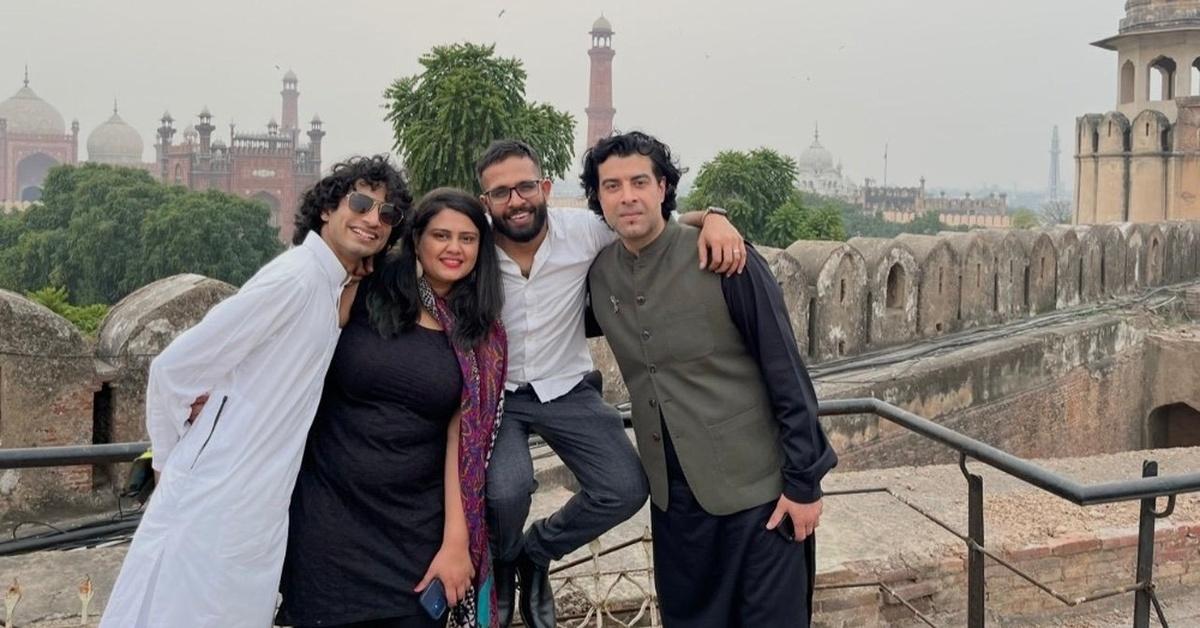
Arbab also leads Dominion Gallery, where she supports contemporary artists and helps expand opportunities within Pakistan’s creative community. She has been selected as a mentor for the Women in Exhibition 2026-2027 mentorship program, reflecting another part of her work: helping newer professionals find their footing in an industry that can be difficult to enter and even harder to stay in.
Her advice to people coming up in entertainment is simple enough to sound almost plain, but she means it seriously.
“Build relationships, not just a résumé,” she says. “A résumé can show what you have done. Relationships show people how you work, how you collaborate, and whether they can trust you under pressure.”
That lesson came through experience. Arbab’s career was not built through one dramatic break. It was built through consistency, adaptability, and the willingness to keep learning as the industry changed. New platforms emerged. Audience habits shifted. Technology entered more parts of production and distribution. Independent creators found new ways to reach viewers, but also faced new problems around discoverability.
Arbab sees the promise in those changes, but she is careful about where the excitement lands. AI, streaming expansion, digital platforms, and international co-productions can all open doors. None of them matter much if the human center disappears.
“Technology can help us work better,” she says. “But the story still has to come from people. The emotional truth has to come from people.”
That is the thread running through her corporate work, her independent producing, and her leadership in Lahore. She is interested in systems because systems can help stories travel. She is interested in artists because artists give those stories meaning. She is interested in cultural exchange because she believes film and television can make people more curious about lives outside their own.
Arbab wants her long-term impact to be measured by more than credits. She wants to help bring authentic South Asian stories to international audiences. She wants to build stronger creative communities. She wants emerging artists and filmmakers to have more than a dream. She wants them to have a path.
The audience may only see the moment a story arrives. Hajra Arbab has built her career around the work that happens before that arrival.