
Wondering How Brooms Affect the Stone’s Path in Olympic Curling? We've Got You!
The XXV Winter Olympic Games begins on Feb. 6, 2026.
Published Feb. 5 2026, 2:44 p.m. ET

Sports fans are gearing up for the XXV Winter Olympic Games as the event gets underway in Italy, and they are curious about curling. Curling is a sport where players slide stones on a sheet of ice toward a target area segmented into four concentric circles. Two teams take turns sliding granite stones towards the House using brooms.
According to World Curling, the sport is played in the Winter Olympics, as well as in the Paralympics. Curling has categories for Women’s, Men’s, Mixed Doubles, and mixed wheelchair teams. As things get underway in Italy, folks want to know how using brooms affects the stone’s path.
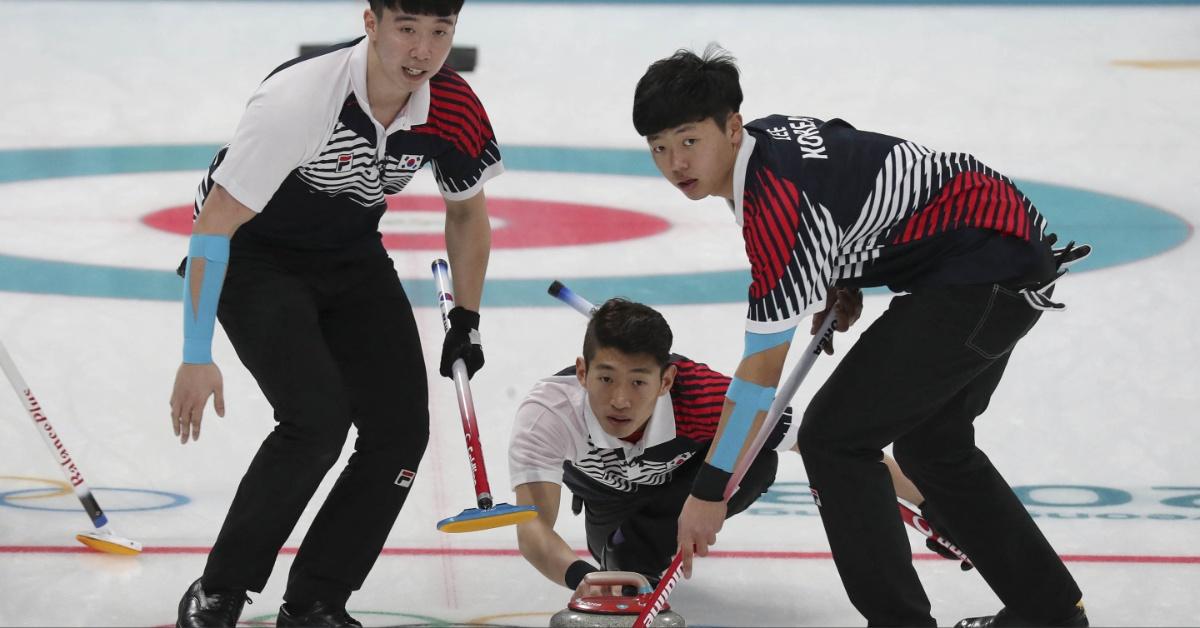
Here's how brooms affect the Stone’s path in Olympic curling.
According to the Olympics, brooms are an important part of curling. They are used to sweep the ice in front of a moving stone, and perfecting ice sweeping is crucial. Just one millimeter can make the difference between one stone finishing closer to the House than another, and an Olympic medal could be on the line.
Using brooms in curling can correct how a stone curves on ice, as well as the trajectory of a delivering stone to the House. Brooms can also be used to attack and defend. Delivering stones to the House with the correct weight and direction is just as important for a player as it is to know how to sweep with the broom.
According to the Smithsonian Science Education Center, curling is named after the way the stone curls while reaching the end of its path on the ice. The sport began in the 16th century
By sweeping the ice, players assist the stone in traveling on the ice in a straighter path and help the stone travel farther. The reason why sweeping helps the stone travel better is friction — sweeping in front of the stone reduces friction by quickly heating and melting the stone on the ice and leaving a film of water.
The film of water is what causes the reduction of friction between the ice and the stone. Players sweep more if they want a stone to travel farther with less curl, and they sweep less if they want more curl or shorter travel. Players' positions on the ice are also imperative for champion curling. The sweeper who is closer to the stone has more control, because the stone has more time to travel over the film before re-freezing.
"When players sweep, the broom slightly warms the ice surface," advises Educational Words Touch. "The small increase in the temperature creates a microscopic layer of water, which reduces the friction between the stone and the ice. As a result, the stone can travel further and maintain the speed for a longer time."
According to Rolling Stone, while curling may be less physical than other dangerous winter competitions, the sport has become a fan favorite due to the teamwork and strategy needed to win. Canada, Sweden, and Great Britain are currently the countries dominating the sport.