
Saving the Living by Raising the Extinct: How Colossal Is Arming Modern Conservation
Colossal announced this week that the bluebuck is the sixth species joining its enterprising portfolio.

Published April 30 2026, 8:00 a.m. ET

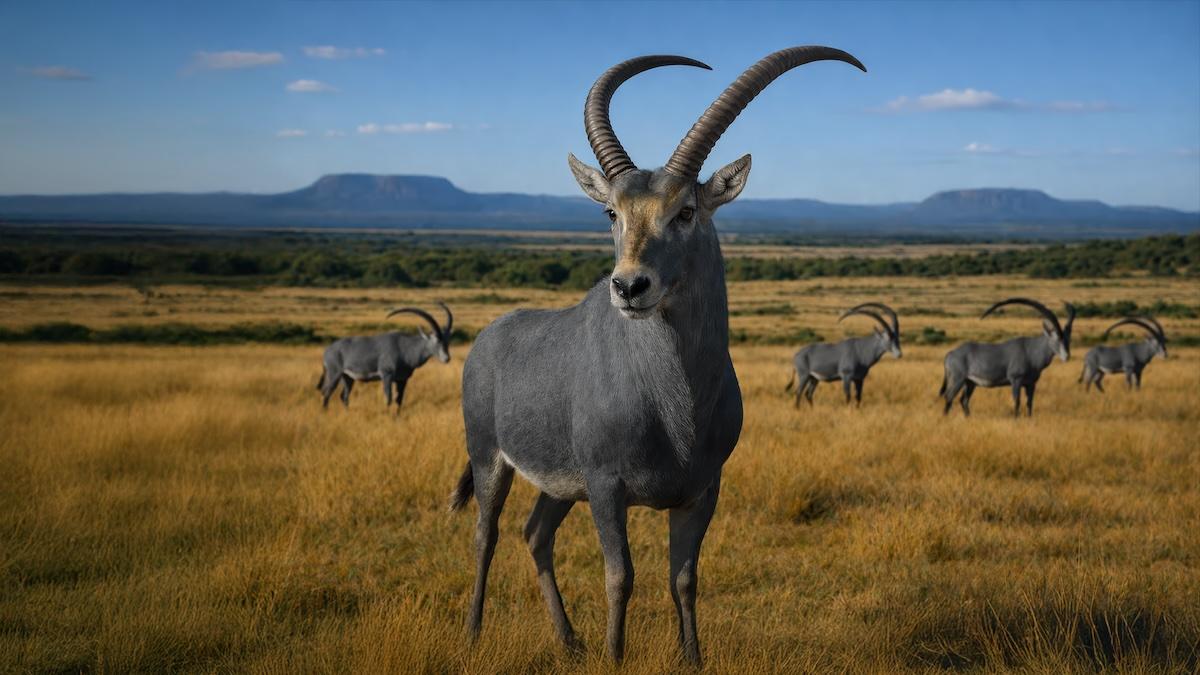
It disappeared quietly, without fanfare, somewhere around 1800. No dramatic last stand, no mourning period, no cultural reckoning. The bluebuck — a striking, silvery slate-blue antelope that formerly roamed the sweeping grasslands of South Africa's southwestern Cape — simply ceased to exist. Hunted to oblivion for the unusual color of its hide, it became the first large African mammal to go extinct in recorded history. The world barely noticed.
More than two centuries later, Colossal Biosciences wants to bring it back.
The Dallas-based de-extinction company — already deep in the business of resurrecting woolly mammoths, dodos, and most recently the internet-breaking dire wolf — announced this week that the bluebuck is the sixth species joining its enterprising portfolio. And if the science sounds like something lifted from a Michael Crichton novel, the people behind it will tell you it's very much real, very much underway, and very much bigger than just one antelope.
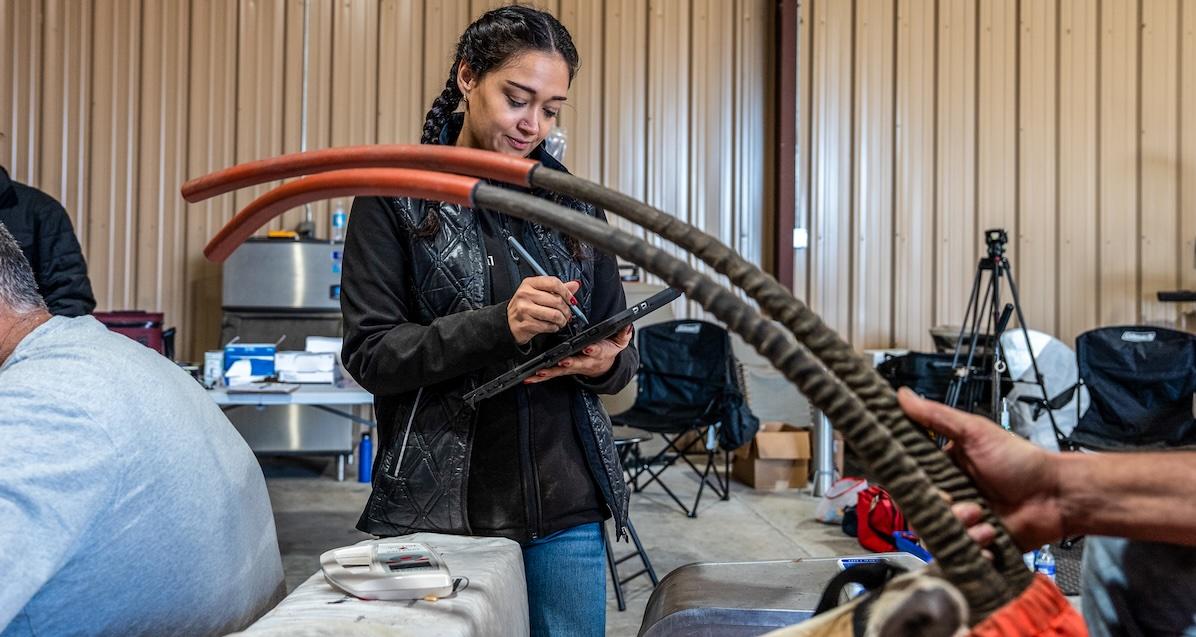
“The bluebuck represents a pivotal step forward for Colossal and conservation, marking our first major focus on antelope conservation—one we can now pursue because of major developments with the necessary technologies,” said Ben Lamm, Co-Founder and CEO of Colossal Biosciences. “The bluebuck sits within the bovid family, allowing us to extend our mammalian work into a new group of animals with different reproductive biology, size, and gestation timelines. Every reproductive technology, genome editing protocol, and conservation tool we develop through this effort is designed to scale—directly benefiting the 29 antelope species currently at risk. By focusing on the bluebuck, we’re not only working to restore a lost species, but also building solutions that can help protect entire ecosystems.”
The project has been quietly progressing since 2024, and the breakthroughs are already stacking up. Colossal scientists generated a 40-fold coverage genome from a historical bluebuck specimen housed in a Swedish museum — one of the highest-quality paleogenomes ever assembled for an extinct species. What they found reframed everything. The bluebuck wasn't a fragile evolutionary dead end. It had maintained stable genomic diversity for at least 400,000 years. It was biologically resilient, adapted to small population sizes over vast stretches of time. It didn't die because it was weak. It died because humans showed up with guns and a market for unusual pelts.
That distinction matters to the scientists working to reverse the clock. "This reframes the bluebuck's extinction as a consequence of rapid colonial-era disturbance," explains Dr. Beth Shapiro, Colossal's Chief Science Officer, whose enthusiasm for ancient DNA borders on infectious. The closest living relatives — the roan and sable antelopes — are now serving as genomic surrogates, with Colossal engineers editing bluebuck-specific traits directly into roan cells. The target characteristics: smaller body size, the iconic bluish-gray coat, the white facial markings that made the animal so visually distinctive and, ultimately, so fatally coveted.
But the truly jaw-dropping development might be happening in reproductive biology. Colossal achieved what had previously been considered nearly impossible — successful ovum pickup procedures in live antelope. The team engineered entirely new ultrasonographic equipment and hormone protocols from scratch, pulling off world-first procedures in both roan antelope and scimitar-horned oryx. In plain terms, they've now opened a direct pipeline from biobanked genetics to living animals.
The conservation implications extend well beyond one extinct species. Of the world's 90 antelope species, 29 are currently threatened with extinction. The platform Colossal is building — stem cell technology, reproductive protocols, chromosome-scale genomes — is explicitly designed to serve all of them.
On the ground in South Africa, the Endangered Wildlife Trust and conservation ecologist Dr. Josh Donlan's Advanced Conservation Plans are already mapping potential rewilding sites, assessing regulatory pathways, and building the community systems that responsible reintroduction demands.
The bluebuck was gone before most of the modern world knew it existed. Colossal is betting that its return can help ensure nothing else disappears the same way.