
Shiza Charania: Robot Intelligence Has a Blind Spot at the Point of Contact

Published Sept. 22 2026, 6:51 p.m. ET

As robotics companies push toward more capable models, Charania is focused on a physical limitation that software alone cannot solve: cameras cannot tell a machine how hard it is gripping, whether an object is slipping, or what happens when vision is blocked at the moment of contact.
A connector can look almost identical whether it is properly seated or just short of being secure. Shiza Charania sees that small gap as a larger robotics problem. As founder and CEO of Midas, she is building tactile sensors and the software behind them so robotic hands can detect pressure, texture, slip, and other information that cameras cannot reliably provide. Her argument is straightforward: many of the tasks robots still struggle to automate are decided at the point of contact, where vision is least useful.
“Vision can tell you a lot about the world before contact happens,” Charania said. “But once the hand is on the object, there are important things the camera either cannot see or cannot measure at all.”
That limitation becomes obvious in tasks involving insertion, alignment, fastening, or delicate component handling. A camera may show a robot where an object is, but the image does not directly reveal how much force is being applied or whether a grip is beginning to slip. The problem becomes harder when the robot’s own hand blocks the view of the contact point.
Her work at Midas focuses on capturing that missing physical information. The sensors are designed to give robotic hands access to signals such as pressure, texture, and slip, information humans process almost unconsciously during manipulation. The system is intended to help robots handle fragile, soft, and unpredictable materials more effectively rather than remaining limited to rigid, repetitive work in highly structured environments.
“When you pick up a glass, you do not stare at your fingers and calculate whether it is about to slip,” she said. “Your hand gives you that information automatically.”
Her approach is also shaped by a frustration with how tactile sensing has traditionally been developed. She says much of the work in the field has remained concentrated in academic labs, where sensors may be optimized for research performance without the same emphasis on durability, manufacturing, cost, or ease of integration. Midas is taking a different route by building with real deployment in mind from the beginning.
Rather than treating the sensor as an isolated component, she and her founding engineers work across the tactile-sensing system. Midas handles materials sourcing, sensor hardware, test rigs, and the software libraries used for integration. That gives the team control over the components that affect how the sensor is built, tested, and integrated into a customer’s robotic system.
“The sensor has to survive the job it is being asked to do, and another robotics team has to be able to use it,” she said. “A strong lab result does not solve much if the hardware cannot make it through real duty cycles.”
The importance of that problem extends beyond one kind of robot. She points to manufacturing, logistics, food handling, textiles, and medical applications as areas where contact-rich tasks remain difficult to automate. Many of those jobs involve irregular objects or materials that deform when touched. For those tasks, recognizing the object is only part of the problem. The robot also needs information about what happens once contact begins.
That difference is central to her view of the current robotics boom. The industry is investing heavily in increasingly capable AI systems and foundation models, with companies pursuing architectures intended to generalize across unfamiliar tasks and environments. She does not dismiss that work. Her focus is on how tactile sensing can be integrated into those increasingly capable robotic systems in ways that work outside controlled research environments.
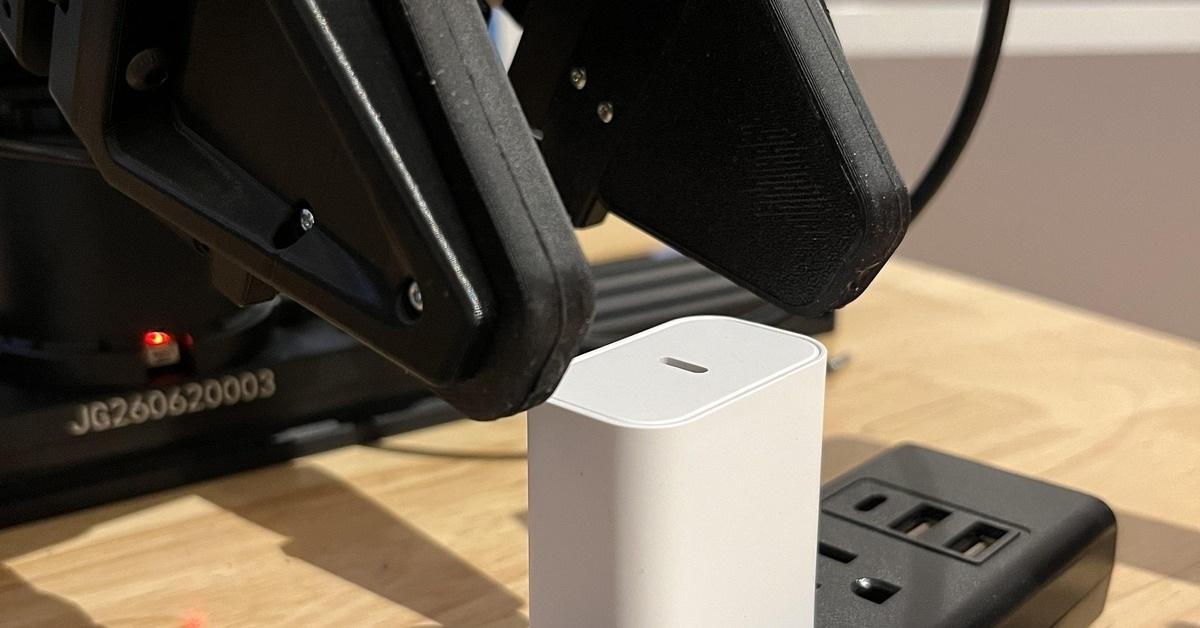
Her view comes from working directly with robotic hardware before moving into tactile sensing. At 1X Technologies, she engineered hardware and test rigs for a humanoid robot. At Midas, her role now keeps her in conversations with robotics teams that are evaluating sensors and trying to determine what their applications actually require.
Those customer conversations are especially important because she says many teams cannot define their ideal tactile sensor in advance. Rich touch data has not been widely available, so customers may not know which modality, resolution, or specification their application needs. Midas works with them by instrumenting the task, examining the resulting data, and converging on a specification based on what the application reveals.
“The customer may understand the manipulation problem very well without knowing exactly what touch data would solve it,” she said. “That means we have to measure the task first, look at what the signal is telling us, and then work toward the sensor the application actually requires.”
That process gives her a view into tactile sensing from both sides of the problem. She is developing the hardware while also seeing where robotics teams struggle to specify what they need before they have access to the data itself. The result is a development process shaped as much by the physical task as by a predefined sensor specification.
Midas is now moving from prototypes toward production and running integrations with robotics companies. Her longer-term goal is to make touch sensing a standard part of robotic systems wherever contact matters, from end-effectors and grippers to full hands and data-collection tools.
"A robot can understand what it is looking at and still fail when it touches it," Charania said. "The next step is giving machines the physical information they need to handle the world, not just see it."