
Technicolor Changed the Film Industry Forever — So What Happened?
The company shut down in 2025.

Published Dec. 29 2025, 1:17 p.m. ET

Growing up as a kid and watching movies, there are a lot of things I remember that simply don't exist anymore. First: There are tons of studios that are now defunct. Seeing the film reels populate the screen of the New Line Cinema logo, for instance. Or the Tri-Star pegasus flying towards the screen. And proclamations of a flick implementing groundbreaking technology, like Technicolor, were also par the course whenever you visited a theater or brought home a rental you were excited to check out. But whatever happened to the revolutionary film process?
What happened to Technicolor?
The American film industry has gone through a lot of changes since its inception in the 1910s. After engineers first discovered how to capture moving pictures, one of the next big advancements was syncing sounds with these video snippets. The 1927 film, The Jazz Singer, is attributed as being one of the first movies to bring this marriage of audio/visual tech to the masses.
Afterward, there were new lighting techniques filmmakers toyed with to create more gripping images for audiences, and of course the developments of non-linear editing of movies helped to progress the art form. The introduction of digital media recording, for better or worse, has also greatly influenced the film landscape.
But there are many who would argue that synced audio and the transition from black-and-white to color films are the biggest advancements in cinema. And Technicolor played a massive role in the latter.
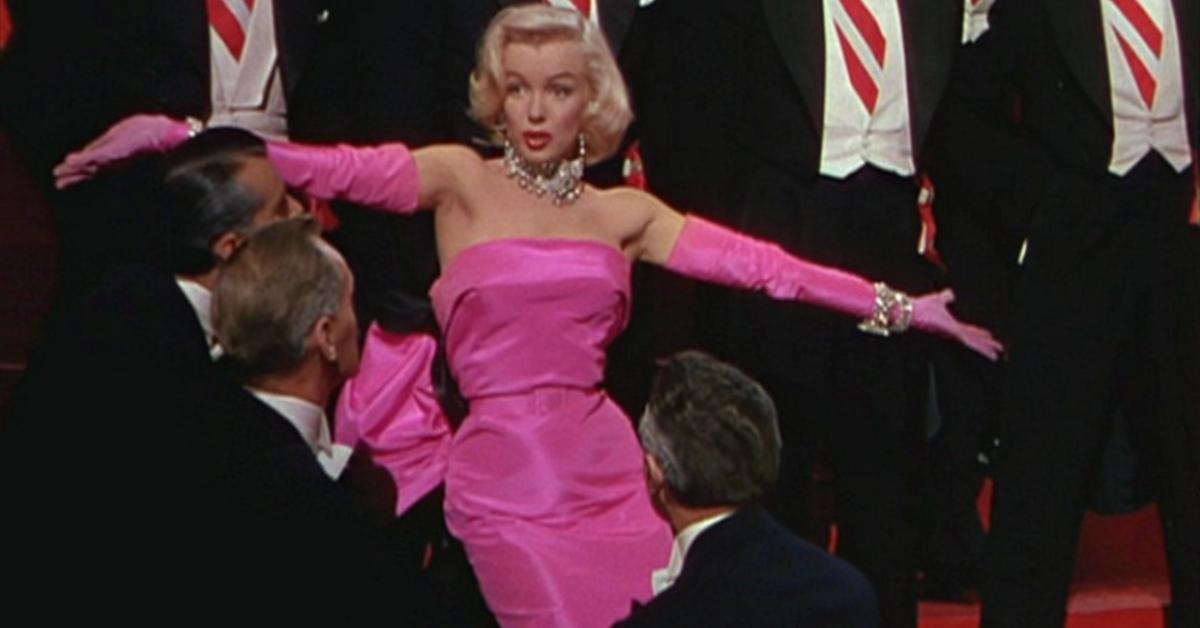
Cined wrote in-depth about "The Technicolor look" and referenced one of two staples of American film history as prime examples of this technology in action: The Wizard of Oz being one of them. Snow White and the Seven Dwarfs historically popularized Technicolor as the go-to style for animated films.
Technicolor was created by three men: Herbert T. Kalmus, Daniel Comstock, and Burton Wescott. The "Tech" in the name is a hat-tip to MIT, where Comstock and Kalmus first met. While the UK had Kinemacolor first, the innovation these three created quickly became the most widely used way studios colored films. And it all boiled down to the end result.
What can't we do Technicolor anymore?
Technicolor films were praised as being vibrant, but the three-strip color technology wasn't without its annoyances for filmmakers. The custom-made cameras for Technicolor films could also be adjusted to create different palettes for each movie to the production company's liking.
As Cined writes: "These multiple color records had to be printed one by one onto a blank piece of film. Together, they created a gorgeous Technicolor image. As it lacked contrast, the company would add a black and white layer underneath the matrixes to serve as 'the key' and add crispness to the images."
This complexity, despite resulting in vibrant, tailored images, meant that there was a lot of fussing about with dye processes for movies. Ultimately, "this annoyed studios and filmmakers," Cined writes. When single-strip coloring processes, like Eastman Color, arrived, many Hollywood production houses decided to opt for these easier methods.
Variety reported that the Technicolor VFX studio's collapse in early 2025 was a "shockwave" felt throughout the entire film industry. In the same article, "mismanagement" of the business was attributed to its downfall, but its hard to ignore that other processes that made coloring films easier for production companies also had a lot to do with Technicolor's downfall.
Ultimately, the company failed to secure investors to stay afloat, and it's now effectively out of business. The last major American film to use the Technicolor process was The Godfather: Part 2. And in Europe, the 1977 horror film Suspiria employed its three-strip color technology.
Afterward, Technicolor transitioned to post-production and VFX processes, including special effects and computer animation for movies, before it ultimately shut down.