
What Is the Stuffed Animal at the Olympics, and Why Do Medalists Get One?
The 2026 plushie is a stoat named Tina.
Published Feb. 23 2026, 12:48 p.m. ET

Athletes who qualify to compete in the Olympics are in it for one thing and one thing only — the gold medal. But not all get the opportunity to clench their teeth against a thick piece of gold (which is actually mostly silver but gold-plated) at the end of a competition or game, because there can only be one winner in each sport.
The runners-up, however, do get a silver or bronze medal, which is still a very high honor.
In addition to the elite athletes in the Olympics getting a medal, they’re also given a stuffed animal representing the Games’ mascot. In 2018, athletes who competed and won in Pyeongchang received Soohorang plush toys along with their medals. In 2026, the mascot was Tina the Stoat, so that’s what the plushies were modeled after.
Here’s what the latest round of plushies represents.
What is the stuffed animal at the Olympics?
The stuffed animals given out at the Olympics are awarded to athletes who place in the highest positions, earning a gold, silver, or bronze medal. The plushie acts as an additional reward while also paying tribute to the Games themselves.
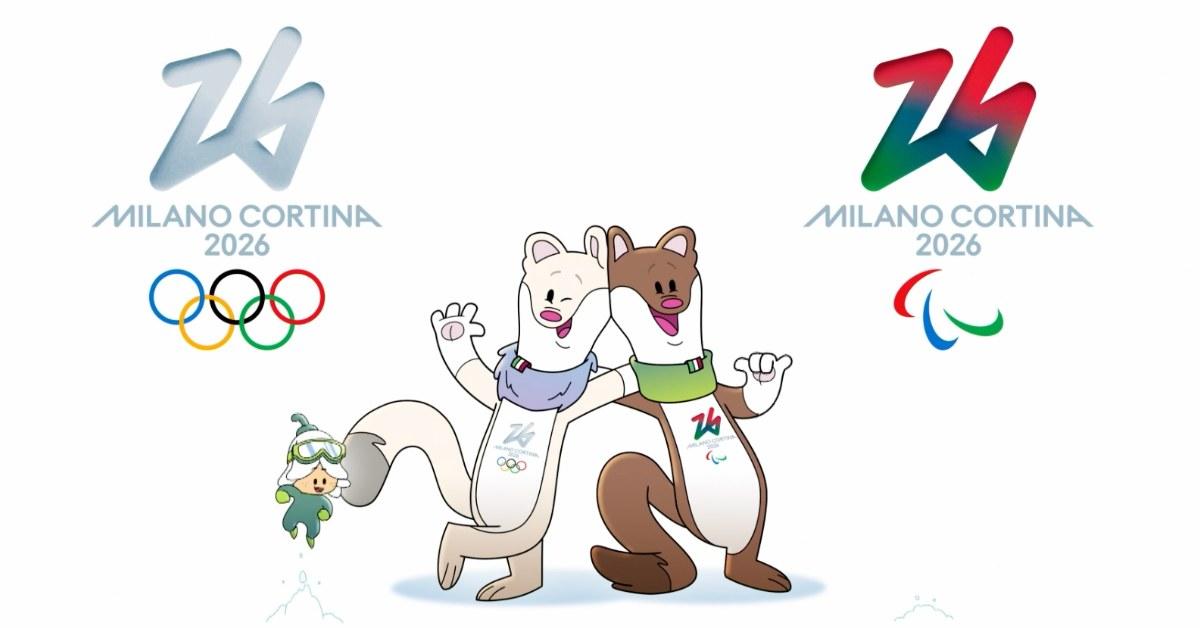
When the Winter Olympic Games were held in Beijing in 2022, winners received Bing Dwen Dwen pandas. For the 2026 Olympic and Paralympic Winter Games in Milan‑Cortina, the plushies being handed out are named Tina and Milo, both of which are stoats.
For context, a stoat is a mammal in the weasel family that looks somewhat like an otter or a ferret. They have long bodies, short legs, and sometimes change their fur color to white in the winter.
The stoats serving as mascots for the 2026 Winter Olympics are named after the host cities.
That said, Tina comes from Cortina d’Ampezzo, and Milo comes from Milano, according to the Olympics website. But there’s more to these little creatures aside from their adorable looks. Tina, the light-colored stoat, was born in Italy and is “passionate about art and music, and she believes in the power of beauty.”
Her brother Milo, the darker-colored stoat, is the Paralympic mascot. While he was born without one paw, he “learned to use his tail and turn his difference into a strength.”
Tina the Stoat is awarded to medalists in the general Winter Olympics, and Milo is awarded in the Paralympics. Accompanying either stoat is a Flo sidekick from the group “The Flo.” The Flo are six tiny snowdrops described by the Olympics as “six curious and irresponsible little flowers” that represent the “symbol of rebirth.” They also “love to have fun, even if sometimes this gets them into trouble.”
Olympic stuffed animals are usually sold in official stores and online, but they can be hard to get.
While the medalists at the Olympics do get their very own Tina or Milo stoat plushie along with a Flo sidekick, fans can also join in on the fun and buy a plushie themselves. These may be different from the ones the athletes receive, but they’re still a plush of the Olympic mascot.
Since they are sold in limited quantities, they are usually hard to come by if you don’t attend the Games or don’t have quick fingers online. And if you're not able to snag one yourself and decide to purchase from a reseller, expect to pay some big bucks.
Take Tina the Stoat plush, for example, which originally sold for between $28 and $60 depending on size, according to the Lansing State Journal. Now, however, they're selling for just under $300 on eBay. Yikes!