
With Photon-1, David Li Is Testing Whether AI Can Learn by Watching

Published Oct. 16 2026, 5:34 p.m. ET

Induction Labs trained Photon-1 on raw video of people using computers, without text supervision or action labels. For co-founder and CTO David Li, the experiment offered a way to test what a model could pick up before anyone explained the task.
Photon-1 was never told that someone had opened a browser. It was not given a label for a keystroke, a mouse click, or a piece of code appearing on a screen. The model watched. Induction Labs trained it on raw video of people using computers, an amount of footage equivalent to roughly 18 years of continuous viewing. No text supervision accompanied the video. There were no action labels spelling out what the person on screen was doing. David Li, co-founder and CTO of Induction Labs, was interested in what could emerge before that kind of instruction entered the picture.
“We were interested in what happens when you stop specifying every lesson in advance,” Li said. “If a model can learn structure directly from experience, you start to reduce how much humans have to explicitly prepare for it.”
The experiment grew out of a frustration with the amount of human preparation built into modern AI. Someone labels the data. Someone demonstrates the task. Someone writes the instruction, builds the environment, defines the reward, or decides what the correct behavior should look like. Even systems described as autonomous often begin with a large amount of work performed by people who already understand what the model is supposed to learn.
Li and his co-founder, Jonathan, started Induction Labs with a different problem in mind. They wanted to know whether observation itself could carry more of the load.
Computers were an obvious place to try. Watching someone use one reveals far more than a collection of screenshots. A person opens software, types, waits, reacts to what appears, changes direction, fixes an error, and continues. The screen records the consequences of those actions as they happen.
As co-founder and CTO, Li co-led the research and development of Photon-1 from the initial research direction through training and evaluation. His work included developing infrastructure for large-scale raw-video training, including data ingestion, preprocessing, and distributed training systems. He was also directly involved in designing and running experiments to determine what models could learn from visual observation alone, without text supervision or action labels. A major part of his role was making the training approach practical at scale and evaluating whether the resulting model could generalize beyond the computer-use footage on which it had been trained.
Training on video also created a messier engineering problem than the premise might suggest. Video takes far more storage and processing than text. Induction Labs had to handle ingestion, preprocessing, storage, distributed training, and experimentation at a scale that made familiar machine-learning shortcuts less useful.
“There are a lot of assumptions in machine learning that come from the systems people built before,” Li said. “When you work with a different source of experience, you have to figure out which parts of that old recipe still matter and which parts were only necessary because of the previous setup.”
Photon-1 came out of that work. The model learned from the visual sequence itself. It saw people use computers and had to extract whatever regularities it could find without a parallel stream of text describing what those actions meant.
The 18-year figure is part of what drew attention to the result. Large AI systems are routinely associated with staggering quantities of data, much of it scraped, labeled, filtered, or otherwise prepared at internet scale. Photon-1’s footage, by comparison, represents an amount of experience that still fits within a human lifetime.
Induction Labs says the model learned capabilities from that footage and, more unexpectedly, showed transfer outside ordinary computer use. Training carried into areas that included games and physical reasoning, even though the source material consisted of people interacting with computers.
“If the model only memorized what it saw on a screen, that would be much less interesting,” Li said. “What we care about is whether it can learn structure that carries into situations it was never directly trained for.”
That transfer is the part Li keeps returning to. Memorizing common screen patterns would be useful for computer automation, but it would leave the experiment with a fairly narrow lesson. Carrying something from those observations into an unfamiliar setting suggests the model picked up relationships that were not tied to one specific interface.
The work lands at a moment when AI researchers are confronting a basic constraint. Human supervision scales only as far as humans can keep producing it. Demonstrations have to be recorded. Labels have to be created. Benchmarks have to be written. Environments have to be designed.
For known tasks, that process can continue for a long time. Someone already knows what good performance looks like.
Unknown problems are different. Nobody can demonstrate the correct answer to a scientific problem that has not been solved. There is no expert example for a discovery that has not been made. A system intended to move beyond existing knowledge eventually needs some way to learn when the answer is not sitting in a human-generated dataset.
“The world contains much more information than people have explicitly written down,” Li said. “Video captures how software behaves, how tools are used, how environments change, and what happens after someone takes an action. The challenge is learning how to turn that experience into something the model can use.”
Photon-1 is a fairly specific experiment inside that much larger problem. It does not establish that models can simply watch the world and become autonomous learners. It does show that a model can learn from raw computer-use video without receiving the text descriptions and action labels common in many training pipelines.
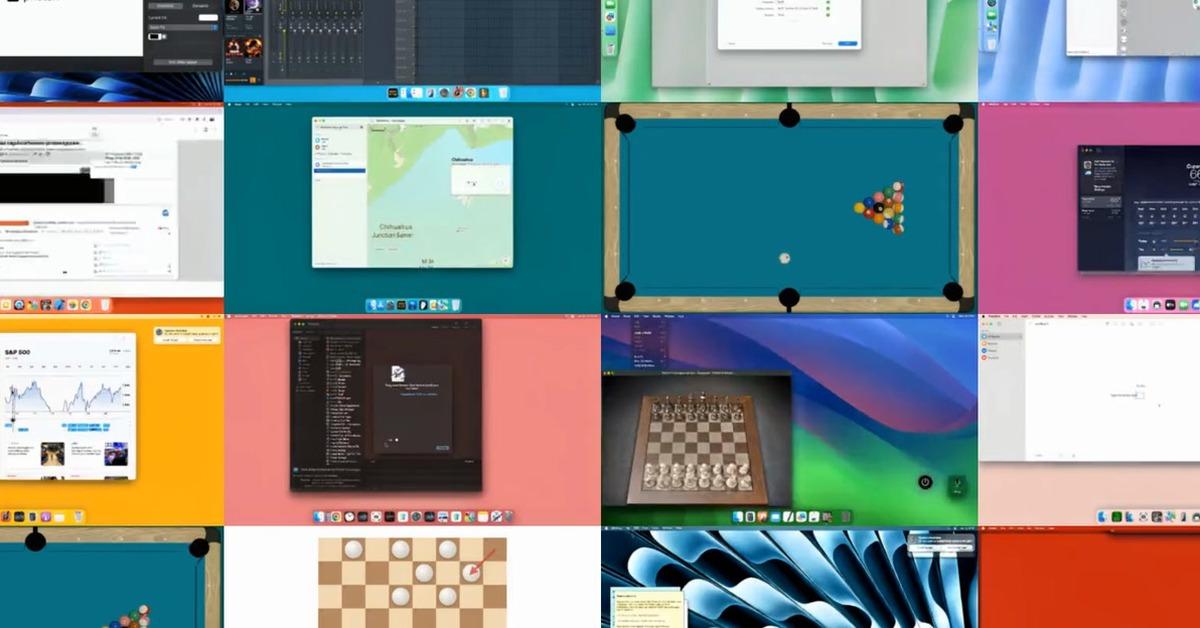
The result also gives Induction Labs something more useful than a theory to work from. Its researchers can point to a model that consumed roughly 18 years of visual experience, learned from those observations, and showed capabilities outside the narrow setting in which the footage was collected.
Li is interested in what happens if that process can be pushed further. The immediate lesson from Photon-1 is smaller and more concrete: a surprising amount of instruction may already be sitting inside ordinary experience, even when nobody has taken the time to label it.
A person watching someone work can often infer what is happening without being handed a written explanation for every move. Photon-1 was built to see how far a machine could get doing something similar. The answer, at least from this first model, was far enough to make the experiment worth continuing.