
What Is the Compensation for the Artemis II Space Crew? Details on the Astronauts' Salaries
The crew launched into space on April 1, 2026.
Updated April 8 2026, 3:48 p.m. ET

The crew of NASA's Artemis II is currently enjoying a 10-day journey around the moon for a mission that launched on April 1, 2026, and people are quite curious about their financial compensation. The Artemis II astronauts include a Canadian astronaut, Jeremy Hansen, as well as three American astronauts, Victor Glover, Christina Koch, and Reid Wiseman.
As the crew makes their way home to Earth in the next few days following their dangerous mission, the compensation has come into question as people wonder how much the crew has been paid for their space exploration efforts.
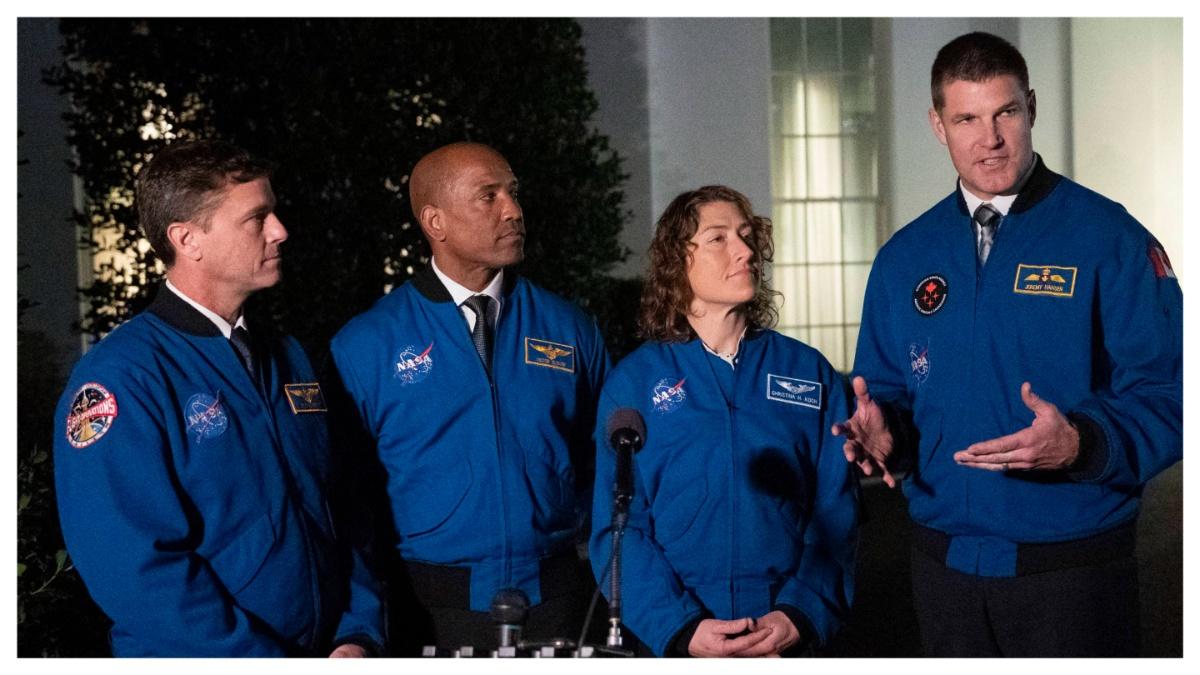
What is the compensation for the Artemis II space crew?
According to Fortune magazine, the Artemis II space crew earns approximately $152,000 per year. Canadian astronauts reportedly earn about the same amount, but the crew will not be compensated extra for the dangerous space travel. The Artemis II space crew will not receive overtime pay, hazard pay, and they will not receive a bonus for their 10-day trip around the moon.
Becoming an astronaut is no easy task, and the field is also quite competitive. Only 10 candidates from more than 8,000 applicants were selected for NASA's class of 2025, and only four crew members were selected for the Artemis II crew.
"Four astronauts have been selected for NASA’s Artemis II mission," read a statement on the NASA website. "Commander Reid Wiseman, pilot Victor Glover, and mission specialist Christina Koch from NASA, and mission specialist Jeremy Hansen from the Canadian Space Agency."
The statement also noted the crew's mission for the 10-day journey.
"Artemis II will be NASA’s first crewed flight test of the Space Launch System rocket and Orion spacecraft around the Moon to verify today’s capabilities for humans to explore deep space and pave the way for long-term exploration and science on the lunar surface."
The crew is expected to complete a figure eight in space that extends more than 230,000 miles from the Earth, and the astronauts will travel 4,600 miles beyond the moon before returning on April 10. The crew is expected to reenter the atmosphere at high temperature and high speed before landing in the ocean off San Diego's coast. A recovery team from the Department of Defense and NASA will carry the crew back to shore following the landing.
The crew received a live call from President Trump on April 6, and he praised the crew for their bravery in a video shared by Sky News Australia.
"You are doing a fantastic job," he said. "You've made history and made all of America really proud. Incredibly proud."
The president also invited the crew to the White House when they came home, and he even claimed he'd be asking them for their autographs.
"I'll ask for your autograph," he claimed. "Because I don't really ask for autographs much, but you deserve that. You really are something. Everybody's talking about this, and, uh, I look forward to having you in the Oval Office at the White House."