
What Is the 'Hot Girls Read' Drama? Allie Rose Says Trademark Will Be Abandoned
"The decision was made more as a business strategy decision than a human being decision."

Published June 10 2026, 12:14 p.m. ET

A trademark dispute involving the phrase "Hot Girls Read" has sparked widespread debate across BookTok and the broader online reading community. The controversy began after Allie Rose Co., a small business known for its book-themed merchandise, announced that it had successfully trademarked the phrase for use on specific products.
While the company described the trademark as a milestone for its brand, many readers and content creators argued that "Hot Girls Read" had already become a widely used slogan across social media long before the registration was approved. The discussion quickly spread across TikTok, Instagram, Reddit, and Threads, with users weighing in on whether a phrase commonly associated with reading culture should belong to a single business.
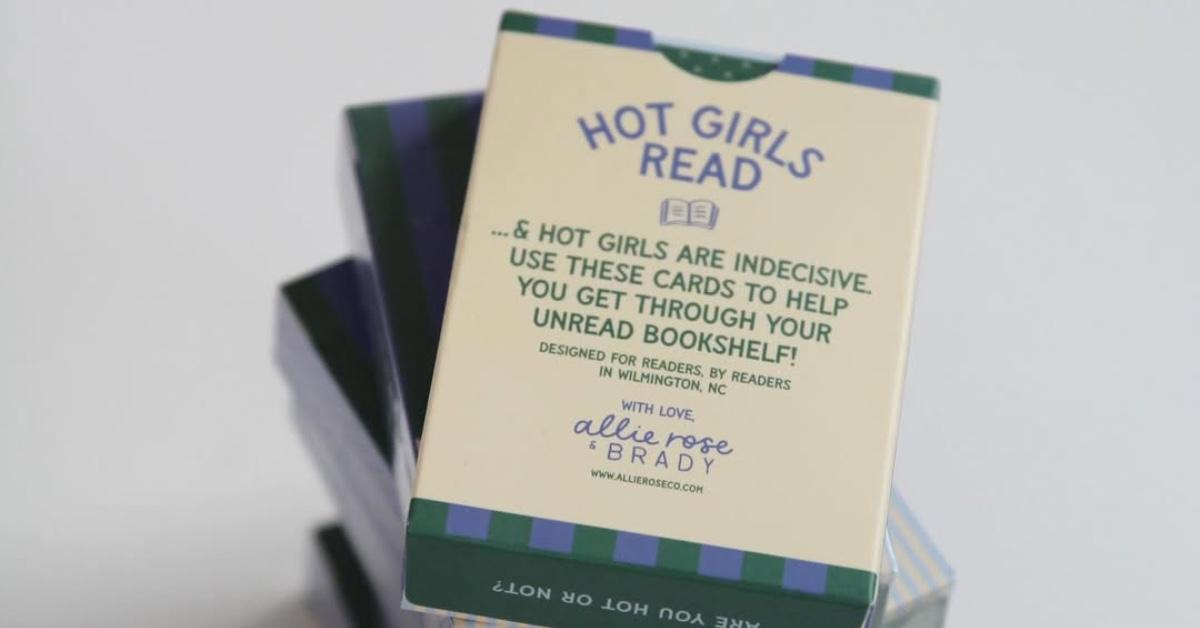
Who Trademarked 'Hot Girls Read'?
Allie Rose Co. is a small business founded by graphic designer and content creator Allie Rose, whose real name is Allie Mitrovich. The company sells book-themed merchandise, including bookmarks, apparel, stationery, and reading accessories. The controversy began after the company announced that it had secured a trademark for "Hot Girls Read." In a now-deleted Instagram post, Allie Rose Co. described the phrase as an important part of the brand's growth and identity.
The company later clarified that the trademark applies to specific merchandise categories, including bookmarks, stickers, book covers, notepads, T-shirts, sweatshirts, and hoodies. It also asked businesses selling products featuring the phrase to remove those listings.
Why are readers upset about the trademark?
The announcement quickly sparked backlash across BookTok, Reddit, Threads, and Instagram. Many readers argued that "Hot Girls Read" had already become a common phrase within the online reading community long before the trademark was approved. Critics pointed to examples they believe predate Allie Rose Co.'s use of the slogan.
According to Marie Claire Australia, social media users resurfaced posts containing variations of the phrase dating back to 2009, 2010, and 2011.
Others argued that the phrase became popular through years of use by readers, book clubs, influencers, and content creators rather than a single business. Some also connected it to the broader "Hot Girl" movement that gained popularity online in the late 2010s.
The controversy has also raised concerns among small business owners who sell reading-themed merchandise. Because the trademark applies to certain categories of products, some readers worried that sellers could be required to remove items featuring the phrase from their stores.
As the debate continued, the discussion expanded beyond Allie Rose Co. itself. Many readers used the situation to discuss larger questions about trademarking community-driven phrases and whether widely used internet expressions should be controlled by a single brand.
Following days of backlash, Allie Rose shared an Instagram video announcing that the trademark was being surrendered. "I want to say I'm so sorry to every small business that I harmed in doing this," she said. Allie added that "the decision was made more as a business strategy decision than a human being decision" and acknowledged that it had been "entirely wrong" on her part.
In the video, Allie said paperwork had already been filed to abandon the trademark, though she noted that the process would take time to appear in official records. She also denied claims that she had personally sent cease-and-desist notices or Etsy takedown requests to businesses selling "Hot Girls Read" merchandise.
The creator added that profits from her remaining "Hot Girls Read" products would be donated to the literacy-focused charities Room to Read and Read and Feed. She concluded the video by apologizing again and stating that community matters more than the trademark itself.
While the trademark only applies to specific products and does not prevent people from using the phrase in everyday conversation, the controversy remains one of the biggest discussions within the BookTok community, even as the trademark is now in the process of being abandoned.