
Everyone Wants the King Cake Baby During Mardi Gras, but What Does It Mean?
Everyone wants to find the baby, but what does it mean?

Published Feb. 17 2026, 1:58 p.m. ET

When it comes to the tradition of Mardi Gras in Louisiana, New Orleans residents take their holiday seriously. It happens every year, ending with Fat Tuesday, and ushers in weeks of revelry, tradition, and fun, which culminate in a massive celebration.
Some traditions are localized to New Orleans, while others are celebrated around the country, and some around the world.
Among those Mardi Gras traditions that have worked their way into the larger population: king cakes and the little plastic babies that live inside of them. But what does the baby mean, and why are people so eager to find it when they cut into a king cake? Here's what we know about the unusual tradition.
What does the baby in the king cake mean?
We've all seen the cakes: ring-shaped yellow cakes with colorful frosting, usually in white, green, and purple. But people seem to go ga-ga over the chance to find a little plastic baby inside it.
It's a little weird without context. What exactly does the baby represent?
According to Better Homes & Gardens, Mardi Gras was first celebrated in America in 1699, but the baby in the cake wasn't really a tradition until the 1800s. The outlet reports that "In the 1940s, a baker named Donald Entringer solidified the baby-in-the-cake tradition when a traveling salesman approached him with an offering of small porcelain dolls."
He began baking porcelain babies into the cake to symbolize Jesus. Eventually, he ran out of porcelain dolls and switched to plastic, which is a tradition that endures to this day.
If you find the baby, you are crowned "king" or "queen" of the event, and you are responsible for providing the king cake for the next year's celebration. It also purports to confer prosperity on whoever finds the baby.
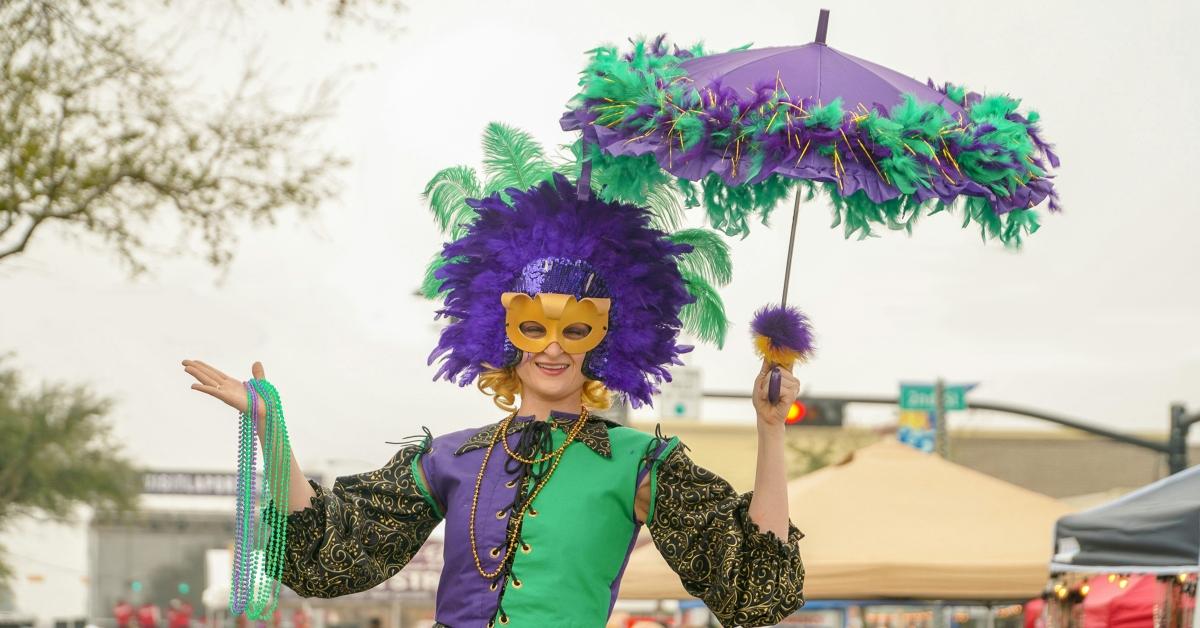
Beaded necklaces are another Mardi Gras tradition that sings to the soul of the holiday.
The baby in the cake is far from the only tradition celebrated with Mardi Gras. In fact, the holiday is one of the most tradition-laden holidays. Among the traditions: beaded necklaces. The necklaces date back to the 19th century, and come from a symbolic act of the parade "king" throwing "riches" to parade attendees.
The idea is to mock ostentatious wealth and to spread it among the "peasants," aka the parade attendees. Mardi Gras, while at its core tied to religious roots, is a celebration of a rebellious nature and the power of the people.
While New Orleans remains the hub of Mardi Gras celebrations in the United States and Bourbon Street transforms into a carnival every year, the traditions are slowly wending their way into the rest of the country. As in the holiday's native country of France, the celebrations look a little different from city to city. But in New Orleans, it's the same every year: wild costumes, staunch traditions, and a festival aura that is unmatched.