
Why Are Kaiser Nurses on Strike? The Pay, Staffing, and Patient Care Battle
"We will not accept a deal that leaves anyone behind, lags behind inflation, or fails to meet the standard Kaiser has already set elsewhere."
Published Oct. 15 2025, 10:45 a.m. ET

It started quietly in break rooms and with whispered tensions. Nurses across Kaiser Permanente were unhappy. Then it erupted. On Oct. 14, 2025, thousands of frontline workers walked off the job, making history. The scale alone stunned many. But what pushed them over the edge?
When 31,000 Kaiser Permanente registered nurses and health care workers launched a five-day strike across California, Oregon, and Hawaii, the media took notice. The union says this is their biggest action in five decades.
Here's what we know about the strike, the reasoning behind it, and what the burnt-out workers are asking for.
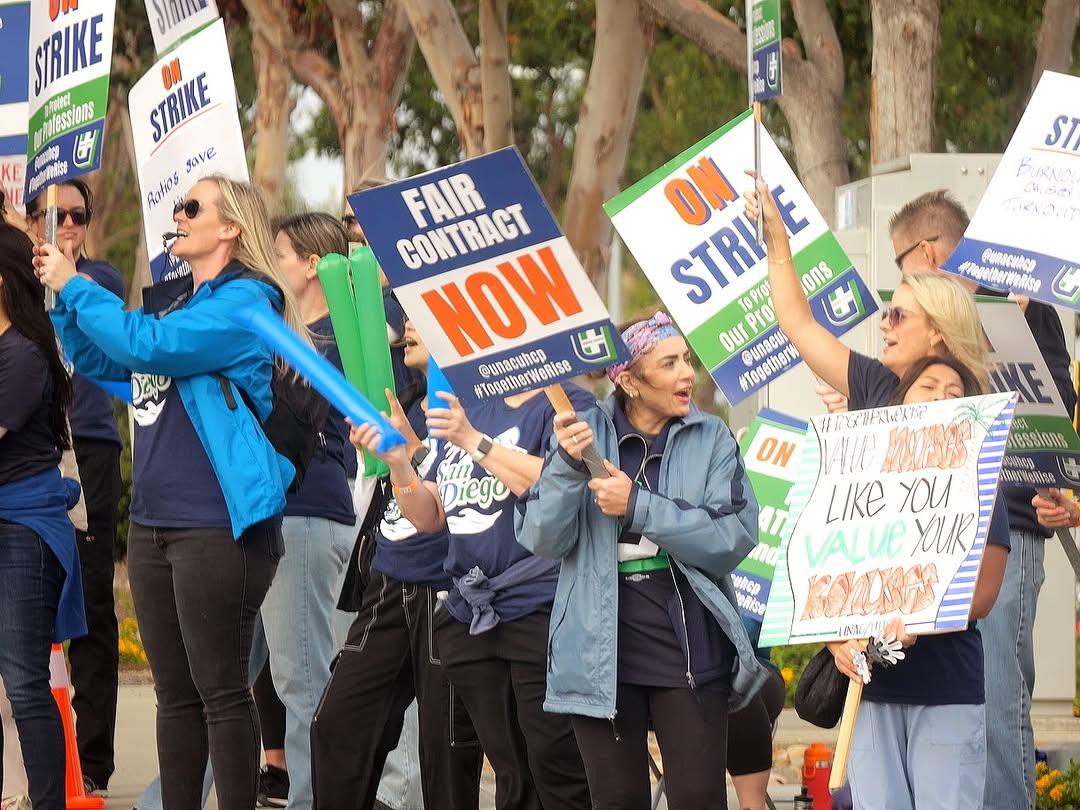
Why are Kaiser nurses on strike across multiple states?
The United Nurses Associations of California/Union of Health Care Professionals (UNAC/UHCP), released a statement about the strike. "We do not take the decision to strike lightly. A strike is always a last resort, reached only after every other option has been exhausted."
They continued, "When the 2021 National Agreement was signed, no one could have predicted historic inflation. Since then, inflation has risen 18.5 percent, while our members received just 10 percent in across-the-board wage increases."
Kaiser Permanente countered with a 21.5 percent wage increase over four years, while union demands sit at 25 percent.
The statement noted they weren't asking for "special treatment" but what was "fair," saying "Kaiser has the ability to pay. In 2021, reserves stood at $44 billion. In 2024, Kaiser reached $66 billion in reserves—a $22 billion increase. This is not a money problem. It’s a priority problem."
The company claims many employees already earn “16 percent more than industry peers,” and an additional increase in pay to meet demand would mean raising prices for customers.
According to The Associated Press, the strike includes pharmacists, midwives, rehab therapists, and nurses. At the time of writing, 31,000 are on strike, but that number could grow to 46,000 before the strike is over.
Per The Associated Press, Kaiser Permanente is one of the nation’s largest not-for-profit health plans, serving 12.6 million members at 600 medical offices and 40 hospitals in largely western U.S. states. It is based in Oakland, Calif.
The strike is scheduled from Oct. 14 through Oct. 19. Hospitals, emergency services, and urgent care will remain open. Appointments may become virtual, and elective surgeries may be postponed.
The strike is rooted in long-standing tensions over respect, burnout, and inequality.
The committees negotiating say Kaiser has repeatedly dismissed proposals, delayed agreements, or offered superficial fixes that do not deal with root issues.
They say they are ready to come to agreement. "We are ready to reach a fair contract. But we will not accept a deal that leaves anyone behind, lags behind inflation, or fails to meet the standard Kaiser has already set elsewhere. We are striking to protect patient care, ensure fairness, and restore collaboration at Kaiser Permanente."
This strike is more than a standoff over dollars. It is about dignity, safety, and sustainable care. For Kaiser Permanente nurses, walking off was a final recourse after years of mounting pressure. How this ends will ripple across health care systems far beyond Kaiser’s walls.