
Experts Have Weighed in on Whether the Hantavirus Is Likely to Become a Pandemic
Hantavirus has sparked fears of a new pandemic.

Updated May 7 2026, 10:05 p.m. ET

In 2020, the world was brought to a grinding halt by the pandemic we all know as COVID-19. It tore through countries, ended lives, and changed the world as we know it, almost overnight.
Collective trauma seems to be lingering, perhaps exacerbated by the fact that COVID has never really gone away completely.
And that trauma was reignited in May 2026 when news spread that a highly deadly form of the Hantavirus had been confirmed on a cruise ship, and marked several fatalities. The virus's fatality rate, much higher then COVID-19's, immediately sparked fears that there would be another pandemic, with this one potentially far worse.
So, do we need to worry about whether or not Hantavirus will become a pandemic? Luckily, experts have weighed in on the topic to ease fears as international agencies begin responding to the outbreak.
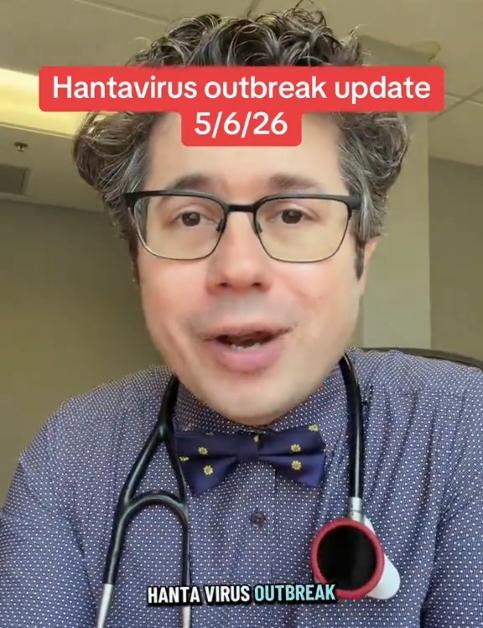
Will the Hantavirus become a pandemic, like COVID?
Everyone's a little on edge, especially after it was confirmed that people had died aboard a cruise ship from the Hantavirus.
According to the World Health Organization, "On 2 May 2026, a cluster of passengers with severe respiratory illness aboard a cruise ship was reported to the World Health Organization. The ship is carrying 147 passengers and crew. As of 4 May 2026, seven cases (two laboratory confirmed cases of hantavirus and five suspected cases) have been identified, including three deaths, one critically ill patient and three individuals reporting mild symptoms."
WHO adds, "Hantavirus infections are associated with a case fatality rate of <1–15% in Asia and Europe and up to 50% in the Americas."
With a fatality rate of up to 50% in the strain of Hantavirus, identified as the Andes strain, it's easy to see why people are frightened. Especially since the organization notes that human-to-human transmission has been observed with this strain.
However, there is some good news, as they report, "WHO currently assesses the risk to the global population from this event as low."
While human to human transmission has been noted, Center for Disease Control reports, human to human spread "is usually limited to people who have close contact with a sick person. This includes direct physical contact, prolonged time spent in close or enclosed spaces, and exposure to the sick person's body fluids."
Which means that currently, they do not expect Hantavirus to be as transmissible as COVID was, and therefore poses a lower risk of becoming a pandemic, per TODAY.
Here's what the experts say you need to know about the Andes Hantavirus strain.
So, what should you do if you're worried about Hantavirus? Both health organizations note that symptoms often appear flu-like, and the incubation period for the virus can be up to 42 days. Which means you can expect symptoms to appear between 4 and 42 days after exposure.
Aside from catching the virus from prolonged, close contact with an infected person, it can also be caught "through contact with infected rodents or their urine, saliva, or feces," per the CDC.
However, they also note, "The rodents that carry Andes virus have not been found in the United States."
CDC says that these tips can reduce the risk of catching Hantavirus:
- "Washing hands frequently
- Avoiding kissing and sexual contact with someone who may have Andes virus
- Avoid sharing drinks, cigarettes, hookah, and vapes with someone who may have Andes virus
- Avoid sharing eating utensils or eating food from the same plate or bowl as someone who may have Andes virus
- Maintaining distance from someone who may have Andes virus."
People are understandably nervous about the virus's spread, especially given how much misinformation and how many misunderstandings spread in the early days of COVID.
But it's important to note that the transmission vectors are different, and it is not expected to be a pandemic at this time.