
The Real Difference Between Short Program and Free Skate Explained
One program is strict and technical. The other gives skaters room to breathe, perform, and go big.
Published Feb. 11 2026, 11:09 a.m. ET

If you are watching the Winter Olympics figure skating and thinking, “Why do they skate twice?” you are already asking the right question. The difference between the short program and the free skate is basically the sport’s plot twist. One round is a controlled checklist where tiny mistakes scream loudly. The other is where skaters can swing for the fences and change the whole leaderboard.
Here is the sneaky part. The short program and the free skate are judged the same way, but they are built differently on purpose. That design forces skaters to prove two things. First, they can hit the required elements under strict rules. Second, they can keep it together longer with a bigger risk and more room for creativity.
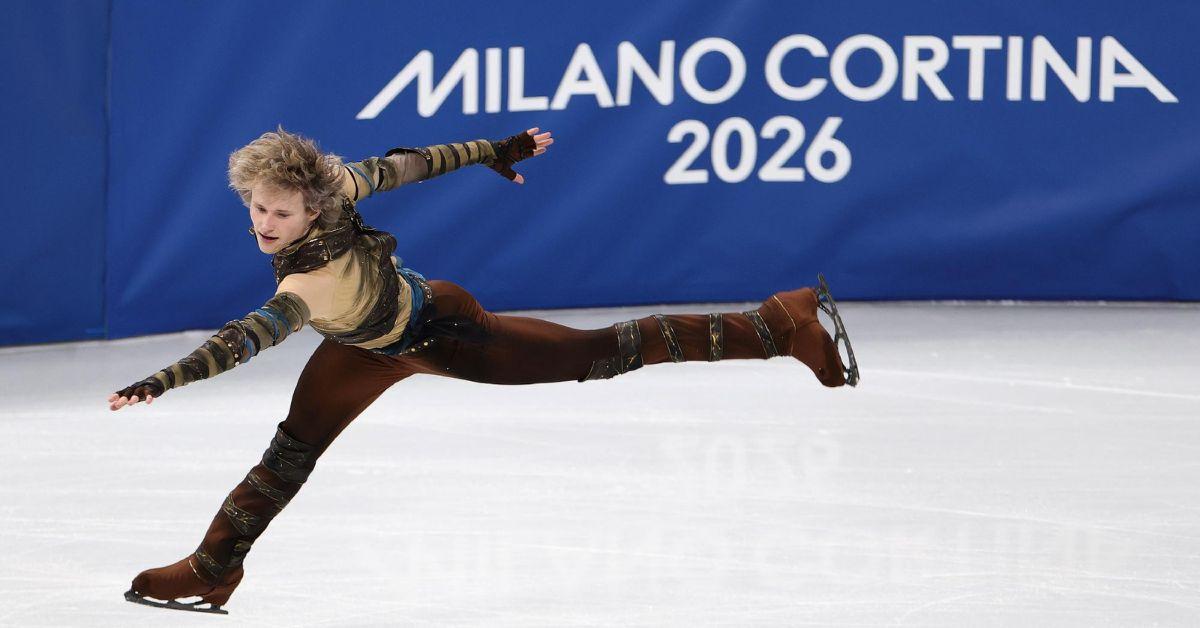
What is the difference between short program and free skate?
According to the Olympics, in the short program, skaters have a defined set of required elements they must include, which is why it feels so tight and tense. It is not a free-for-all. The element list is set by the International Skating Union, so you cannot just swap in your favorite jump because it feels safer that day. The structure is the point.
Time is a big tell. For men’s and women’s singles and pair skating, the short program is 2 minutes and 40 seconds, give or take 10 seconds.
There is almost no space to recover from an error. One shaky landing can turn into a points leak that follows you the rest of the event.
The vibe is basically “high stakes speed run.” Skaters are trying to rack up points while staying inside the requirements, and judges are watching both the technical side and the performance side. You still get emotion, music, and style, but the short program is where control gets rewarded fast, and errors feel extra loud because the program is so compact.
Each segment earns its own total score, and those two totals are combined to determine final placement. Because the free skate is longer and allows for more elements, it usually carries more scoring potential. However, the short program score still matters significantly, since both segments together decide the final standings.
Free skate is where the program gets longer, the risk gets bigger, and the comeback math gets real.
Free skating, often called the free skate, runs longer. For singles and pairs at the senior level, it is up to four minutes. Skaters still have rules and limits, but they get far more choice in how they build the program and where they place big elements. That is why this segment can reshuffle standings. It is more time, more difficulty, and more chances to gain or lose ground
Both the short program and the free skate are judged using the ISU Judging System. Each routine receives two main scores. The Technical Element Score reflects the base value of required elements, with judges adding or subtracting points through a Grade of Execution depending on how well each element is performed. The Program Components Score evaluates skating skills, composition, performance, transitions, and interpretation of the music.
If you want the simplest way to remember it, treat the short program like the precision round and the free skate like the endurance round with extra spice. One proves you can execute under strict rules. The other proves you can perform under pressure for longer while choosing your battles. Once you know that, figure skating stops feeling confusing and starts feeling deliciously dramatic.