
Why Did Drew Dalman Retire? Bears Center Steps Away at 27 After Five NFL Seasons
The Bears’ offensive line leader suddenly called it quits. Drew Dalman’s retirement has fans confused.
Published March 4 2026, 10:54 a.m. ET

When Drew Dalman walked away from a multi-million-dollar career, Chicago Bears fans were stunned. On March 3, the Pro Bowl center informed the Bears that he was retiring after five NFL seasons, according to ESPN. The move became official on Tuesday, March 3, after “whispers” built up around the NFL combine.
Drew told the Bears he is retiring at age 27, ending his career after five seasons. Now fans want answers. Netizens are trying to figure out why the California native would walk away from a promising career.
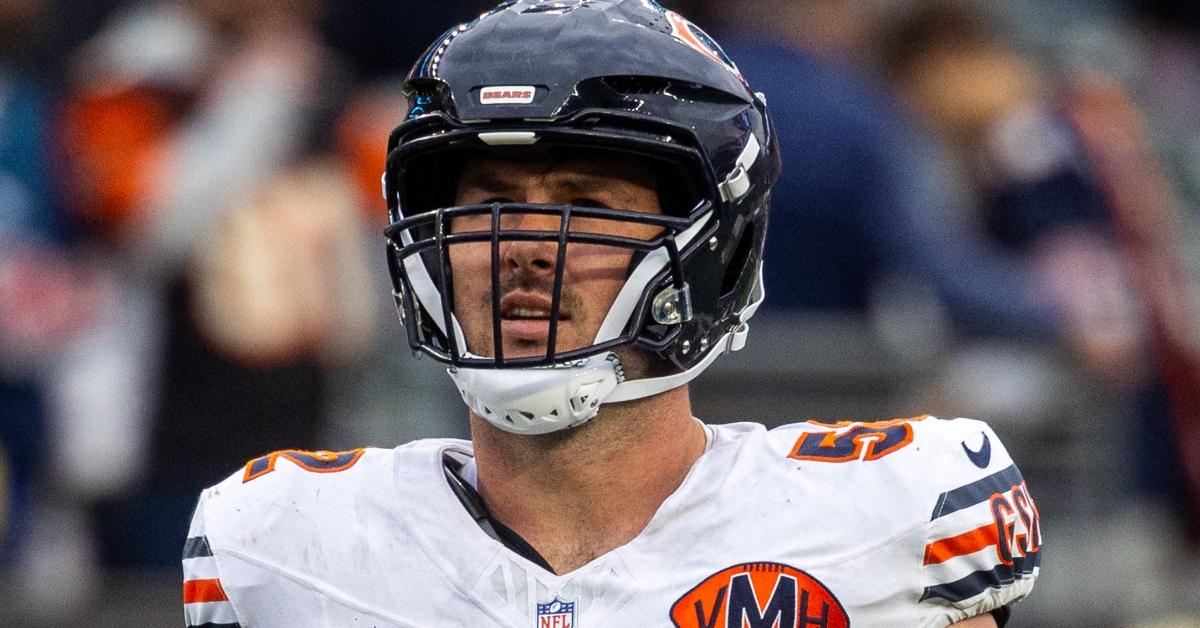
Why is Drew Dalman retiring?
Drew has not publicly explained why he is stepping away. His departure is a huge loss for the franchise because he was not just a starter. He was the brain of a unit that helped flip Chicago’s identity in one season. Early retirements do happen in the NFL, often because of the game’s long-term physical toll. Drew likely has personal reasons, but he has not shared them publicly.
Drew played every snap in his lone season with Chicago after signing a three-year, $42 million free-agent deal in March 2025. During that season, Chicago’s offensive line ranked first in pass block win rate and fifth in run block win rate.
His teammates also praised his ability and football IQ. According to ESPN, Quarterback Caleb Williams nicknamed Drew “Hulk,” explaining, “He’s the brains and all of it.” Tight end Cole Kmet echoed that praise in simpler terms, saying, “Drew is just so smart, man.”
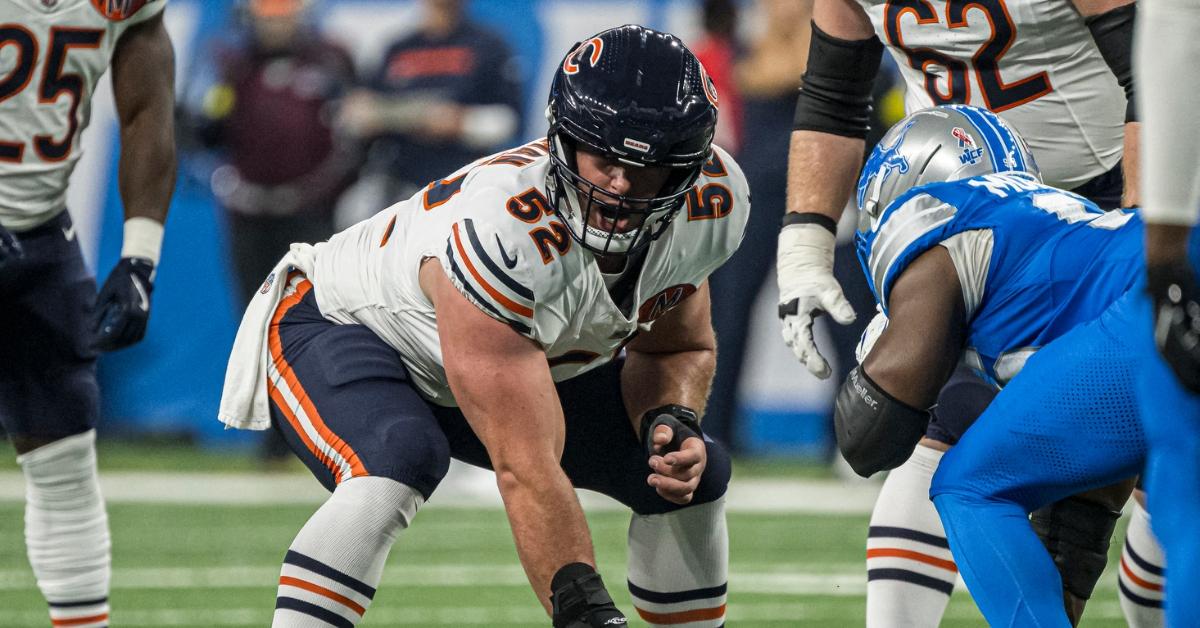
What is Drew Dalman’s net worth?
Drew’s exact net worth is not publicly documented. However, his NFL earnings are easy to track. Spotrac lists Drew’s career earnings through 2026 at $25,187,464, including an $18 million cash year in 2025. That season alone included a $6 million signing bonus and $11 million in base salary.
Drew’s decision to retire also opens the door for the Chicago Bears to try to recover $4 million in signing bonus money. Over the life of his deal with Chicago, he received a $6 million signing bonus, which teams typically prorate across the length of a contract for salary-cap purposes. If $2 million of that bonus counted as “earned” after the first season, then $4 million remains “unearned.” The Bears can attempt to recover that remaining amount now that Drew has retired.
According to OverTheCap, Chicago could claw back $2 million in 2026 and another $2 million in 2027, totaling $4 million. In other words, Drew’s retirement does not just shake up the Bears’ depth chart. It could also allow the team to pursue a significant portion of bonus money.