
“That Makes So Much Sense” — If You Ever Wondered What the “O” in “O’Clock” Means, We Got You
"Of the" = "o'."

Published March 6 2026, 3:26 p.m. ET

Many kids are unable to even tell time on an analog clock anymore. Which has prompted some schools to go as far as to completely remove them from classrooms, as youngsters are left scratching their heads and looking at the circular-shaped time-keeping contraption like it's the chalkboard from Good Will Hunting.
But just because analog clocks are falling out of fashion, it doesn't mean that the nomenclature associated with these devices is going anywhere. And the very design of analog clocks answers a question many have about telling time. Namely: What does the "o" in "o'clock" mean?
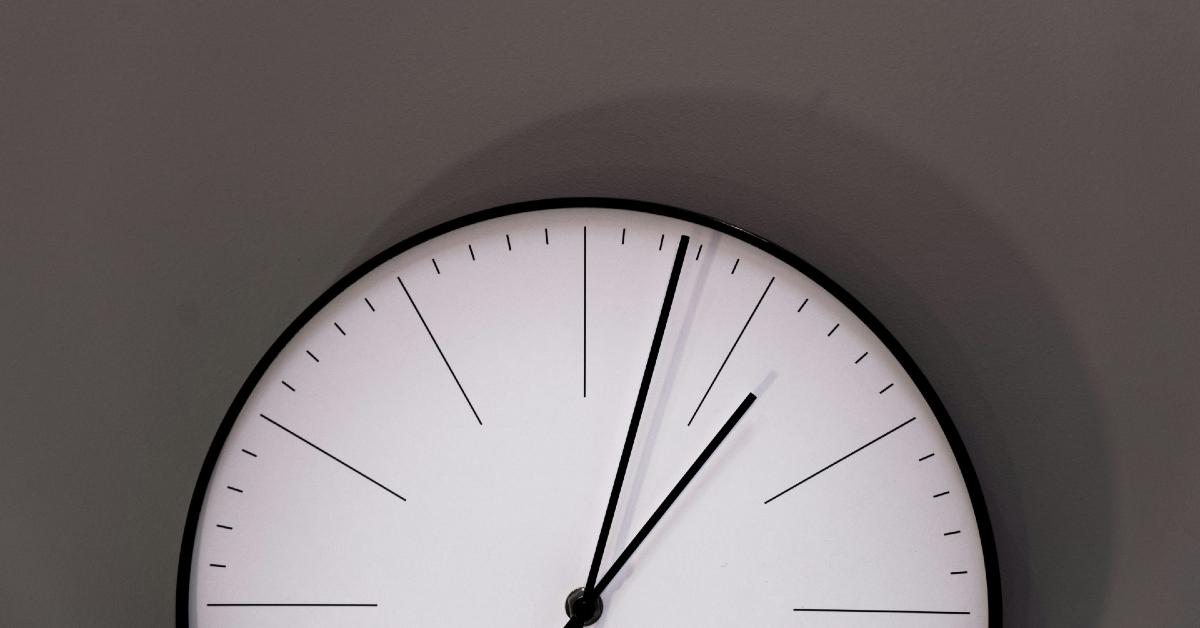
So what does the "o" in "o'clock" mean?
Even if you're reading the time off of your phone or digital watch display, you'll still hear people saying: "it's 3 o'clock." Which has left many wondering, like this Instagram user, why this appendix to relaying the hours and minutes of the day is necessary.
As it turns out, the "o" stands for "of the," as in "of the clock," according to Yahoo. Reader's Digest published an article highlighting one of the earliest recorded instances of someone using "of the clock," which dates back to 1384.
Historians date the prevalence of mechanical clocks all the way back to 1275. Today, one of the oldest clocks that has stood the test of time is the Salisbury Cathedral Clock, which was constructed in 1386. But two years prior, there is a recorded mention of someone commenting on the time and attributing this measure to a clock.
That's because clocks at the time were considered relatively new technology. Think about the early days of mobile phones before everyone and their toddler had one. If you were to tell someone that you had a work call you'd need to take during this period, they'd probably think that you had to be at the office in order to engage in this specific communication.
The same principle applies to individuals living in the Middle Ages, who, when mentioning the time, had to state that they were attributing this measure of passing hours by a clock. Because how many people would've realistically had such a complicated machine in their home, let alone on hand, at all times?
The Horology Lab writes that prior to the widespread usage of clocks, that sundials were a popular form of timekeeping for folks across all cultures. "Sundials were not limited to one region or culture; they were used and refined globally, from China to Europe and the Middle East."
Since we're speaking of the term "o'clock," and America's roots are indeed predominantly tied to early British colonial history, it's no surprise that this term has endured for so long. The same Horology Lab piece writes: "In Europe, sundials remained the primary timekeeping method until the development of mechanical clocks in the 14th century."
So if you're a Brit in the Middle Ages trying to convey time at the advent of mechanical clock advancements, you're going to invariably come across a lot of people who are still relying on sundials in order to keep track of their time. Meaning that you're going to have to specify that the time you're speaking of is based on "the clock."
The reason why the term became "o'clock" is that "o'" is a common shorthand way of saying "of the." After so many people for so long kept saying the time "of the clock," that phrase became abbreviated and has still persisted to this day. Kind of like how the "save" icon on a variety of computer applications still shows a floppy disk, even though they haven't been used as a data management tool for decades.