
India's Supreme Court Allows First-Ever Passive Euthanasia for Harish Rana — What Happened?
The Supreme Court made the ruling on March 11, 2026.
Published March 12 2026, 1:03 p.m. ET

The Supreme Court in India made history on March 11, 2026, after it ruled to allow the country's first-ever passive euthanasia for a young man named Harish Rana. According to India Today, an earlier Supreme Court ruling in 2018 on passive euthanasia allowed for the withdrawal of life support in certain cases, like removing a ventilator.
The new Supreme Court ruling goes further and allows the withdrawal of medical treatment for Harish. Justice Pardiwala was brought to tears as he delivered the ruling.
"Our decision today is not only logic, it sits in a space of love, medicine, and science," he said as he spoke to Harish's parents. "This is an act of profound compassion and courage. You are not abandoning your son. You are allowing him to leave with dignity."
So, what happened to Harish?
What happened to Harish Rana?
Harish, who is 32, was just 20 when he fell from the fourth floor of a building at Panjal University in Kharar. The civil engineering student was in his last semester when the tragedy happened, and he was left with severe brain injuries that have left him in a permanent vegetative state ever since. Harish also developed diffuse axonal injury, which is a traumatic brain injury in the white matter, and is paralysed from the torso down.
After years of helplessly watching Harish suffer in silence, his family began to advocate for him to die with dignity. In addition to the grief of watching their son suffer daily, Harish's father, Ashok, and mother, Nirmala Devi, are his primary caregivers, and they were forced to sell their home in 2021, per the Times of India. The couple also had to hire nurses, and the cost nearly equaled Ashok's salary.
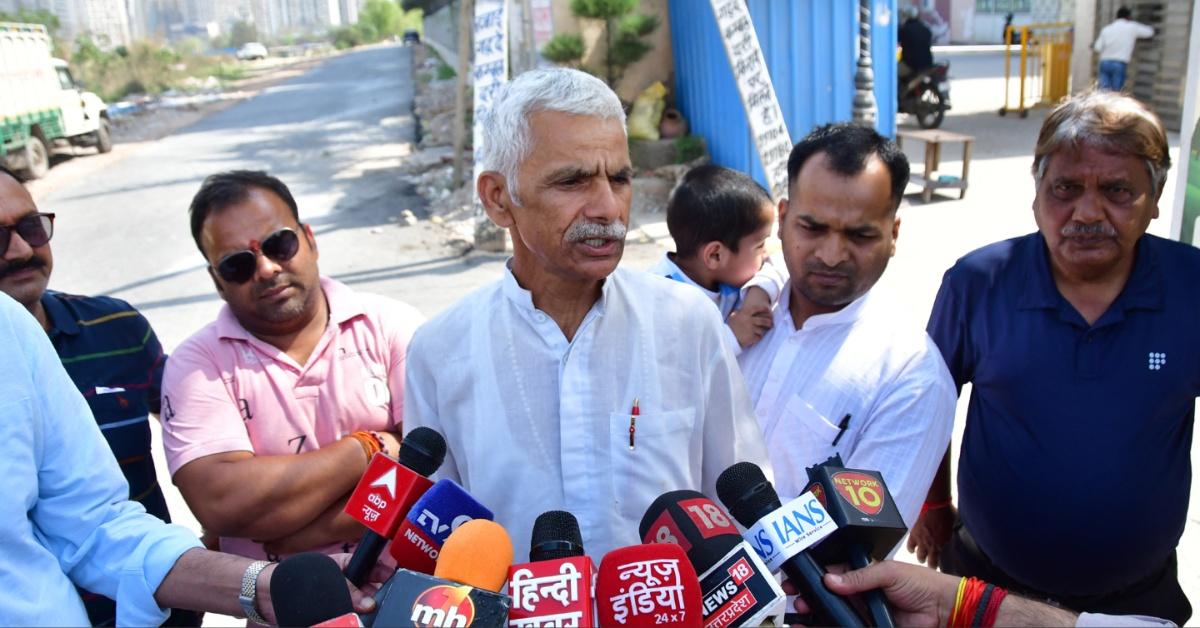
"For Harish and for us, this is a difficult decision, but it's in our interest, said Ashok. "Watching your own child fade away is the deepest pain a parent can suffer. Yet, for him, death is a release, a gentle escape from the endless misery and suffering he has endured for the last 13 years."
"We thank God," he added. "The judges who heard the case were also guided by God's grace. Through their guidance, the judgment we wanted was delivered. We received support from doctors and we are satisfied with that."
Harish is a patient at the All-India Institute of Medical Sciences (AIIMS), Delhi, in the palliative care unit. Passive euthanasia is different from euthanasia, as it allows for a natural death with comfort and dignity, but there is nothing used to hasten the death.
The former AIIMS chief and professor of Palliative Medicine and onco-anaesthesia, Dr. Sushma Bhatnagar, explained the difference.
"Palliative care never supports any kind of euthanasia," the doctor said, per India Express. "Whether active or passive. What we support is allowing a person to die naturally. We will not prolong death, and we will not hasten death. Palliative care and passive euthanasia are two different things."