
Sanctuary Cities Are at the Heart of ICE Escalation as Citizens Grapple with Federal Government
Trump threatened to cut federal funding to states which host sanctuary cities. It's not clear if he can even do that.

Published Jan. 14 2026, 4:26 p.m. ET

2025 was a year of major changes for the United States. President Donald Trump returned to the White House to serve his second, and final, term in office. With him came an agenda filled with major changes from the top to the bottom of the federal government.
Enacting sweeping changes affecting the budget, laws, and more, Trump and his administration set norms on fire. But it was perhaps his escalation of the use of ICE, under the instruction of Secretary of Homeland Security Kristi Noem, that took center stage.
The agents working for ICE were filmed brutally detaining citizens, both with and without warrants, claiming that they were only targeting criminals and undocumented immigrants, despite proof to the contrary. By 2026, tensions between citizens and ICE had reached a fever pitch. At the center of the swirling chaos: sanctuary cities. What are sanctuary cities, and which states have them? Here's what we know.
Which states have "sanctuary cities"?
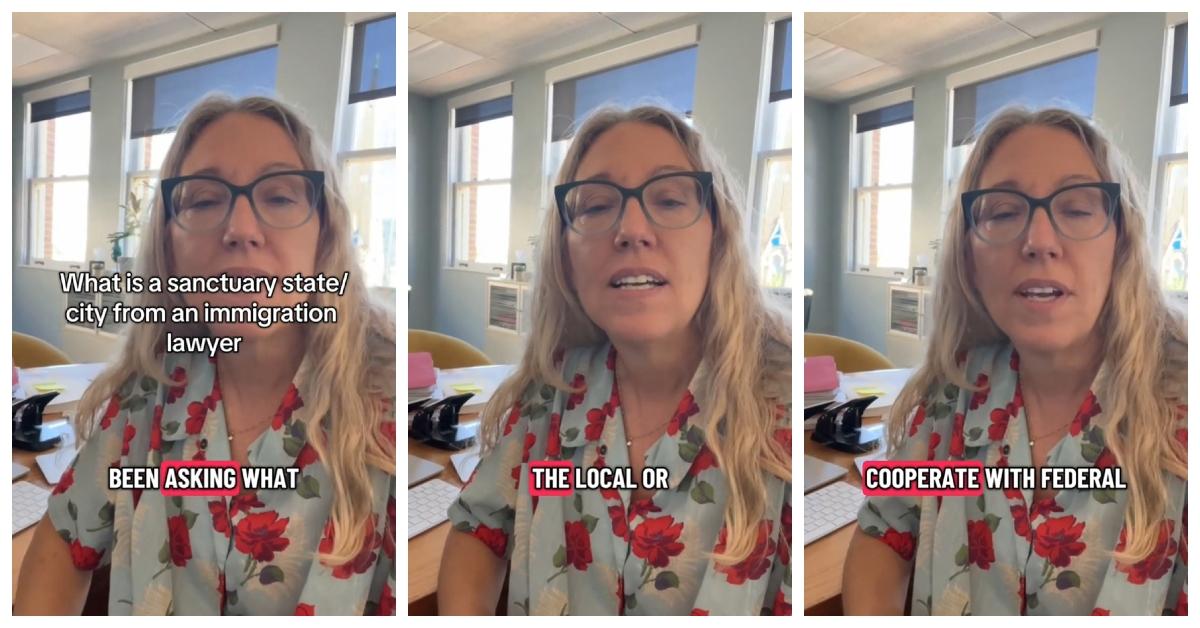
First, it's important to understand what sanctuary cities are. Merriam-Webster defines a sanctuary city as "relating to or being a locality that provides limited cooperation to federal officials in the enforcement of immigration laws or policies."
In other words, if ICE or Border Patrol is active in a community, local police will not act to aid them or provide resources. In non-sanctuary cities, police will often work with ICE, depending on the precinct.
So, which states have sanctuary cities? According to Newsweek, documented sanctuary states include California, Colorado, Connecticut, Illinois, Massachusetts, New Jersey, New York, North Dakota, Oregon, Rhode Island, Utah, Vermont, and Washington.
In addition, 220 cities and counties across the nation are listed as having "sanctuary status," according to the Center for Immigration Studies.
It is no surprise that these cities have made headlines in 2025 and 2026 as places where ICE activity has been highest, ostensibly because those in the Trump administration who make the calls don't want cities to think they can avoid ICE activities.
Trump has threatened to cut federal funding to states that contain "sanctuary cities."
These so-called sanctuary cities were again thrust into the spotlight in mid-January 2026 when Trump threatened to cut federal funding to cities which refuse to aid ICE agents.
Jan. 14, 2026, he took to Truth Social to write, "EFFECTIVE FEBRUARY FIRST, NO MORE PAYMENTS WILL BE MADE BY THE FEDERAL GOVERNMENT TO STATES FOR THEIR CORRUPT CRIMINAL PROTECTION CENTERS KNOWN AS SANCTUARY CITIES."
It's unclear whether this action falls within his scope of power as president, but it wouldn't be the first time he has tried to do something that the Constitution doesn't allow. In fact, according to The Hill, a U.S. District Court judge already ruled a funding freeze to sanctuary cities "unconstitutional" even before Trump made the threat.
The confusion sparked by his order has left states scrambling to determine what their rights are and how best to protect their people, both citizens and immigrants.
Trump's escalation against blue states and sanctuary cities is no surprise. Since returning to office in January 2025, he has grown increasingly aggressive and erratic, even green-lighting military activity in other countries. In his first administration, more conservative cabinet members held him back. This time, he seems to be surrounded by "yes" men, and it's unclear when, if at all, he will hit the limit of his grab for control.