
Why Jonathan Morris Left the Priesthood and Chose a New Path
A sabbatical turned into a turning point as Jonathan Morris reconsidered celibacy and his future.
Published March 30 2026, 12:51 p.m. ET

After nearly 17 years as a Catholic priest, Jonathan Morris left the priesthood through the Church’s formal process.
He was ordained in 2002 in Rome as part of the Legionaries of Christ. He later said he left the order after learning its founder, Marcial Maciel, had lived “secretly entangled in a web of deceit.”
After leaving the Legionaries, he entered diocesan ministry in the Archdiocese of New York. According to the National Catholic Register, he served as parochial vicar at St. Patrick’s Old Cathedral for four years. He later served at Corpus Christi Church and took on additional roles, including media work with SiriusXM and The Catholic Channel.
Jonathan has since left the Church entirely and now lives the life he once considered but set aside.
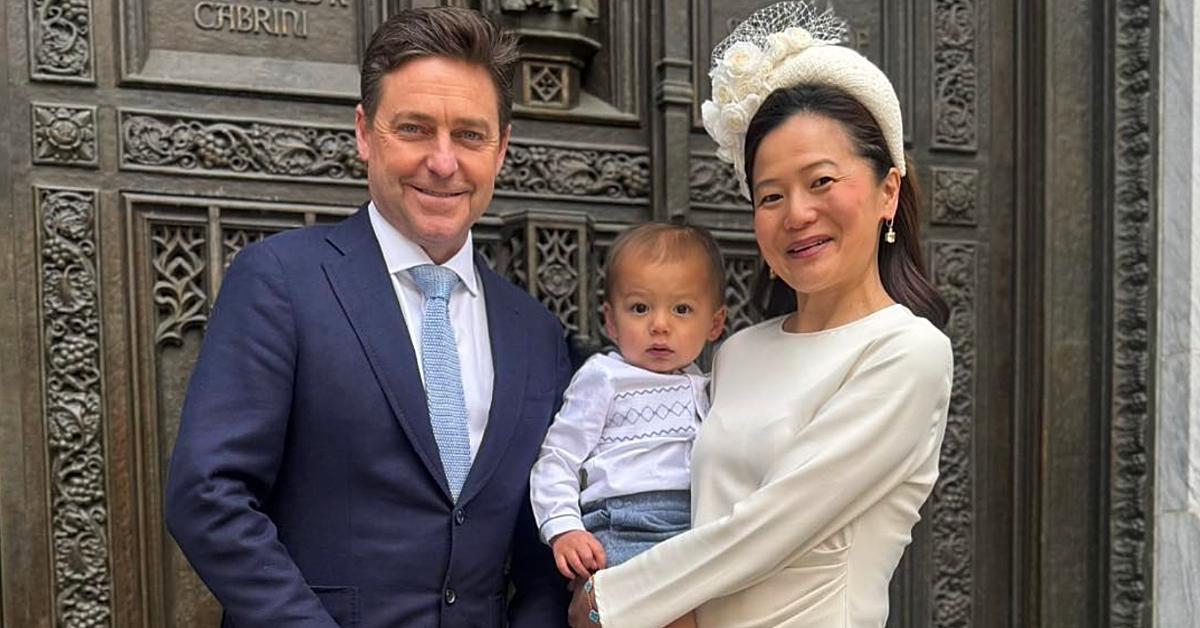
Why did Jonathan Morris leave the priesthood?
Jonathan left the Church after a sabbatical. He said he had struggled “for years” with his vocation, especially the commitment to celibacy. He wanted the freedom to marry and build a family. He also confirmed he was in a romantic relationship at the time but wanted to keep his future options open.
“Taking this step is something I have considered often and at length in years past and discussed with my spiritual guides,” Jonathan said in a statement, per Patheos. “While I have loved and thrived in so many aspects of my ministry, deep in my interior I have struggled for years with my vocation and with the commitments that the Catholic priesthood demands, especially not being able to marry and have a family.”
After leaving the priesthood, he stayed active in media and leadership. He co-founded Morris & Larson Advisors and married Kaitlyn Folmer in 2020, according to Business Insider.
His desire for family life was not new. In a 2014 interview with the NCR, he reflected on growing up in Ann Arbor as one of seven children. He studied business at Franciscan University of Steubenville and initially had a girlfriend before discerning a call to the priesthood.
“I majored in business at Franciscan University in Steubenville and had a girlfriend,” Jonathan revealed. “My roommate was thinking of the priesthood, and I was impressed. It is such a big commitment. I invited him to a retreat to think about it. At the retreat, I started thinking about it myself. In the end, I became a priest, and my roommate married my girlfriend — although he asked my permission before he started dating her.”
Here's what leaving the priesthood actually means.
Under Catholic canon law, a priest cannot be “un-ordained.” According to The Tablet, the Church considers ordination permanent, even if a priest no longer serves publicly. In cases like Jonathan’s, the Church releases the individual from clerical duties. Terms like “laicization” or “defrocking” describe that change in status, not a reversal of ordination.
The legal foundation comes from the Code of Canon Law, which explains how a cleric can leave the priesthood and what that means in practice. Under Canon 290, a cleric can lose the clerical state if their ordination is declared invalid, if they are dismissed as a penalty, or through a rescript granted by the Apostolic See for serious reasons.