
Donald Trump Attended Supreme Court Oral Arguments in a First for Any President Ever
No other sitting president has ever attended oral arguments at the Supreme Court.

Published April 2 2026, 10:48 a.m. ET

There are a lot of things that Donald Trump accomplished, or attempted to, in the first year of his second term in the White House. And now, he can add being the first sitting president to ever sit in on oral arguments in a Supreme Court case to that running list. But why was Trump at the Supreme Court on April 1, 2026? It wasn't part of some April Fool's joke, that's for sure.
When Trump signed numerous executive orders in January 2025, one of them was his plan to end birthright citizenship in the United States. It would stop children born in the United States from automatically receiving citizenship status at birth. The executive order was an attempt to crack down even further on his immigration initiatives, but the order was almost immediately challenged and sent to the Supreme Court.
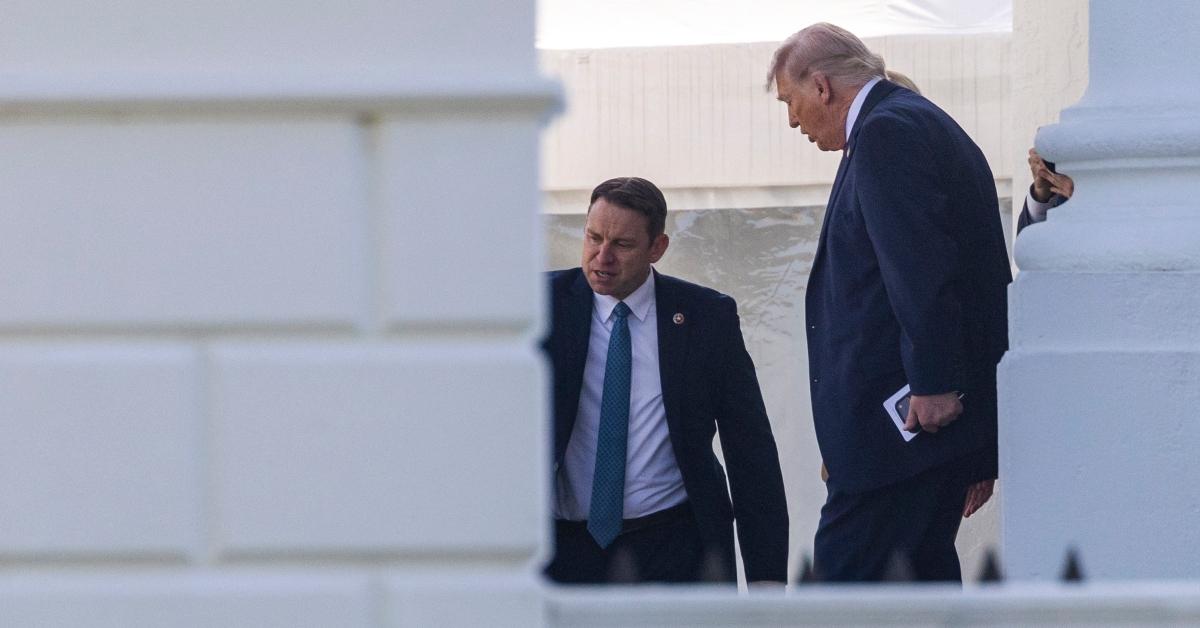
Why was Donald Trump at the Supreme Court?
According to multiple news outlets, including PBS, Trump attended the oral arguments at the Supreme Court and then left. But it was because of his own vested interest and the fact that he is named in the case that he was there. Almost as soon as Trump signed the order that would end birthright citizenship, some states and civil rights groups began to challenge it, according to Congress.
The Supreme Court case, Trump v. Barbara, is the official name of the suit, and, per WCNC Charlotte, "Barbara" is the pseudonym given to a mother who fled Honduras in 2024 seeking asylum for herself, her husband, and their children, and safety from the Mara 18 gang. The American Civil Liberties Union is backing the unnamed woman in the case that challenged Trump's executive order.
What does ending birthright citizenship mean?
The 14th Amendment, which grants citizenship to people born in the U.S., was ratified in 1868. Not only would the repeal of this Amendment mean a huge change for how the children of immigrants and undocumented individuals are treated in the U.S., but it would mean taking away something that was put into effect more than 150 years ago.
According to SCOTUSBlog, Trump tried to change birthright citizenship in his first term in office. With his second term, he seemed intent on ratifying that and signing that executive order as soon as possible. If it is approved by the Supreme Court, it would mean that children born in the U.S. might not be automatically given U.S. birth certificates and citizenship, depending on who their parents are.
The Supreme Court could have an answer by early summer 2026.
NPR reported that the Supreme Court's ruling on birthright citizenship is expected to be in by the summer of 2026. The change could take effect immediately, or over time, as states update government databases and files to reflect the massive overhaul.
After Trump left the Supreme Court, he posted on Truth Social, "We are the only country in the world STUPID enough to allow 'birthright' Citizenship!"