
The Doomsday Clock 2026 Update Sets Time at 85 Seconds to Midnight
People are talking about the Doomsday Clock all over TikTok, but what does the 2026 update actually mean?
Published Jan. 28 2026, 11:06 a.m. ET

If you’ve been scrolling TikTok or X (formerly Twitter) and seeing folks freaking out about the Doomsday Clock 2026 update without quite knowing what it means, you’re not alone. That sudden flurry of posts might make it seem like the world is literally counting down to a cosmic apocalypse. So, a little context might be helpful to understand what everyone is talking about.
In late January 2026, according to the Bulletin of the Atomic Scientists, a group of scientists who track threats to humanity — from nuclear war and climate change to artificial intelligence — shifted the symbolic clock to a new setting: 85 seconds to midnight. It’s the closest this metaphor has ever been to zero hour. Understandably, this update is stirring questions about whether we’re just witnessing online drama or facing real, rising risks. Is the world actually ending?
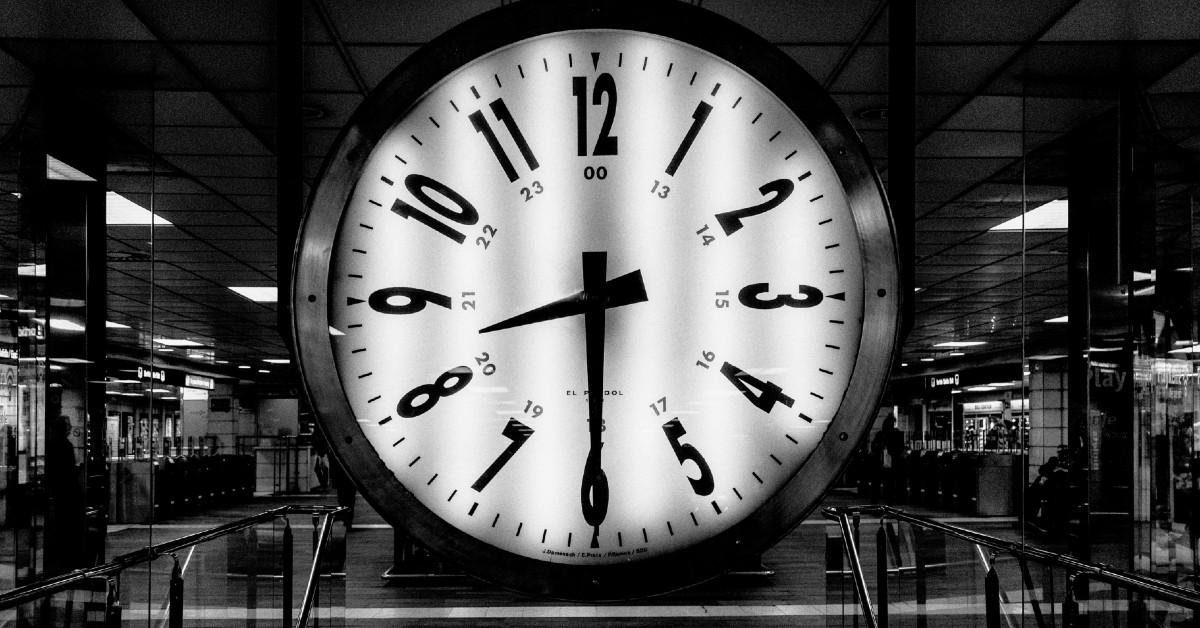
The Doomsday Clock 2026 update shows a symbolic measure of global risk.
For 2026, the Doomsday Clock was set to 85 seconds to midnight, four seconds closer than it was last year. This is also the closest it’s ever been since the concept debuted in 1947.
This clock isn’t a literal timepiece or an official countdown to doomsday. Instead, it’s a metaphor created by the Bulletin of the Atomic Scientists to represent how close experts think humanity is to a catastrophic disaster caused by human actions.
Midnight represents an imagined global catastrophe, a moment when human-caused technologies or conflicts might make the planet uninhabitable. Being “85 seconds to midnight” doesn’t mean we have 85 seconds left, but rather that experts view the combination of threats as dangerously close.
The setting reflects a combination of growing global tensions, escalating nuclear risk, climate change, unregulated advances in artificial intelligence, and the threat of biological hazards.
One reason the clock moved forward is the perception that major countries — including the U.S., Russia, and China — have become more adversarial, making international cooperation on big issues harder.
The Doomsday Clock isn’t updated in isolation; it’s based on discussions among scientists, Nobel laureates, and security experts who consider recent global events and trends each year before deciding where to place the hands.
The history behind the Doomsday Clock helps explain the update.
When the Doomsday Clock was first introduced in 1947, it was set to seven minutes to midnight, a reflection of global fears over nuclear weapons after World War II.
Over the decades, the clock has shifted forward and backward depending on world events. For example, in 1991, per ABC News, it was moved back to 17 minutes to midnight after major nuclear arms agreements.
In recent years, the clock has generally moved closer to midnight. Before 2026, the closest setting was 89 seconds in 2025. At the time, the 2025 update was also a record.
Though the clock is a metaphor, it’s widely recognized as a way to spark global conversation about existential threats and the actions (or inaction) of governments, scientists, and societies.
Experts emphasize that the clock isn’t a precise scientific model; it’s a communication tool meant to get people thinking about risk and responsibility.
So what should you take away from the update? The new time isn’t a literal prediction of “the end.” It’s more like a weather advisory from scientists saying, “Storm clouds are gathering, and we need to respond.”
Rather than being a cause for headline panic, the clock can be a starting point for conversations about global cooperation, climate action, and ethical tech development.