
How Do Astronauts Go to the Bathroom in Space? It’s More Complex Than You Think
Going to the bathroom in space isn’t simple. It’s a system built on decades of trial, error, and some very creative engineering.
Published April 2 2026, 12:23 p.m. ET

It is one of those questions people immediately think about when it comes to space travel. How do astronauts go to the bathroom in space when there is no gravity to rely on?
The answer is not simple, and it is definitely not what most people expect. What seems like a basic human need has required decades of engineering, millions of dollars, and constant redesign to get right.
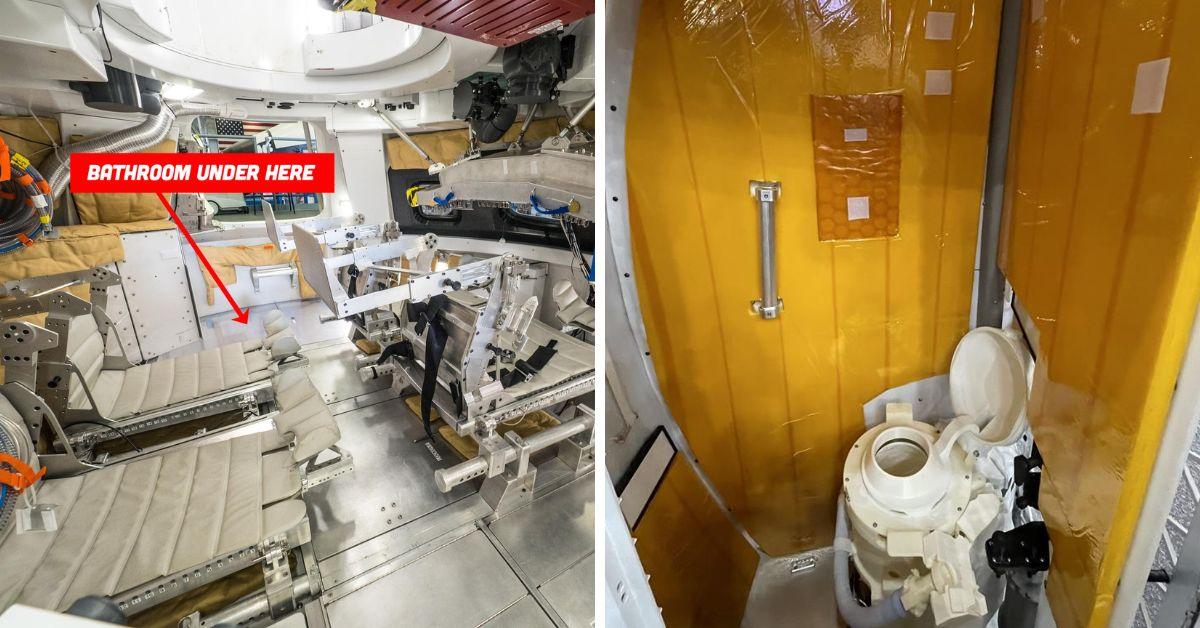
How do astronauts go to the bathroom in space when gravity is not an option?
In space, gravity is no longer doing any of the work, so everything has to be controlled manually. Instead of flushing, space toilets rely on airflow and suction to move waste in the right direction.
According to BBC News, NASA developed what is called the Universal Waste Management System, a toilet designed to handle both urine and solid waste in zero gravity. The system uses airflow to guide waste into the proper containers.
The system includes a seat, a funnel, and an airflow system that helps control odor and move waste into separate containers.
NASA scientists spent more than $23 million developing the full system ahead of the Artemis II mission, which launched on April 1, 2026, and marked the first lunar fly-around mission in more than 50 years.
The current design is not something that appeared overnight. It is the result of years of trial, error, and improvement across multiple missions.
According to Scientific American, NASA’s Melissa McKinley described waste systems as “an evolution of design,” explaining that the current toilet builds on technology from Apollo missions, the space shuttle, and the International Space Station.
Unlike Apollo astronauts in the 1960s and 1970s, who relied on waste collection bags, the Artemis II crew has access to a fully functional toilet.
Designing a space toilet is about more than just function.
One major goal of the newer system is usability for all astronauts. Earlier designs were not always practical for everyone, especially women.
The new system is designed to be used by both men and women, improving comfort and efficiency during longer missions.
And even with all that progress, NASA still considers this an ongoing learning process. Melissa said, “We’ll know so much more when this mission comes back,” noting that the system will help shape future lunar and Mars missions.
There is no such thing as a quick or casual bathroom trip in zero gravity. Astronauts have to position themselves carefully and rely on airflow to make sure everything goes where it is supposed to.
If the system were to fail, astronauts would have to fall back on collecting urine in bags and storing solid waste in containers with odor filters.
Fortunately, the updated system is designed to avoid those scenarios, allowing astronauts to focus on their mission instead of worrying about basic needs.
When people think about space exploration, they often imagine rockets, distant planets, and groundbreaking discoveries. But behind the scenes, even the most basic human needs require serious innovation.
There is no “quick trip to the bathroom” in space. Every part of the process has to be engineered, tested, and refined over time.
And as missions push farther beyond Earth, those small details become even more important, because living in space means rethinking even the simplest parts of life.