
At the Height of Tax Season, You Might Be Entitled to a Second IRS Refund
A federal court says you might be entitled to another tax refund.

Updated March 17 2026, 10:40 a.m. ET

Tax season is always stressful, even if you know you might be entitled to a refund at the end of it. Now, though, a recent court ruling might mean that you're entitled to more than one refund this tax season. The ruling has to do with fees you might have been charged during the COVID-19 pandemic.
Following the news that the refund is available, many wanted to better understand who might qualify for a refund, and how you can go about claiming it. Here's what we know.
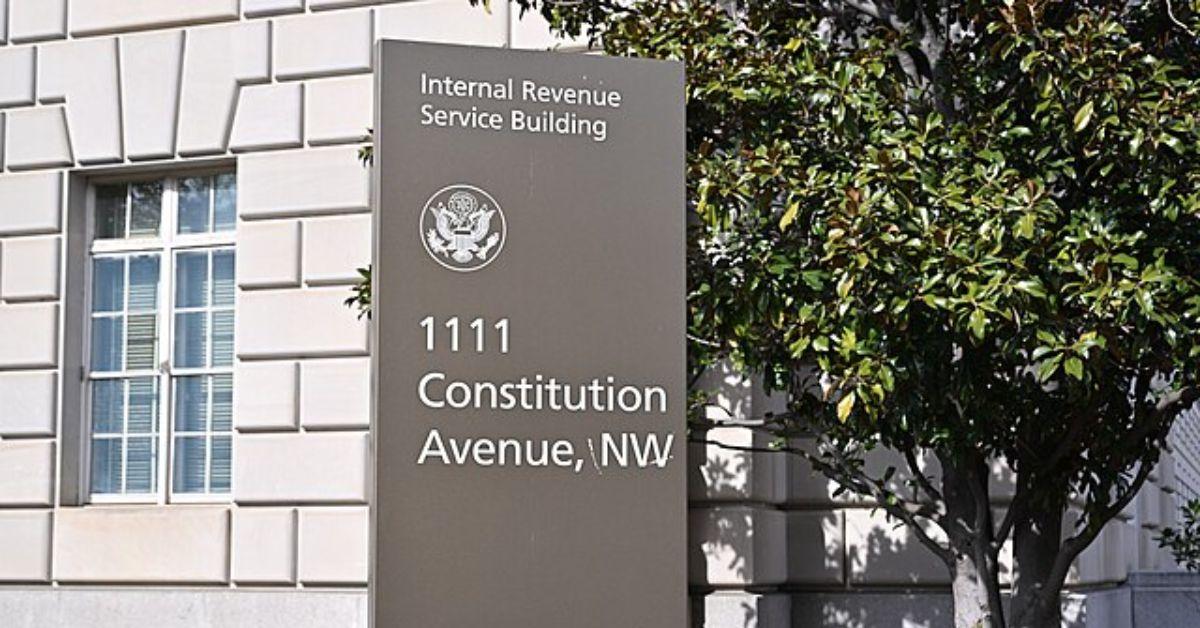
Here's how to get the IRS pandemic refund.
A U.S. Court of Federal Claims expanded the definition of the tax code that concerns extended deadlines during disasters. According to the ruling, the IRS lacked the required authority to assess underpayment interest or other penalties until 60 days after the end of a disaster period. The COVID-19 national emergency lasted from Jan. 20, 2020, to May 11, 2023, and so, if you add 60 days, the filing deadline for 2019, 2020, 2021, 2022, taxes would have been July 10, 2023.
Practically, what that means is that if you were charged interest or penalties during that timeframe, they were likely done in error. According to USA Today, the deadline to file a claim is July 10, 2026, since the statute of limitations is either three years from when the taxes were filed or two years from when a return was issued, whichever date comes later. The best way to make a claim is to use IRS Form 843.
To determine whether you're eligible, you'll need to check your records to see if the IRS levied any fees or penalties during the three-year period when the country was in a declared state of national emergency.
There are also particular steps you should take with IRS For 843 if you want to file a claim yourself.
Here are the steps you should take when filing a claim.
To fill out IRS Form 843 and correctly file a claim, you should make sure you have documentation that proves you were charged a fee or penalty. Taxpayers should also explain on the form that they are filing a protective claim based on the Kwong v. United States decision regarding Section 7508A(d) and the COVID-19 disaster period.
The IRS is likely to appeal the judge's decision, so the case is not over now. However, experts told USA Today that the time to file for the refund is now. That way, even if the IRS does appeal and the refunds aren't sent out until the case is resolved, the IRS will now who to send those refunds to in the event that they do eventually have to get sent out.
We don't know exactly how many people might be eligible for this refund, but it seems like it could be a substantial number of Americans. If you don't file a claim, though, it doesn't seem like the IRS will have to send you anything at all.