
“The Mouth of the South” Ted Turner Dies at 87 — What Was His Cause of Death?
The CNN founder changed television forever, but his later years were shaped by a quiet health battle.
Published May 7 2026, 12:08 p.m. ET

These days, it’s hard to imagine a world where the news simply stopped for the night. But before cable television became a 24/7 presence in homes, airports, and restaurants everywhere, viewers had to catch the evening broadcast at a specific time or wait until the next day to find out what was happening in the world.
That changed because a businessman named Ted Turner looked at the system and decided it made absolutely no sense. On May 6, 2026, news broke that the man with the incredible mind that forever changed broadcasting news had passed away at the age of 87.
What was Ted Turner’s cause of death? Keep reading for the details surrounding his death while also revisiting the larger-than-life legacy he left behind through CNN, sports, conservation, and decades of ambition.
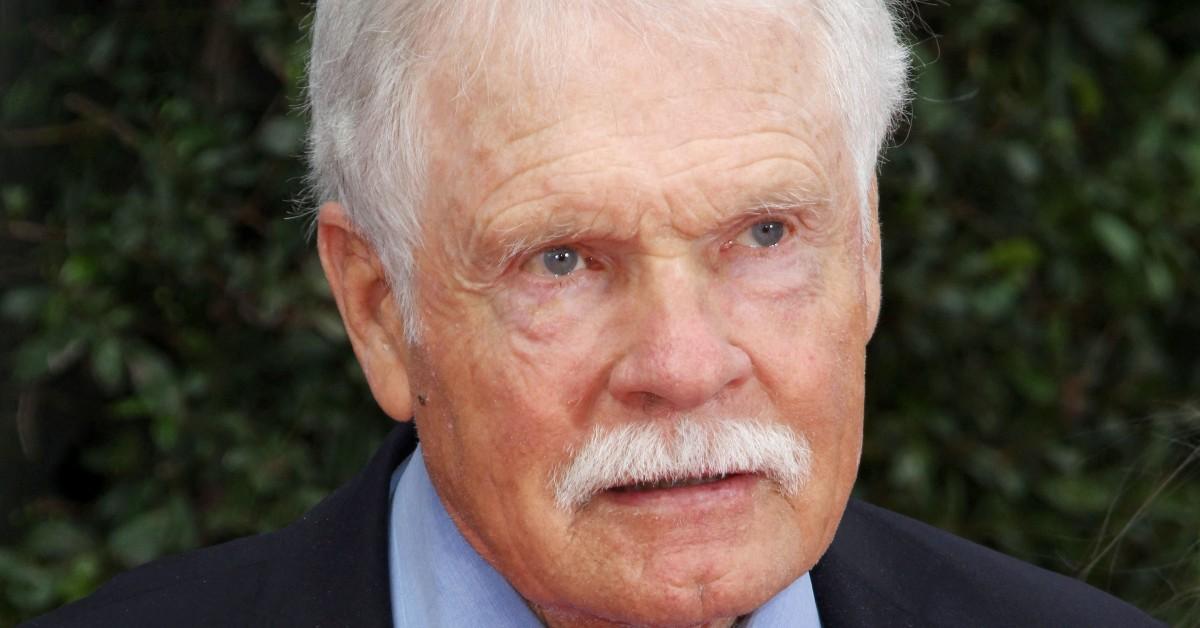
Ted Turner’s cause of death comes years after his dementia diagnosis.
According to a press release from Turner Enterprises via CNN, the CNN founder died peacefully surrounded by family on Wednesday, May 6, 2026. While an official cause of death was not immediately released, he revealed in 2018 that he had been diagnosed with Lewy body dementia, a progressive neurological disorder that affects cognitive function, movement, and behavior over time.
Furthermore, in early 2025, he was hospitalized with a mild case of pneumonia before later recovering at a rehabilitation facility.
For someone who built an empire by thinking bigger and louder than almost everyone around him, the quieter final chapter of his life felt strikingly different from the public image many people remembered. According to NPR, this was, after all, the same man who once told Oprah Winfrey, “If Alexander the Great could conquer the known world, why couldn’t I start CNN?”
He believed people wanted more from television news.
Long before CNN existed, he had already started building his media empire through Atlanta television station WTBS and broadcasts of Braves games. But launching a 24-hour news network in 1980 was the gamble that truly changed everything.
At the time, most Americans got their news from the major broadcast networks during scheduled evening programs. He later explained that he often worked too late to catch those broadcasts himself and figured plenty of other people probably did too.
A lot of industry insiders thought the idea sounded ridiculous. CNN’s early years were filled with technical issues, awkward live segments, and criticism from skeptics who nicknamed the network “Chicken Noodle News.” Still, he kept pushing forward because he genuinely believed viewers wanted constant access to information from around the world.
That vision eventually reshaped television completely. During the Persian Gulf War, per CNN, audiences suddenly found themselves watching live coverage unfold in real time. At that moment, Ted’s idea for a nonstop news channel didn’t seem strange or crazy anymore.
There’s more to his story than just television.
Ted’s story stretches far beyond television. He owned the Atlanta Braves and Atlanta Hawks, became one of the country’s largest landowners, helped restore bison populations in the American West, and launched environmental efforts that even included the cartoon “Captain Planet.”
At the same time, his personal life carried a tremendous amount of pain. He lost his sister after years of illness. Sadly, he was only 24 years old when his father died by suicide. Those experiences shaped much of his worldview and ambition in the decades that followed.
His relationship with actor Jane Fonda also became one of the most talked-about celebrity marriages of the 1990s. Even after their divorce, the two remained close for years. According to CNN, Jane later admitted she never stopped loving him despite the challenges that eventually pulled them apart.
For better or worse, he lived with the kind of intensity that made people pay attention. Whether he was creating CNN, buying sports teams, advocating for nuclear disarmament, or arguing with critics, he rarely did anything halfway.