
What Does Trump's Reclassification of Weed Mean for the Average Person?
There is an expedited hearing scheduled to discuss the possibility of moving recreational marijuana usage to Schedule III as well.

Published April 27 2026, 9:38 a.m. ET

Back in 2025, President Donald Trump signed an executive order moving weed from a Schedule I to a Schedule III controlled substance. However, the change didn't actually go into effect at that point. Rather, the executive order was essentially a nudge for federal agencies to expedite the issue.
On April 23, 2026, the official legal change was implemented. This means the reclassification is now in effect for FDA-approved and state-licensed products. So, what does this all mean, and how will it change things for the average marijuana user?
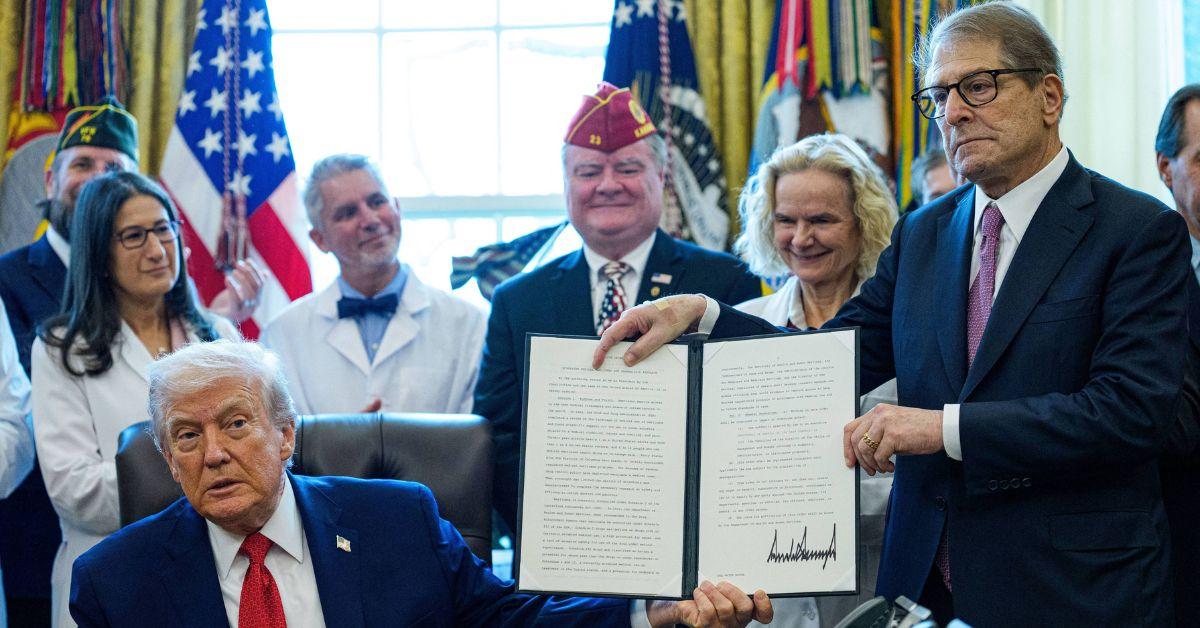
What does the reclassification of weed actually mean?
Prior to this change, weed was a Schedule I substance, which means it was federally illegal (although some states allowed it). Legally speaking, marijuana was on the same level as substances like heroin or LSD, as in, not considered a proper medical substance, and believed to be easily abused.
Now that it's a Schedule III substance under the Controlled Substances Act (CSA), medicinal marijuana is viewed as having a low risk of users becoming dependent on it. Other substances that fall into this category include pain medications, such as Tylenol with Codeine, and anesthetics like ketamine.
In practice, this means that you can now get a prescription for medical marijuana that you can then purchase from a state-level licensed professional, in states that allow it. That said, recreational marijuana use is still banned on a federal level and remains classified as a Schedule I substance, although it is legal in some states.
This reclassification also affects dispensary owners, which in turn can affect consumers as well. Medical marijuana businesses that have a valid state license are no longer subject to IRS Code Section 280E. This means they can write off standard business expenses, which they previously couldn't do. This will save these businesses money, which will likely enable them to reduce their prices.
What happens next?
There is an expedited hearing scheduled for June 29, 2026, to discuss the possibility of moving recreational marijuana usage to Schedule III as well. If that reclassification is approved as well, it would mean recreational weed would receive the same tax and research benefits that medical weed usage gets now.
It's important to note that the substance's legal status would still be left up to the state. That said, in a general sense, the punishment for a Schedule III substance-related crime is significantly lighter than that of a Schedule I substance-related crime.
Why this change was made:

Attorney General Todd Blanche took to X to explain the reason for the reclassification. He wrote, "Under the decisive leadership of POTUS, this Department of Justice is delivering on his promise to improve American healthcare. ... These actions will enable more targeted, rigorous research into marijuana's safety and efficacy, expanding patients' access to treatments and empowering doctors to make better-informed healthcare decisions."
That aforementioned research is arguably the most important element of the reclassification, as many medical professionals have expressed that weed could be a safer alternative to relief than many of the medications currently used. As Associate Professor of Medicine and Medical Director at George Washington University, Dr. Mikhail Kogan told Neurology Advisor, "A lower classification would streamline the process for obtaining necessary federal licenses and funding."