
The Insurrection Act Has Been Invoked Dozens of Times Since 1794
The Insurrection Act is a little vague.

Published Jan. 16 2026, 1:45 p.m. ET

It feels as if President Donald Trump can't go a single day without threatening to invoke the Insurrection Act. According to NPR, he first did this back in June 2020, following the murder of George Floyd. In a more measured tone than we are used to, the president said, "If a city or state refuses to take the actions that are necessary to defend the life and property of their residents, then I will deploy the United States military and quickly solve the problem for them."
For the unfamiliar, the Insurrection Act allows the President of the United States to "deploy the U.S. military domestically and use it against Americans under certain conditions," per the Brennan Center for Justice. It has been criticized for being a little too broad, but it has previously been used to quell rebellions. When has the Insurrection Act been invoked? Keep reading for more details.
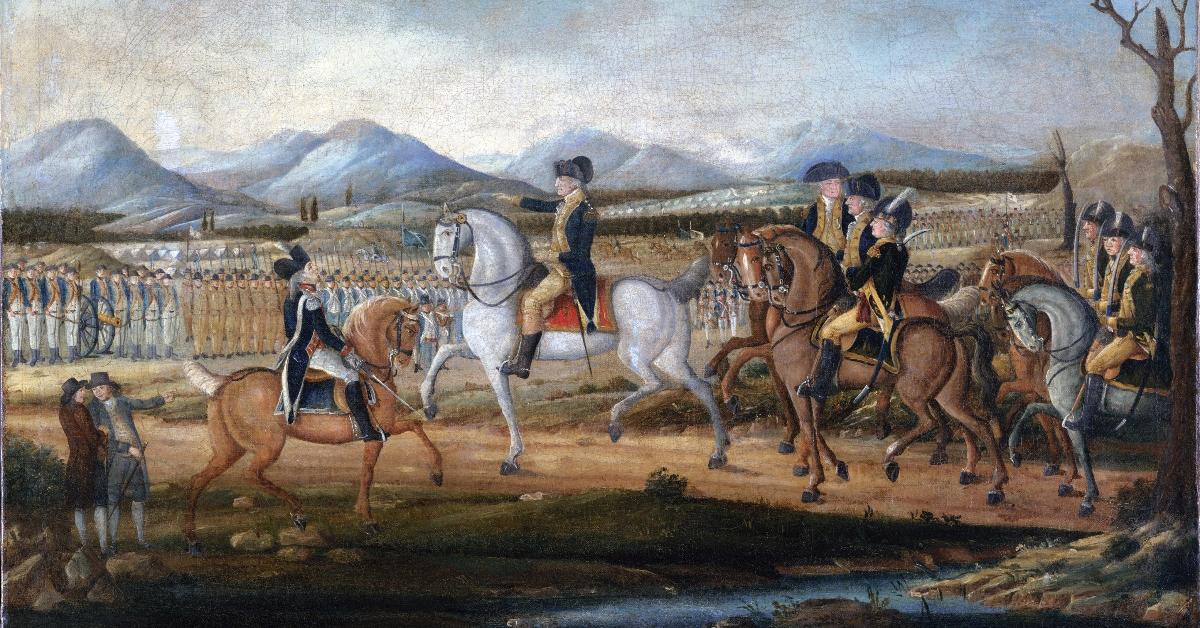
The Insurrection Act was technically first used in 1794.
According to USA Today, the Insurrection Act has been used 30 times since George Washington first invoked it in 1794. It would be a little difficult to dig into each time, so we're going to focus on the first and the most recent as of January 2026. When Washington used it, it was not known as the Insurrection Act. He invoked the Militia Acts of 1792 to tamp down the Whiskey Rebellion.
This uprising had echoes of the Boston Tea Party from two decades prior. Once again, taxes were becoming a problem for the new American government, which relied on said taxes to build its wealth. The trouble began in 1791 when Treasury Secretary Alexander Hamilton proposed an excise tax on whiskey produced in the United States, per PBS. This was unacceptable to farmers in western Pennsylvania who profited from the sales of distilled whiskey.
Of all the months to revolt, the farmers chose July 1794 to attack the home of John Neville, a tax inspector who lived in Bower Hill near Pittsburgh. The movement quickly spread and threatened to spill over into other states. Hamilton urged Washington to send in the militia, which resulted in 13,000 troops marching into western Pennsylvania. By the time they arrived, the rebellion had collapsed. Two men were convicted of treason, but were pardoned by Washington.
In 1992, President George H.W. Bush sent federal troops to Los Angeles.
Between 1794 and 1992, when the Insurrection Act was last invoked, several presidents called upon it. The actual Act was passed in 1807, and in 1871, President Ulysses S. Grant used it to suppress Ku Klux Klan violence in South Carolina. A little more than 100 years later, racism was the force behind President George H.W. Bush's decision to invoke the Insurrection Act.
In March 1991, a Los Angeles man by the name of Rodney King led the California Highway Patrol on a high-speed chase that ended after nearly 8 miles. King was subsequently beaten by four police officers, which was caught on camera by an eyewitness. Two months later, when they were acquitted, riots broke out in South Central Los Angeles. California Gov. Pete Wilson and Mayor Tom Bradley requested federal assistance from Bush, who sent the National Guard and U.S. troops to the city.
During this time, Los Angeles was besieged by looting, prolonged shootouts, arson fires, and violence. When all was said and done, 12,000 people were arrested, over 2,380 were injured, and at least 53 people were killed.