
Gerald the Dolphin Is Accused of Kidnapping a Florida Man — and People Believe It
“All you creators that made a video on this… get off the internet and go fix your IQ.” — @freekdagemini
Published March 16 2026, 10:05 a.m. ET

Gerald the dolphin might not know it yet, but he’s getting major traction on TikTok. In fact, one could say he’s gone viral. Too bad he won’t be able to relish the moment because A) dolphins wouldn’t understand such a concept, and 2) Gerald the dolphin doesn’t actually exist (unless you or your sibling once named a random dolphin you saw swimming in the ocean and decided to call it Gerald).
If you’ve caught wind of the story about Gerald the dolphin on TikTok, or even Facebook, you might’ve heard bits and pieces of the wild tale claiming Gerald (the dolphin) kidnapped a Florida man and made him do the unthinkable. If you’re seeking more context on this story (because who wouldn’t be after hearing something like that), keep scrolling. We’ve got all the details, the facts and the fiction.
Who is Gerald the Dolphin on TikTok?
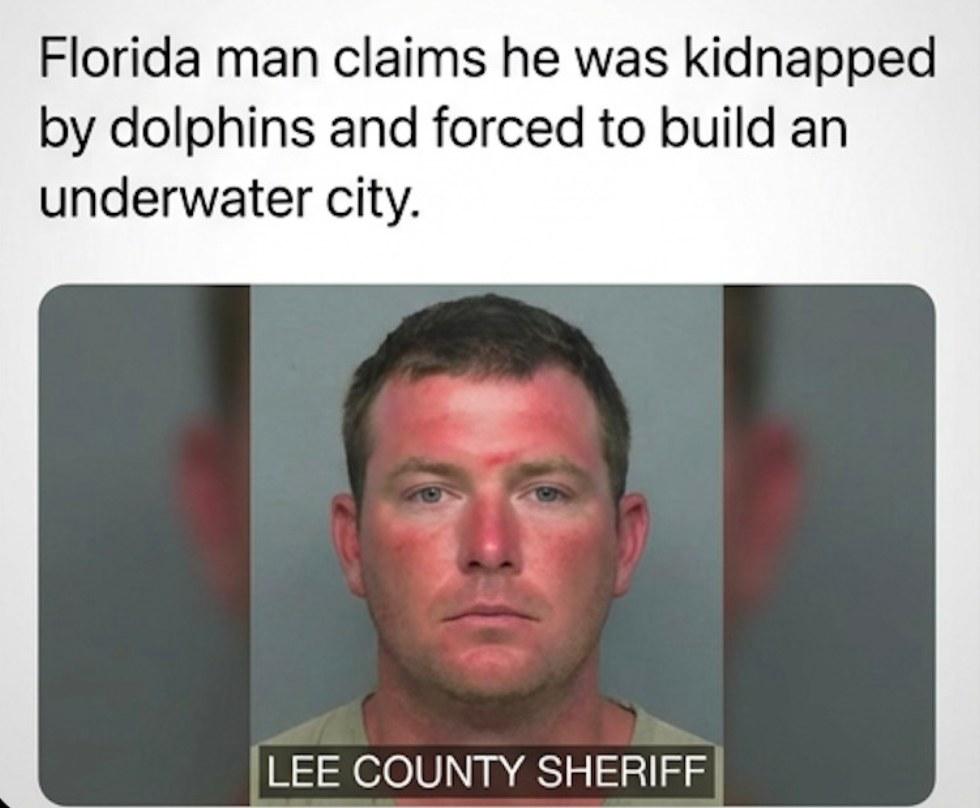
Gerald the dolphin is a made-up dolphin from a fabricated story that started going viral on social media in mid-March 2026. There is no actual dolphin named Gerald, unless, of course, some enclosure like an aquarium decided to name one that. In that case, he has nothing to do with this viral story.
The rumor appears to have stemmed from a social media post that looked legit because it was shared under the name WXYZ 7 News, which is a real news station based in Detroit. The post reads, “Florida man claims he was kidnapped by dolphins and forced to build an underwater city,” and it includes a photo of a man with a severely sunburned face. He is also a fake character created for the made-up news story.
Now, if you guessed that Gerald was one of the “big guys” allegedly helping orchestrate this alleged kidnapping, you’d be right. According to a Facebook post shared by the Lee County Sheriff's Office, Gerald was basically the head honcho, or as the man described, the “project foreman” you apparently don’t question, at least that’s what he told authorities. The man even credited Gerald the dolphin with helping him breathe underwater for three days.
But again, the entire story is made up. The Lee County Sheriff's Office has debunked it after too many creators online started running with it, which led a lot of people to believe that some, or all, of it might actually be real.
More about the Florida man who claimed he was kidnapped by dolphins.
The man people say was kidnapped by dolphins, but actually wasn’t and doesn’t even appear to exist (the photo may have been AI-generated), is named Ricky James Hollowell, 33. According to the viral story, he was found on the shoulder of the Sanibel Causeway “soaking wet and drawing blueprints in the sand.”
The story claims he told deputies he had been “taken against his will by a pod of dolphins three days ago” and forced to work on an “underwater construction project.” Hollowell allegedly said he had been swimming off Fort Myers Beach when the dolphins approached him and “escorted him to a site approximately 40 feet below the surface.”
He also claimed he communicated with the dolphins through “a series of clicks that he eventually learned to interpret,” adding that the head of the project was none other than Gerald the dolphin.
According to the tale, the Florida man even drew blueprints in the sand that were supposedly “detailed enough to be concerning,” including plans for condos, a town square, and a recreation center that he allegedly built underwater.
The story goes on to claim he was only released after the dolphins were “satisfied with his work,” but Gerald reportedly warned him that “they’d be back for phase two.”
People aren’t just shocked that the story is going viral, many are also floored that some creators are telling it as if it were real news. One creator, @freekdagemini, called these people out, saying, “I can’t tell if you’re spreading fake news because you’re dumb or doing it for money.” He also added that anyone pushing the story as a real news story needs to “get off the internet.”