
Why Are There No Stars in Space Photos? The Real Reason Explained
Space photos often show black skies with no stars, but the reason has everything to do with how cameras work.
Published April 8 2026, 11:20 a.m. ET

If you have ever looked at photos taken from space, one detail probably stood out right away. The sky looks completely black, even though we know it is filled with stars.
So why are there no stars in space photos? It is a question that has fueled confusion, curiosity, and even conspiracy theories. But the real answer is actually much simpler and comes down to how cameras capture light.
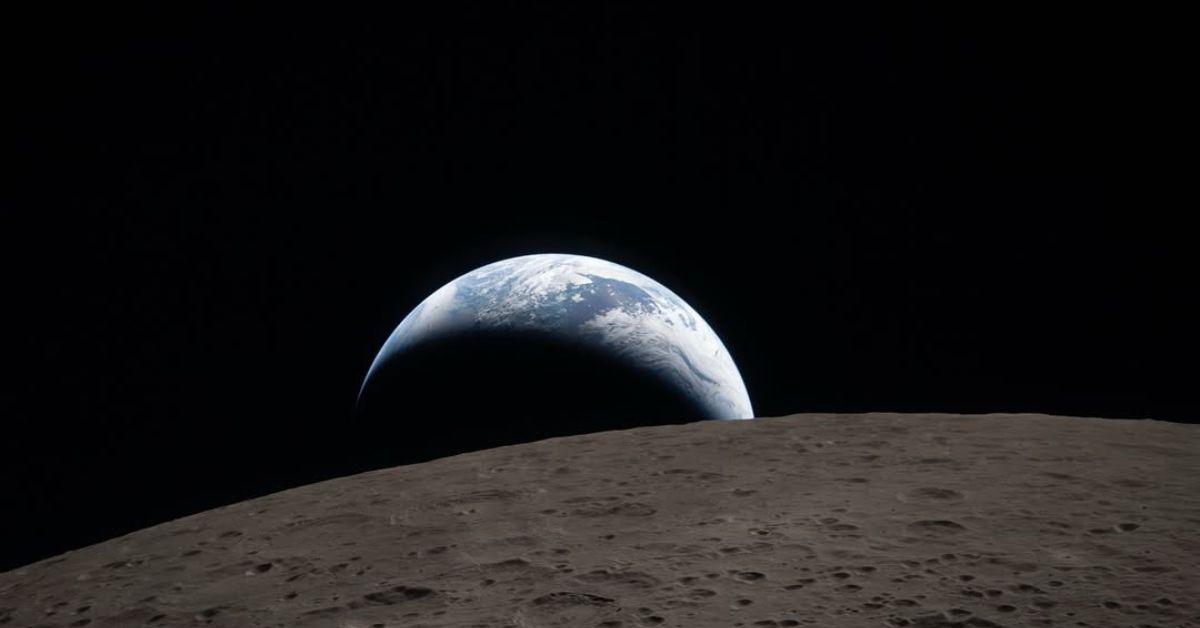
Why are there no stars in space photos? It comes down to how cameras handle light.
According to an Instagram post by NASA, cameras can only capture a limited range between the brightest and darkest parts of a scene. When astronauts or spacecraft photograph something like Earth or the Moon, those objects are extremely bright compared to distant stars.
Because of that, the camera settings are adjusted to properly expose the bright subject. That means the much dimmer stars often do not show up in the final image, even though they are still there.
This is not unique to space photography. It is the same reason you might not see stars in photos taken at night on Earth when there are bright lights in the frame.
Stars are not routinely visible in photographs taken from spacecraft because they are significantly dimmer than nearby illuminated objects like Earth, the Moon, or spacecraft surfaces.
That contrast makes a big difference. When a camera is set to capture a brightly lit object, the faint light from distant stars is essentially lost in the exposure.
Images taken from the Moon often show a black sky for the same reason. The camera is exposing for the bright surface or Earth, not the dim background of space.
The topic has come back into focus as images connected to NASA’s Artemis II mission circulated online. The mission, which is planned as the first crewed lunar fly-around in more than 50 years, sparked renewed curiosity about what space actually looks like in photographs.
Some viewers noticed that, once again, the sky appeared black without visible stars. That led to the same question resurfacing. But as NASA and experts have explained, those images are shaped by camera settings, not by the absence of stars themselves.
Camera settings play a major role in what shows up in space photos.
NASA explains that three main camera settings, shutter speed, ISO, and aperture, control how light is captured and affects how much light reaches the camera sensor.
To capture stars clearly, a camera typically needs a longer exposure or higher sensitivity. But when photographing something bright like Earth, those settings would overexpose the image and wash out important details.
They can expose for the bright object or for the stars, but capturing both clearly in a single image is difficult.
NASA has shown that stars can appear in space images when camera settings are adjusted for them. However, that usually comes with a downside.
For example, using a longer shutter speed can make stars visible, but it may cause nearby objects to look blurry due to motion. This trade-off highlights why most official images prioritize clarity of the main subject rather than faint background details.
The absence of stars does not mean they are not there. The black sky in space photos can feel surprising at first, but it does not reflect reality. The stars are still present, just not captured under those specific conditions.
Once you understand how cameras balance light, the mystery disappears. It is not about space being empty. It is about how difficult it is to photograph something extremely bright and extremely dim at the same time.