
Orthodox Easter Falls on a Different Day Than Easter, and There's an Actual Reason for This
There are some important differences between Easter and Orthodox Easter.

Published April 2 2026, 2:24 p.m. ET

Even if you aren't inherently religious, you might celebrate Easter in some way. From dyeing hard-boiled eggs to putting together baskets for your kids, Easter has sort of evolved into something that people from different religions and cultures have latched onto. But what about Orthodox Easter? It's another part of the holiday, and it is celebrated on a different date.
So, why is Orthodox Easter on a different day than Easter as many of us know it? For some, it's a less-celebrated holiday, if only because of its stricter roots in religion. And it's less about the Easter Bunny and more about the religious reasons for both Easter and Orthodox Easter. In a way, it makes sense, then, that both Easters are on different dates.

Why is Orthodox Easter on a different day?
Orthodox Easter is celebrated with the Julian calendar, known as the old calendar. Easter is celebrated on a date with the newer Gregorian calendar. According to History.com, Christians followed the Julian calendar for years. Then, when Pope Gregory XIII brought in the Gregorian calendar in 1582, Western churches aligned with the Pope and made the switch, but not all churches did.
Now, Orthodox churches in countries like Greece, Russia, and Romania stick to the Julian calendar. These Orthodox churches remained loyal to the original calendar as a show of their religious faith and dedication. Now, in the present day, it means that Orthodox Easter is usually celebrated from a week to a few weeks after Easter.
Orthodox Easter traditions are a little different.
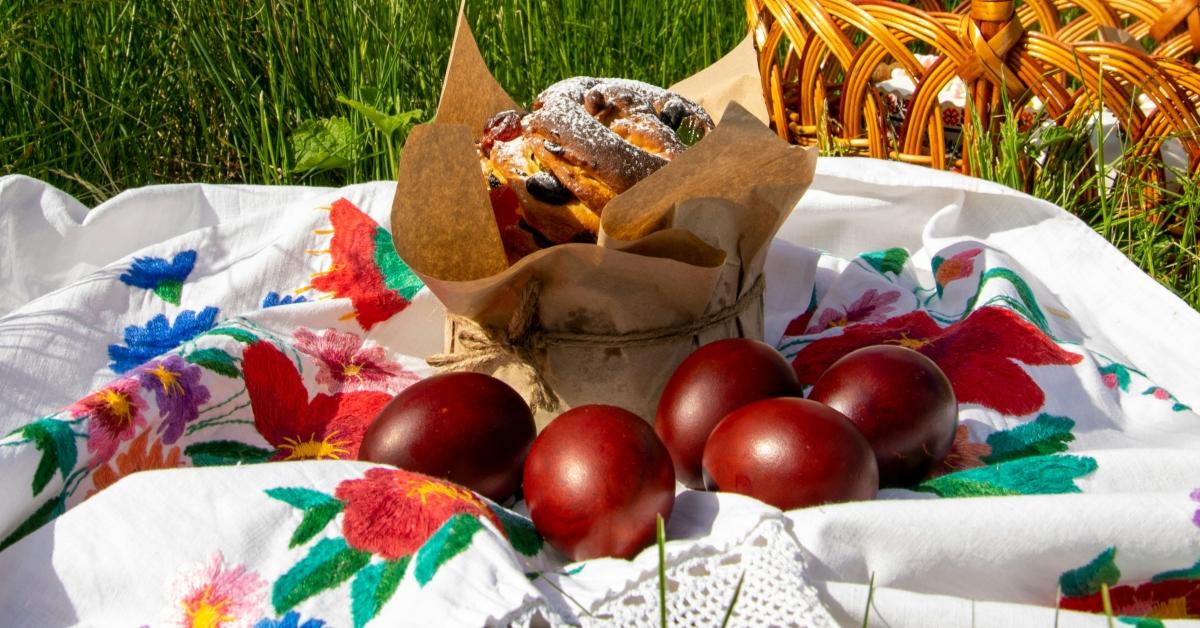
Orthodox Easter comes with more religious undertones and more of an emphasis on the serious parts of the holiday. Per the BBC, different Orthodox Churches around the world celebrate a little differently, but in the United States, people dye eggs red as a symbol of the blood of Christ, and they have their food blessed at church.
Orthodox Christians in Greece celebrate with food by eating roasted lamb and a special Easter bread. Many also celebrate the holiday by attending a midnight church service in honor of Jesus. While Western Christians also go to church on Easter Sunday, for Orthodox Christians, it's more involved than attending a quick service.
The date is always a little different, since Easter and Orthodox Easter follow two different calendars. Orthodox Easter also always comes after the Jewish Passover holiday, so in order to figure out the future dates for the Orthodox holiday, it's important to keep that in mind, too. It also falls on the date after the first full moon after the vernal equinox. Whereas it's a little easier for some to calculate when Easter falls each year, with Orthodox Easter, it's just a tad trickier.
While it often arrives after the traditional Easter holiday that many celebrate, in 2029, Orthodox Easter will arrive on April 8. Since Easter falls on the first Sunday after the vernal equinox, with no need to factor in Passover, it's also on an earlier date that year. But don't worry, because if it's hard to calculate, you can count on your calendar to let you know.