
Why Are They Called the New England Patriots? The History Behind the Name
Before they became an NFL dynasty, the New England Patriots were crafted to represent an entire region.
Updated Jan. 21 2026, 12:24 p.m. ET

The New England Patriots didn’t get their name by accident — it’s rooted in Revolutionary history. When the franchise launched in 1959 as part of the new American Football League, the team played in Boston and went by the Boston Patriots.
According to the Pro Football Hall of Fame, owner Billy Sullivan opened the floor to the public for name suggestions. A panel of Boston sportswriters ultimately chose “Patriots.” From the jump, the franchise positioned itself to carry more than just a city’s identity. It aimed to represent the entire New England region, even before the name officially said so.
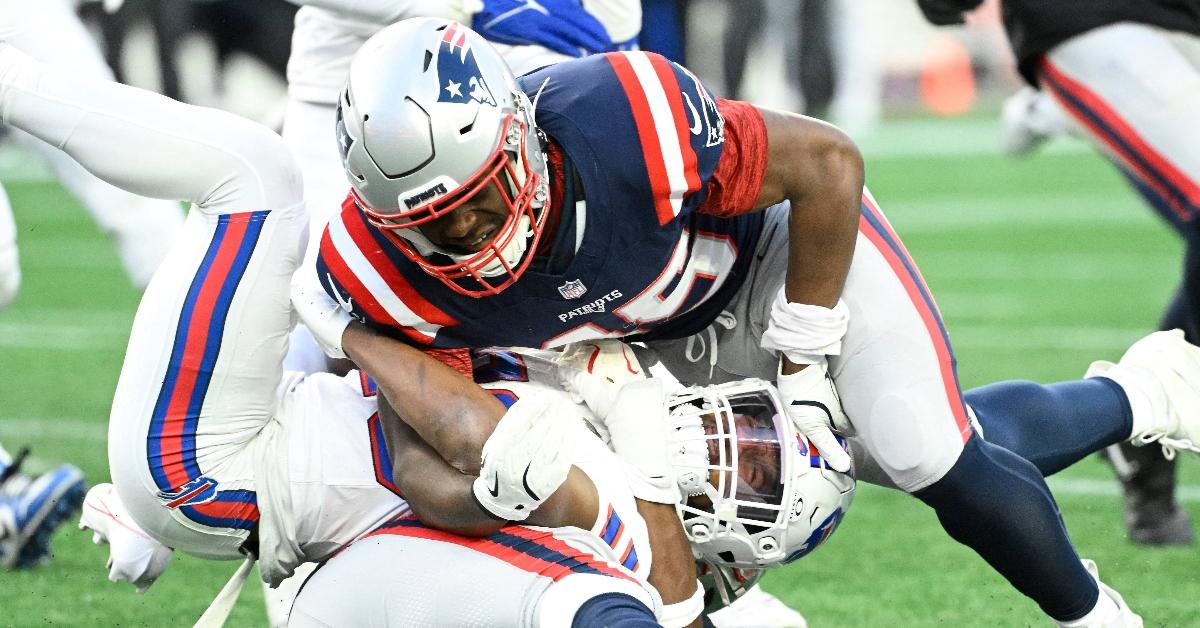
Why are they called the New England Patriots?
The franchise name honored the American patriots of the Revolutionary era and nodded to Boston’s central role in the fight for independence. When the “Patriots” became official, the team also adopted red, white, and blue as its colors, leaning fully into the patriotic vibe.
Former athlete Gino Cappelletti, who played for the team from 1960 to 1970, later described how fans reacted when the franchise formally changed its name. “It was mixed. Some people thought it was a good deal, and then others thought we were the Boston Patriots and that should be it,” Gino told ESPN. “I’d say those who preferred Boston probably won out over those who wanted New England.”
Even though the team carries the New England name, it is physically based in Massachusetts. The Patriots play in Foxborough, a town located between Boston and Providence. They moved there in 1971. That relocation triggered the shift from the Boston Patriots to the New England Patriots. Sullivan wanted the franchise to represent the entire six-state region — Massachusetts, Rhode Island, Connecticut, New Hampshire, Vermont, and Maine — instead of just one city.
Locally-significant names are not new to the NFL.
Before “Patriots” became the final pick, several other options circulated, many tied closely to colonial Boston culture. According to ESPN, suggested names included the Colonials, Pilgrims, Puritans, Braves, Beantowners, and even the Hubs. Later, when the team transitioned from Boston to New England, Sullivan initially tried “Bay State Patriots,” but the NFL rejected it, pushing the team to settle on the broader regional identity instead.
The Patriots aren’t alone in having a name tied closely to local history or culture. According to Bleacher Report, the Cleveland Browns took their name from their first coach, Paul Brown, after a fan contest. The Pittsburgh Steelers honored the region’s steel industry, also through a public vote.
The New Orleans Saints got their name because the league awarded the franchise on All Saints’ Day. The New York Jets rebranded from the Titans in the 1960s to reflect the jet age and their proximity to major airports. Even the Raiders shifted from a short-lived name, the “Señors,” to the Raiders after fan backlash and a second naming contest.