
Why Does Tyler Lockett Avoid Hits? The Seahawks Star Explains His Strategy
Tyler Lockett isn’t “soft.' He’s strategic. His approach to contact is based on survival, skill and advice from NFL greats.
Published Dec. 11 2025, 11:43 a.m. ET

Tyler Lockett has built a reputation as one of the NFL’s most reliable, efficient receivers. But alongside the highlight catches comes a criticism that resurfaces every season: why he sometimes slides, steps out, or goes down before taking a hit.
So, why does Tyler Lockett avoid hits? The answer isn’t about toughness. It’s about longevity, precision, and a deep understanding of how violent the sport truly is. And Tyler himself is more than ready to explain why he plays the way he does.
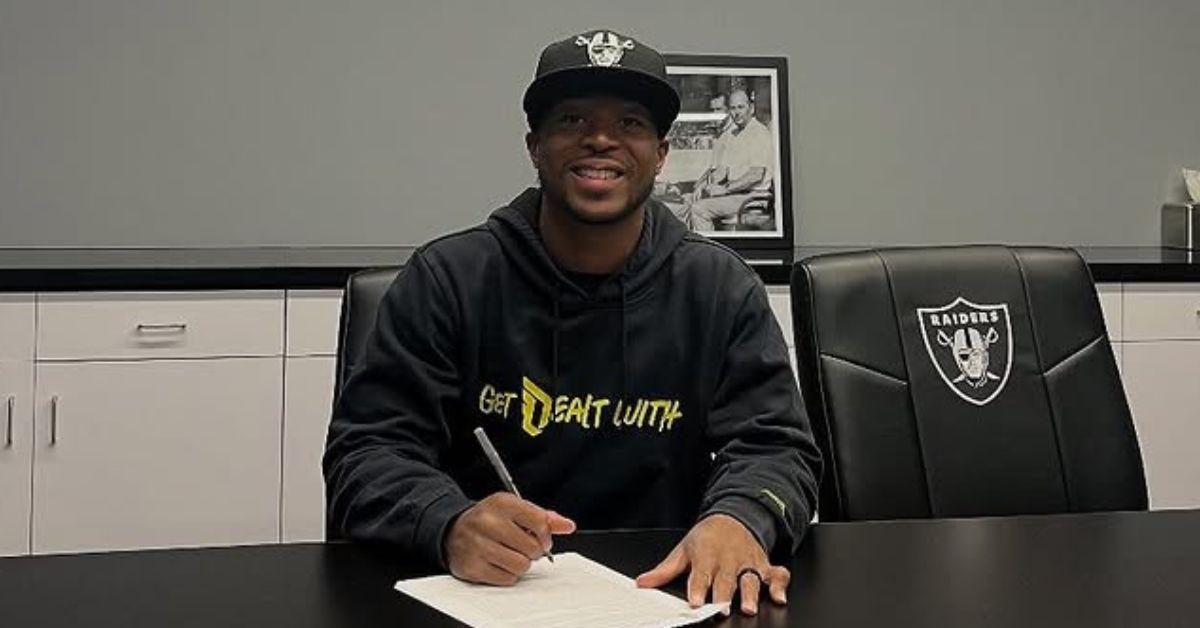
Why does Tyler Lockett avoid hits? He says it’s about survival, not "softness."
Every time Tyler goes down just short of a first down, critics resurface wanting to know why he won't take hits. According to NBC, Tyler told ESPN that preserving his body is not only intentional but rooted in coaching, strategy, and long-term health.
He shared advice he received in college from coach Andre Coleman. Andre pointed him to NFL legends Torry Holt and Isaac Bruce. Their method? "They catch what they can, they get what they could get, and then they get down."
Rather than embracing unnecessary contact, those receivers built Hall of Fame careers by avoiding injuries that could have cut them short. Tyler said that it's his choice on whether or not he takes hits and choose wisely is not just part of preserving his career, but part of protecting his health as well.
He said, "Everybody wants you to put your body on the line. For what? Your entertainment? Your amusement, whatever? For us, we put our bodies on the line every single day."
Tyler doesn't intentionally miss first downs to avoid hits.
Tyler said players already endure extreme physical demands. Avoiding unnecessary hits isn’t a lack of effort, but the difference between a smart decision and a damaging one. Sometimes he simply misjudges the distance to a first down. That’s not strategy or fear. That’s instinct and speed colliding in real time.
Fans need to remember that the yellow lines shown on TV to mark the downs aren't on the actual field, so it's not as easy for them to see the first down and keep pushing.
Going down early doesn’t mean he’s avoiding responsibility. It means he’s choosing long-term availability over short-term glory. A small gain today isn’t worth losing weeks of play time or years of quality of life later.
His reliability backs up the philosophy. He rarely misses games, consistently produces, and was one of the Seahawks’ most trusted weapons. Availability itself is a skill, one that relies on knowing when not to take a hit.
What some fans label as softness, coaches and players often recognize as high-level awareness. It’s the discipline to protect yourself in a league where careers can change, or even end, with a single collision. Many football players have suffered from CTE, which is a condition caused by repeated head injury that can affect daily life and even alter personalities.
Tyler sees avoiding unnecessary hits as part of his craft. It’s the same strategy used by iconic receivers before him, based on realism rather than ego. His view remains simple: he’ll fight for yards when he should, and he’ll go down when it’s smarter.
This approach isn’t about fear. It’s about staying healthy, staying present, and playing the game. Whether fans love it or hate it, he knows his body, his role, and the cost of every collision.